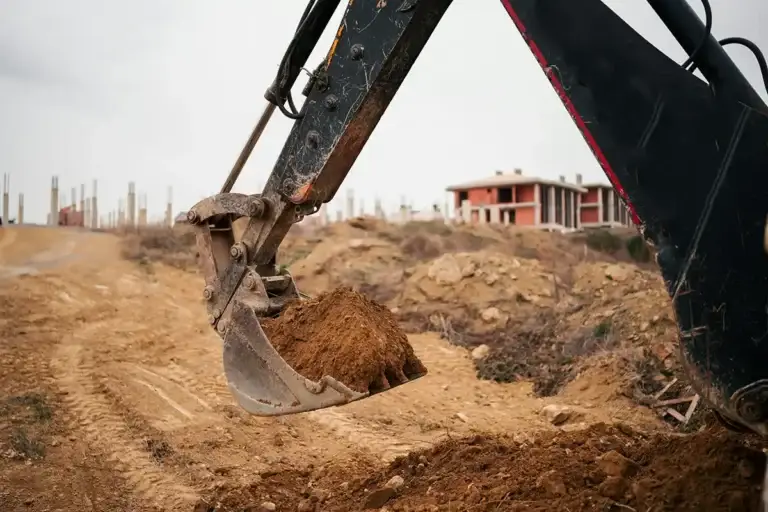
Expanding US defence infrastructure investment across Australia is increasing demand for local construction firms to deliver work on the ground. Accessing this opportunity depends on Australian SMEs understanding procurement systems and positioning themselves within established contractor networks.
The United States (US) is investing heavily in military infrastructure across Australia and the broader Indo-Pacific, and much of that investment depends on local construction capability. For Australian small- to mid-sized construction firms, this creates a direct pathway into one of the world’s largest defence infrastructure systems.
This opportunity exists for a simple reason. The US military does not build infrastructure itself. It relies on private contractors, and those contractors rely heavily on local firms to deliver the work on the ground. As Bradford Garrigues of the Society of American Military Engineers (SAME) explains, military infrastructure programs depend on private sector contractors to deliver facilities, and those contractors in turn need capable local partners who understand the local environment, workforce, and construction standards.
For Australian construction SMEs, this means access is already underway across multiple project streams.
Why Australian SMEs are essential to US military construction projects
When the US Department of Defense funds infrastructure projects overseas, it awards contracts to large prime contractors through structured procurement programs. These primes oversee the work, manage compliance, and coordinate delivery, but they do not import entire construction workforces from the United States.
Instead, they establish small, on-the-ground management teams and rely on local subcontractors to execute the majority of the construction. Civil works, structural installation, electrical and mechanical services, concrete packages, and specialist engineering services are almost always delivered by local firms.
This is not simply a preference; it is how the system functions. Prime contractors depend on local capability to meet delivery timelines, comply with local construction regulations, and manage logistics efficiently. Australian firms bring established supply chains, skilled workforces, and an understanding of local conditions that foreign contractors cannot replicate quickly.
The result is structural reliance on Australian SMEs, where local firms sit within prime delivery structures instead of competing against them.
The scale of upcoming investment makes SME participation inevitable
Australia’s role in US defence strategy has expanded significantly under initiatives like the US Force Posture Initiative and broader Indo-Pacific defence programs. These initiatives are funding large-scale infrastructure projects including airfield upgrades, operational facilities, hangars, fuel systems, logistics infrastructure, and base support buildings.
Such programs operate under multi-year funding arrangements and structured procurement pipelines designed to deliver projects across multiple locations. Local firms are essential to sustain delivery capacity, as the scale and geographic spread limit the ability of prime contractors to self-deliver.
At the same time, Australian and US governments are coordinating more closely on defence infrastructure, particularly in northern Australia and strategic locations that support regional operations. This coordination is translating directly into construction demand.
For Australian construction firms, this represents a sustained pipeline of opportunity, rather than a one-off program.
Key contract structures
Understanding how these projects are contracted is critical to understanding how local firms participate. US defence infrastructure is not awarded through a single tender model. Instead, it operates through layered procurement frameworks that determine who can bid directly, who can subcontract, and how work is distributed over time.
Multi-award construction contracts create the primary delivery framework
The majority of US military construction projects in Australia are delivered through umbrella agreements known as Multi-Award Construction Contracts, or MACs. These contracts pre-qualify a group of prime contractors to deliver infrastructure over a fixed period, typically five years.
Two major MAC programmes are currently operating in the Indo-Pacific region. One covers large-scale infrastructure projects ranging from tens of millions to billions of dollars. The other covers smaller projects that can range from several hundred thousand dollars to tens of millions.
Only pre-qualified prime contractors can bid directly on these MAC projects. However, these primes rely extensively on subcontractors to execute the work. This is where Australian SMEs enter the ecosystem.
For most Australian construction firms, subcontracting under MAC primes is the primary entry pathway.
Open solicitations create direct access opportunities
Not all projects are awarded exclusively through MAC frameworks. In some cases, projects are released through open solicitations, allowing a broader range of contractors to participate.
These open tenders are particularly important for businesses entering the ecosystem for the first time. They provide opportunities to build experience, demonstrate capability, and establish relationships with US contracting agencies and prime contractors.
Even when firms do not bid directly, monitoring these tenders allows them to identify which prime contractors are winning projects and actively delivering work in Australia.
This intelligence is essential for positioning as a subcontractor.
Sustainment and supporting works create ongoing opportunities
Once major infrastructure is delivered, ongoing maintenance, upgrades, and support work continues for years. These projects often sit below major contract thresholds and are delivered through subcontracting arrangements.
This creates long-term demand for firms with specialist capabilities in infrastructure maintenance, engineering services, mechanical and electrical installation, and facility upgrades.
For SMEs, sustainment work often provides the most accessible and consistent entry point.
Where to find these opportunities
SAM.gov is the central procurement portal. The US government publishes federal procurement opportunities through SAM.gov, which functions as the central portal for defence contracting.
Australian construction firms can use this system to identify current tenders, upcoming opportunities, and recently awarded contracts. This lets firms see exactly which companies are winning work and where future projects are likely to emerge.
SAM.gov also provides insight into contracting agencies, project timelines, and procurement pathways. Understanding this landscape lets firms align their business development efforts strategically.
Rather than relying on informal channels, SAM.gov provides direct visibility into the procurement pipeline.
However, while SAM.gov provides visibility, prime contractors represent the most practical entry point.
MAC primes actively seek capable subcontractors who understand Australian construction standards and can deliver efficiently. Many international primes do not have established Australian supply chains and rely heavily on local firms to fill this gap.
Establishing relationships with primes positions SMEs to participate in projects as they move into delivery phases. These relationships often lead to repeat engagement across multiple projects.
Registration enables formal participation
To participate fully in US defence contracting, companies must register within the US federal procurement system. This process establishes a company as a recognised vendor and enables engagement with contracting agencies and primes.
Registration also lets companies receive notifications about relevant opportunities and ensures compliance with procurement requirements.
While the system uses US-specific classifications and processes, Australian firms can register and participate as foreign entities. This step formalises access.
Make the most of this window of opportunity
Defence infrastructure expansion is accelerating
Australia’s strategic importance has increased significantly in recent years, and defence infrastructure investment reflects this shift. New projects are entering procurement pipelines now, and delivery timelines extend across the coming decade. Firms that position themselves early can participate in projects as they move into delivery phases.
Prime contractors are actively building local partnerships
Many MAC prime contractors are new to Australia and require reliable local partners to deliver projects effectively. They need firms that understand Australian construction standards, workforce dynamics, and regulatory requirements. Australian SMEs provide this capability immediately and prime contractors are actively looking for partners who can deliver.
Early positioning creates long-term advantage
MAC contracts operate over multi-year periods, and subcontractor relationships established early often extend across multiple projects. Once a firm demonstrates reliability and capability, it becomes part of the contractor’s delivery ecosystem, which creates sustained work pipelines rather than isolated contracts.
The most effective entry strategy for construction SMEs
Australian SMEs should focus on positioning themselves within the delivery ecosystem rather than attempting to compete directly as prime contractors.
Monitoring SAM.gov lets firms identify relevant projects and prime contractors. Registering within US procurement systems formalises participation and enables engagement. Establishing direct relationships with MAC primes also lets firms position themselves as subcontractors on upcoming projects.
Industry organisations like SAME provide valuable access to contracting officers, prime contractors, and industry networks, accelerating understanding of procurement pathways and building essential relationships.
Ultimately, success in defence contracting is built through positioning, relationships, and demonstrated capability.
The strategic reality: Australian SMEs are critical to US defence delivery
US defence infrastructure programmes in Australia are designed to use local contractors. Prime contractors depend on Australian firms to execute construction, meet compliance requirements, and deliver projects efficiently.
For Australian construction SMEs, the opportunity is real and accessible. The system is structured to include them. What matters most is understanding how the ecosystem works and positioning early within it.
The firms that engage now will establish relationships and capability that position them for years of sustained defence infrastructure work.