Rising rates of youth mental ill-health in Australia are prompting closer examination of how support systems address connection, family dynamics, and early intervention. Evidence from both frontline programs and research highlights the role of shared experience and community-based approaches in improving outcomes, particularly where isolation and stigma persist.
It was at one of the programs we hosted for at-risk youth and their parents that I watched a mother cry in front of her 15-year-old son. It was the first time in years.
She told him about her own childhood trauma, feeling like a failure as a parent, and lying awake at night, terrified she was losing him. Her son sat frozen, and then something shifted in his face.
“Mum, I didn’t know,” he said quietly. “I thought you just hated me.” That moment changed everything for their family.
Shared vulnerability doesn’t just build trust. It creates the conditions for healing that no amount of individual therapy can replicate.
Afghanistan showed me what connection really means
When you jump out of a plane at 1,000 feet with 20+ other paratroopers, you learn something fundamental.
You learn what connection really means.
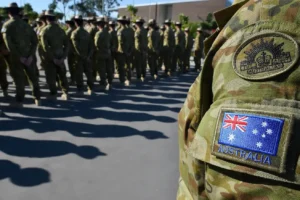
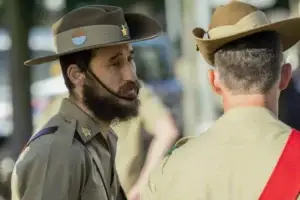
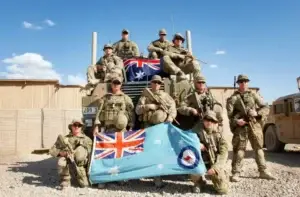
You’re all equally exposed, equally vulnerable, and equally dependent on each other. I deployed to Afghanistan in 2012 as part of Mentoring Task Force 5. On 29 August that year, I lost three mates in a green-on-blue attack.
I came home with PTSD, anxiety, and depression. Then I broke my neck and back in a surfing accident.
The doctors told me I’d never work again. Never lift weights. Never jump out of planes.
They were wrong, but the path back wasn’t what they prescribed.
I spent four months unable to move. Lying in bed, drowning in medication, and watching my life slip away. The physical pain was brutal, but the isolation nearly killed me.
What saved me wasn’t sitting alone in a clinical room talking about my feelings. It was being around other veterans who’d been through hell and were willing to say it out loud. Who could look me in the eye and say, “Yeah, mate. I wake up at 3:00 am too.”
On the other side of that journey was the silence, professional distance, and clipboard notes in those rooms that crushed me.
I didn’t need someone to diagnose me. I needed someone who understood. I needed the shared acknowledgement of struggle that creates something the medication never could: permission to be human.
The research backs what the battlefield taught me
Harvard professor Jeff Polzer’s research demonstrates that vulnerability precedes trust.
When people experienced vulnerability through challenging situations together, their cooperation levels increased by 50 per cent.
Think about that for a moment. We’ve built an entire mental health system around individual treatment, private sessions, confidential conversations, and isolated healing, and yet the data shows the opposite works better.
When you create spaces where people can be vulnerable together, trust materialises beneath your feet. You don’t build trust first and then share vulnerabilities. You leap into the unknown alongside others, and trust forms in that shared experience.
This isn’t just theory. I’ve watched it happen hundreds of times.
Why parents feel so isolated
Nearly half of young Australians are experiencing high or very high levels of psychological distress and their parents are drowning.
They’ve been to the doctors, psychologists and counsellors. They’ve tried the medication, followed behaviour plans, and offered both tough love and the gentle approach. Nothing’s working and they feel like they’re the only ones who can’t help their children. I’ve sat with mothers who haven’t slept properly in two years and fathers who cry in their cars before going into work. The families who find their ways to our program are parents who have had police at their door, found razors hidden in their kid’s room, or even drafted suicide safety plans with counsellors.
They’re exhausted and terrified, and they think it’s just them.
But here’s what I see when 70 families arrive on program: they’re all facing the same patterns, including tech addictions, school suspensions, withdrawn kids, destroyed self-esteems, and years of failed interventions.
The relief on their faces when they realise they’re not alone is immediate. One father told me, “I thought my family was uniquely broken. Seeing 69 other families going through the same thing… I can breathe again.”
I’ve watched parents who couldn’t make eye contact on day one drop-off come together by day three in our group chats, sharing phone numbers and making plans to stay connected. The walls break down fast when you realise you’re not the only one fighting this battle. If isolation amplifies shame, community dissolves it.
How military structure creates safe vulnerability
People assume military programs like The Youth Regiment are about toughening kids up: yelling at them and breaking them down. That’s not what we do. Military structure creates something most families have lost, which is predictable safety.
When you know exactly what’s expected because the rules are clear and consistently applied, everyone follows the same routine, and the adults around you are calm and competent, that’s when you can finally let your guard down.
Our ratio is one veteran mentor to every four kids, and they aren’t just any veterans. They’re people who have faced their own darkness and come through it. Who can sit with a 14-year-old having a panic attack and say, “I know this feeling, and you’re safe. I’ve got you.”
I’ve got one mentor who talks about the day he nearly ended his life. Another who shares how he rebuilt his relationship with his parents after years of pushing them away. They don’t hide their scars, they show them. The kids watch us be vulnerable first. They see grown men talk about their struggles with mental health, including about the mates they’ve lost, the nights they couldn’t sleep, and rebuilding their lives after trauma.
Then something remarkable happens: the kids start talking, too. I’ve had 16-year-olds who haven’t spoken to anyone in months suddenly open up about feeling worthless, not because we forced them to, but because they watched grown men and women share vulnerability first.
The reconnection expedition changed everything
After running our nine-day program for years, I noticed a pattern. The kids would transform, they’d go home, and, within weeks, the old dynamics would creep back in. We finally started recognising that the problem wasn’t the kids. It was that we’d only worked with half the relationship.
So, we created the Reconnection Expedition, which is three days of parents and kids canoeing together through remote wilderness, camping side by side, and facing challenges together.
But the real work happened around the campfire. We asked parents to share their own stories, struggles and vulnerabilities in front of their children.
I watched a mother tell her daughter about her own experience with depression as a teenager. The daughter had no idea. She’d spent two years thinking her mum couldn’t possibly understand what she was going through. The daughter just stared at her mum for a long moment. Then she said, “You too?” Those two words broke years of silence between them.
That night, they slept in the same tent for the first time in three years. Vulnerability in isolation is terrifying. Vulnerability witnessed and shared becomes connection.
What this means for Australia’s mental health crisis
We’re spending billions of dollars on a system that treats mental health as an individual problem requiring individual solutions, but the research on community resilience shows something different.
Suburbs with very low community resilience had significantly higher rates of depression, mental distress, and disability. Resilience can be measured at the population level, and it plays a meaningful role in shaping health outcomes.
We can’t counsel our way out of a community problem. Groups like Alcoholics Anonymous work because they create shared purpose, a path forward, and a structure to hold each other accountable. The healing happens in the collective, not just the individual.
Early intervention programs that focus on community and connection reduce crime by 5-31 per cent. They lower reoffending rates by 50 per cent.
Victoria’s Youth Crime Prevention Program achieved a 29 per cent reduction in offending through intensive case management and pro-social group activities.
The evidence is clear: connection works, community works, and shared vulnerability works.
Why we’re shifting to early intervention
For eight years, I ran Veteran Mentors as a last-resort program. Families came to us after everything else had failed and they had gone through years of pain and spent thousands on treatments that didn’t work.
We got incredible results, but I kept thinking about all the suffering that could have been prevented. I kept meeting 15-year-olds who should have been reached at 12. Kids on their eighth suspension who spiralled after their first. Families who’d spent $40,000 on treatments that made things worse. Every single time, I thought, “We could have prevented this.”
That’s why my partners Ryan Fox and Lynette Emert founded The Youth Regiment in 2025.
We’re entering schools now, working with kids after their first suspension, not their seventh. We’re partnering with community groups, speaking with policy makers, and partnering with GPs to offer our approach before prescribing medication. We’re working with educators to recognise when a child needs community support, not just clinical intervention.
The cost of late intervention in Australia is $15.2 billion annually. Nearly one-fifth ($2.7 billion) of that is due to youth crime alone, though a dollar invested in early childhood education yields a two-dollar return.
Early intervention isn’t just more humane; it’s more effective and more economical. We can’t keep waiting until families are broken before we offer them community.
What you can do
If you’re a parent struggling right now, know this: you’re not alone. The isolation you feel is part of the problem, not proof that you’re failing.
I know what it’s like to feel like you’re the only one who can’t figure this out. To wonder if you’re making everything worse. You’re not. Go out and find other parents. Real ones, not the ones posting perfect lives on social media, but the ones who’ll admit their kid got suspended, say they don’t have all the answers, and will sit with you in the mess.
If you’re an educator or health professional, consider this: the most powerful intervention you can offer might not be a referral to another specialist. It might be connecting families to each other.
If you’re a policymaker, look at where we’re investing. Are we funding programs that isolate people in treatment rooms? Or are we creating spaces where communities can heal together?
The battlefield taught me that the strongest bonds form when people face challenges together. When they’re equally vulnerable, equally exposed, and equally committed to getting through it. That’s not just a military principle, it’s a human one, and it’s time we built our mental health system around it.