Career pathways shaped by service often evolve through continuity rather than abrupt change, with experience, responsibility, and environment reinforcing a consistent underlying purpose across different roles. Eric Atkinson’s path from military service to firefighting and business reflects how skills developed in high-pressure environments can be applied across contexts, where leadership, reliability, and a commitment to contribution remain central.
Eric Atkinson does not remember a single moment when he decided what his life would become, because for him, it was never a decision made once, but something that emerged gradually through experience, exposure, and an instinctive pull toward environments where responsibility mattered.
When he spoke with John Coutis on an episode of More to Me, he described that instinct simply, without embellishment or dramatic framing. “I always wanted to be in the Army,” he said. “I’m not too sure why… but I was always drawn to that.”
He grew up in Brisbane’s western suburbs, in a household where service was neither romanticised nor questioned, but simply understood as part of a life well lived. His father had served in the Army before moving into policing, and later, in an act of reinvention that would only fully resonate with Eric years later, retrained as a psychologist in his forties, building a second career grounded in understanding and helping others navigate the psychological weight of difficult professions. Watching his father reshape his own life demonstrated, even if implicitly, that identity was not fixed and that purpose could evolve without abandoning the values that came before.
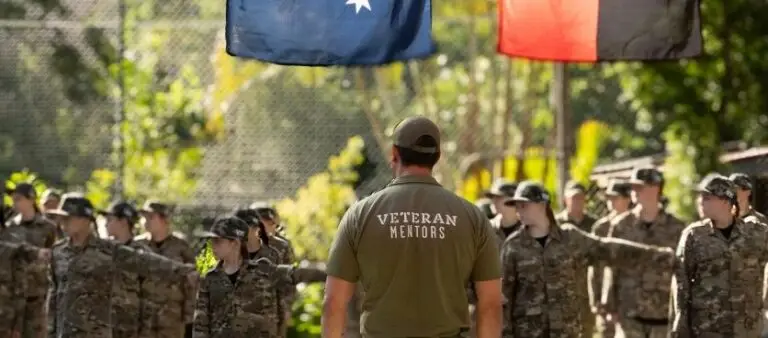
At fourteen, Eric joined the Army Cadets, and for the first time, he encountered a structure that gave him clarity and direction in ways that traditional schooling had not. School had often felt like something to endure rather than something to inhabit fully, but cadets offered a different experience, one where expectations were clear, progress was measurable, and belonging was earned through participation and effort rather than personality or academic performance.
“There was probably a thing when I was at school feeling disconnected,” he explained. “I always felt like that was just something that I was doing until I started my life… but when I was in the Army Cadets, I just felt more at home.”
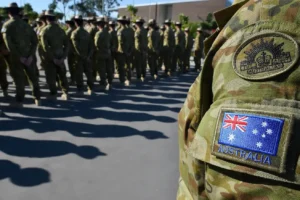
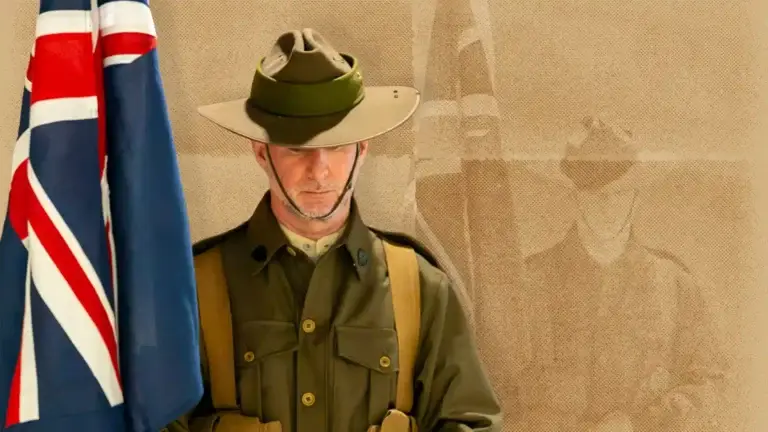
What cadets gave him was not simply military exposure, but a sense of alignment between who he was and what he was doing. It offered him the first glimpse of a future in which he could contribute meaningfully, and that sense of direction would carry him forward when he enlisted in the Australian Army at 17, stepping into a role that would shape not only his early adulthood, but the trajectory of everything that followed.
The education of experience
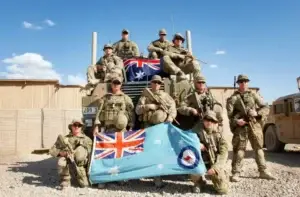
Eric joined the cavalry at a time when Australia’s operational commitments meant that deployments were not hypothetical possibilities, but near certainties, and by the age of 22 he found himself in Baghdad, operating in an environment where unpredictability was constant and the margin for error was often measured in seconds.
“You fly in on a Black Hawk and you hear a noise and you think, are we getting shot at?” he recalled. “You’re just hypervigilant… but after a while, you get a feel about the place. You know what works and what doesn’t.”
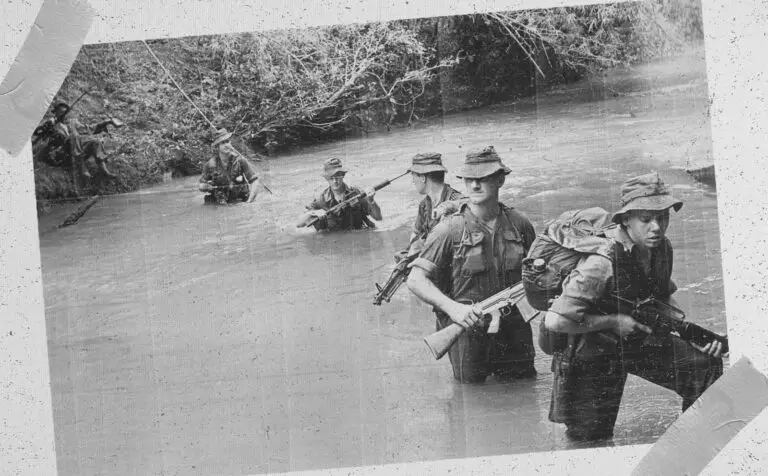
That sense of awareness did not emerge from confidence alone, but from repetition and responsibility, as Eric and his unit escorted personnel through volatile areas, maintaining security in conditions where threats were often invisible until they were immediate. Over time, the unfamiliar became familiar, not because the risks disappeared, but because his capacity to operate within uncertainty expanded.
He learned that performance in those environments depended on preparation and trust, on the quiet understanding that each individual was responsible not only for themselves, but for everyone around them. The equipment mattered. The systems mattered. The routines mattered. Yet behind all of those elements was something more fundamental, which was the understanding that reliability was ultimately about people, about ensuring that others could depend on the decisions and actions you took under pressure.
Those lessons became embedded in him, shaping not only how he operated as a soldier, but how he would later approach entirely different roles that, on the surface, appeared unrelated but were connected by the same underlying principles.
Loss, responsibility, and the weight of survival
His deployment to Afghanistan brought with it a different kind of challenge, both operationally and emotionally, exposing him to environments that felt profoundly removed from anything he had previously experienced.
“I remember going out and it was just nothing like I’d ever seen,” he said. “It felt like something out of another world.”
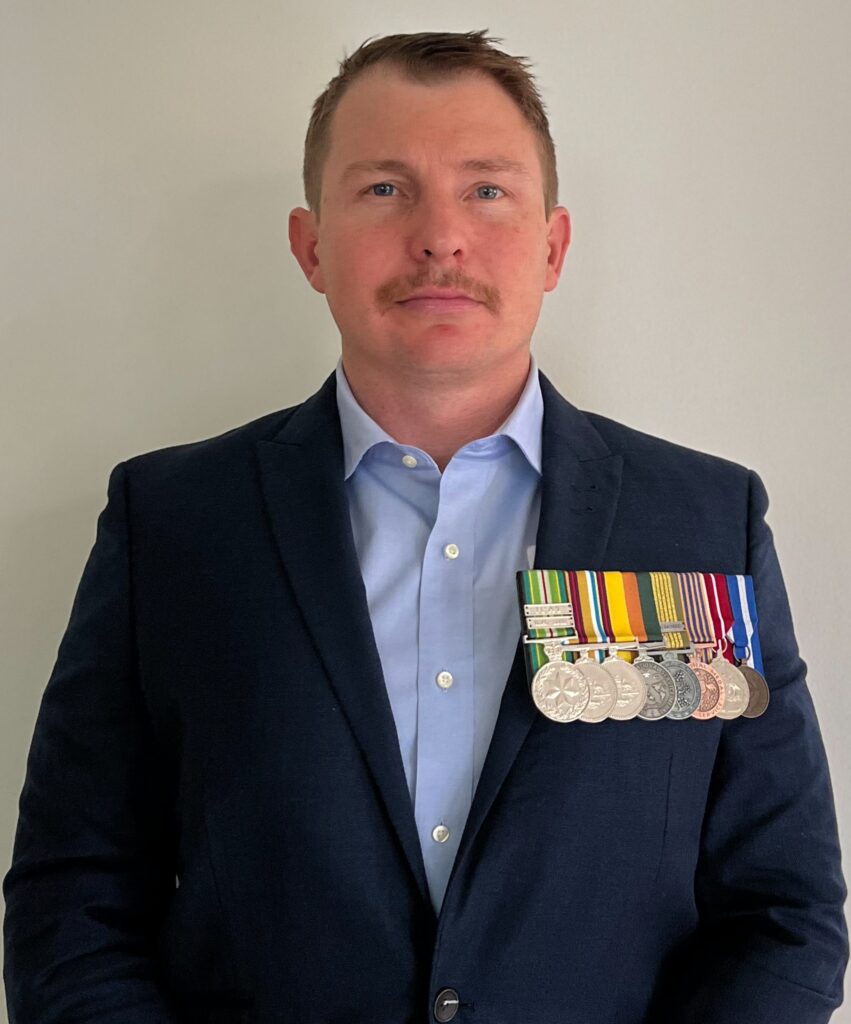
It was during this time that Eric experienced the loss of a fellow soldier, David Pearce, whose vehicle was struck by an improvised explosive device. Pearce was more than a colleague; he was someone who embodied the protective, steady presence that holds teams together in environments defined by uncertainty.
“It just hit us really hard,” Eric said. “We were the lucky ones… and then suddenly, we weren’t.”
What remained with Eric was not only grief, but a heightened awareness of the fragility of certainty, and of how quickly the line between safety and loss could disappear. It reinforced the reality that preparation could never eliminate risk entirely, and that survival was often shaped by factors beyond individual control.
At the same time, it deepened his sense of responsibility, not only toward those he served alongside, but toward the broader meaning of service itself, and what it meant to continue forward when circumstances changed.
Carrying service into civilian life
When Eric left the Army, the transition did not feel like an ending so much as a continuation, because the instinct to serve did not disappear when he removed the uniform. Instead, it found expression in a new form when he joined Queensland Fire and Rescue, entering another profession where preparation, teamwork, and trust were fundamental to outcomes.
He had originally planned to pursue a career as an Army pilot, and when that path closed unexpectedly, the fire service offered an alternative that preserved the sense of purpose he had come to rely on.
“I had this job with the fire service, and I remember thinking, this is it,” he said. “This is my ticket out. I’m free.”
Yet the freedom he describes was not freedom from responsibility, but freedom to apply his experience in a new context, where the stakes remained real and the work remained meaningful. Firefighting gave him continuity at a time when many veterans struggle with disconnection, allowing him to remain in environments where discipline, preparation, and trust continued to shape daily life.
Partnership, family, and a shared resilience
Outside of firefighting, Eric’s life expanded in ways that would prove equally significant when he met Alexis, whose own experiences reflected a different but complementary form of endurance. Her background in travel, her completion of major international marathons, and her willingness to push herself physically and mentally created a shared understanding between them that transcended profession.
Their relationship was built on mutual respect for resilience and for the effort required to recover, adapt, and continue forward. Together, they built a family, raising their sons with an emphasis on experience and exposure, believing that growth comes not only from instruction, but from encountering the world directly.
“We want them to get out and experience things,” Eric said. “It’s amazing how much they learn just by being out there.”
Fatherhood deepened his sense of continuity, connecting his past experiences with his hopes for the future, and reinforcing his commitment to building something meaningful that extended beyond himself.
Reinvention as continuation, not departure
Eric’s eventual role as a co-founder of On Track Meals did not emerge from an ambition to become an entrepreneur, but from the accumulation of everything that had come before, including his military experience, his firefighting career, and his exposure to environments where preparation and reliability shaped outcomes.
He approached the challenge with the mindset he had developed over years of frontline service, focusing not on novelty or recognition, but on usefulness and reliability, and on ensuring that what he created would genuinely support those operating under pressure.
Even as the company grew, he remained a firefighter, maintaining the connection to frontline environments that had shaped his thinking and reinforcing the continuity that defined his life.
He did not leave service behind when he entered business. He carried it forward.
The thread that connects it all
Looking back, Eric does not see a life defined by abrupt reinventions, but one shaped by steady progression, in which each experience built on the previous one, strengthening his understanding of responsibility, resilience, and contribution.
From cadets at fourteen, to deployments overseas, to firefighting and entrepreneurship, the environments changed, but the underlying purpose remained remarkably consistent. Each chapter expanded his capacity to contribute, allowing him to apply what he had learned in new ways without losing the foundation that had shaped him.
His story demonstrates that reinvention is rarely about abandoning who you were, and is far more often about carrying forward what matters most, allowing experience to refine purpose rather than replace it.
Eric Atkinson did not leave his earlier identities behind. He built upon them, creating a life defined not by titles, but by continuity, responsibility, and a deeply ingrained commitment to supporting others, wherever that responsibility required him to stand.
This article is based on discussions with John Coutis.