Transition out of uniformed service brings a loss of structure, identity, and belonging that many are not prepared for, particularly when it occurs suddenly or without support. First-hand experiences from military and emergency service personnel show how deeply service shapes identity, and why navigating life beyond it requires deliberate preparation, personal agency, and systems that recognise transition as an ongoing process rather than a single event.
Standing among the attendees at the 2026 Frontline Mental Health Conference, I found myself struck by a singular and unavoidable truth that many of us spend our entire careers trying to outrun.
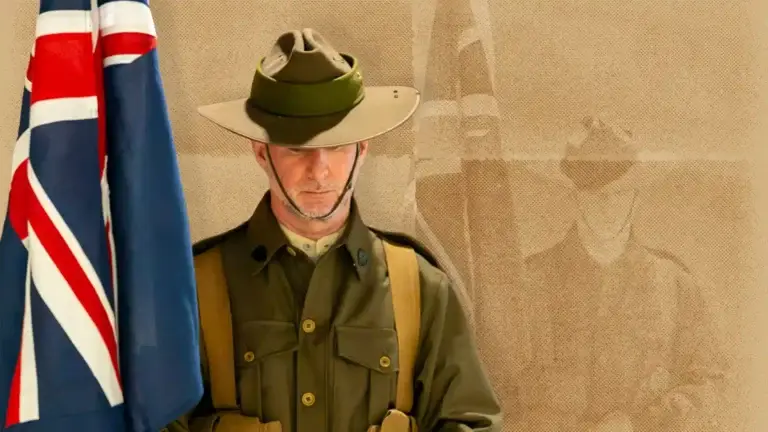
Every person who wears a uniform, whether it’s the disruptive pattern of the military or the high-visibility vests of our emergency services, will one day take it off for the last time. For many, this moment is not the triumphant finish line they imagined during their first week of training. Instead, it often marks the start of a jagged descent into a psychological void where the question of who we are without our rank begins to echo with a haunting, daily persistence.
The insights shared by Megan Fry, a clinical psychologist, and Tim Peck, co-director at Responder Assist, a centre of excellence for emergency worker mental health, suggest that this transition doesn’t have to be a collapse of the self, but rather a smooth and intentional re-expression of service.
For me, this truth was personal and sudden. My transition was made for me when I was medically discharged from the Australian Defence Force (ADF) with no warning, no notice, and no prior appraisal to indicate a loss of determination. I was simply notified and, in an instant, felt disregarded as the gates closed behind me.
To understand why a smooth transition is so elusive, we must first confront the reality of what Megan Fry describes as the Military Mode. The military doesn’t just hire a person; it socialises them through a structured process designed to overcome natural human resistance to violence and replace individual identity with a collective and mission-focused one.
This mode is a psychological survival strategy that is incredibly effective in combat, yet it often becomes an ‘identity trap’ once the mission ends. Tim Peck noted that the very traits making someone a superstar on the frontline, like hypervigilance and emotional suppression, are the same traits that lead to disconnection at home. When we leave, we often find ourselves asking, “If I’m not a commando, then who am I?”, realising that we have become strangers to our own civilian lives.
The harsh realities of sudden transition
When I was told to leave the ADF, I was an Explosive Ordnance Disposal (EOD) Technician instructing and supporting mission-oriented exercises for overseas conflicts. I was a soldier, a friend, a father, a husband, and a sportsman; however, because I saw my greatest identity in being an EOD Technician, I felt my life was ripped out from under me.
This was the result of the intense conditioning I had experienced since joining the army at 18. I believed in the culture, lived in defence housing, and relied on military doctors for every ailment. I knew nothing else. Then, suddenly, I had to fight for my own path with no formal transition program available.
I presented my commanding officer with an ultimatum: support my transition into a university degree or I would go to the media with a previous Chief of Army’s written promise that the military would always have a role for me. Even then, as I navigated university while remaining tethered to defence functions and hospitals, my transition was filled with relapses. The contextual differences between a soldier and a civilian—differences in timeframes, voice tone, and preparation—created a friction that was difficult to soothe.
Finding healing in communal spaces and personal growth
The Rewire program, presented by Megan Fry, offers a clinical breakthrough for those who feel stuck in this cycle by utilising Schema Therapy to address the Military Mode directly. One of the most profound realisations from her research is that veterans often resist traditional help because ‘military people don’t like to be wounded’.
The program identifies that many people serve during their key developmental years, between ages 17 and 25, meaning they have answered life’s biggest existential questions through military values rather than personal growth.
This creates a painful developmental gap where Megan says 30 and 40-year-old military people transition with what is essentially the mind of a 20-year-old, but the body of a 60-year-old. By treating the group environment as a corrective emotional space, Rewire reportedly lets participants move past the false sense of connection provided by the institution and begin building a secure, individualised identity.
While the clinical side of transition is vital, Tim Peck’s insights on the power of choice remind us that radical personal agency is the ultimate tool for empowerment. He spoke candidly about the ‘hollowness’ that follows an inglorious departure from service, cautioning that waiting for the organisation to fill that void is a recipe for isolation.
He warned his peers that, if your plan for transition is, “I’m going to go home and sit and wait for members to reach out”, good luck. The hard truth that many of us are reluctant to face, while still in the heat of the job, is that a long career of dedicated service does not guarantee a peaceful mind or a happy retirement.
As Tim articulated so clearly, 30 years of service doesn’t buy you a happy retirement; the work is still to be done. The responsibility to bridge the gap between our professional identity and our human self belongs to us alone.
Finding a new path of service
For me, the journey toward a new identity required constant reflection and the support of health professionals to find a purpose greater than my rank. I eventually became an Occupational Therapist (OT), driven initially by a sense of defiance and the need to prove to the ADF that I was better than the ‘broken’ version they discarded.
I used the frustration I felt toward the military medical system as fuel to drive my goal of supporting other veterans. My transition was bigger than just the immediate environment around me; it was a complex navigation of micro and macro systems, made even more challenging when my marriage broke down and I had children to support. It was through this struggle that I learned how to integrate my past into a new, meaningful future.
Building on the openness of a smooth transition requires us to start planning for the end on the very day we begin our service. We must move away from a culture that only provides support when someone finally hits the wall and embrace a model of proactive growth instead. This means recognising that our service is merely a chapter in a much larger story. We are more than our ability to manage a crisis or our capacity for controlled aggression.
When we finally step away from the frontline, the goal should not be to discard who we were, but to integrate those experiences into a more complete version of ourselves. As Tim Peck beautifully concluded, transition isn’t the end of service, it’s just a service expressed a little differently. By choosing to engage with our transition with the same discipline we gave our careers, we ensure that our final act of service is to ourselves and our families.