Transition from military service, particularly where injury is involved, requires a long-term approach to rehabilitation that extends beyond initial recovery and views it as an ongoing process shaped by individual needs, capability, and access to appropriate care. Maintaining independence depends on strategies that prioritise preservation, adaptation, and access to appropriate support systems.
My motto, ‘Battle for Life, Life is Heart’ is my guiding principle because I believe we all want to be seen and to leave a legacy, despite what life throws at us. For me, that legacy is teaching my children that we must accept our own choices, the consequences that follow, and how to get back up, regardless of whether the dust has settled or not.
I have been a practicing Occupational Therapist (OT) for over a decade after being wounded overseas, and I’ve had the privilege of seeing the transformative power of rehabilitation up close, both physically and psychologically.
It’s a journey I’ve walked myself and one I now guide others through. The military to civilian life transition introduces a unique set of challenges, particularly for those with physical (visible) and psychological (invisible) injuries, which can be further compounded by the loss of limbs and sensory function. But it’s crucial to remember that these challenges don’t define us. Instead, they present an opportunity to reclaim our lives, focusing on our capabilities, not on our limitations.
It’s a journey I have walked myself. While working as a Bomb Disposalist, I encountered multiple barriers and challenges in various settings within the Australian Defence Force (ADF) and the community. Regardless of setbacks in different environments and contexts, whether it was being dragged through courts for equal rights to be a father to my children, facing judgement from the community, or trying to transition into civilian life with no civilian qualifications, compounded by amputations, a loss of sight, and visible facial scarring, I always had to look deeper and find a reason to get up and move forward. , It’s within this context that the focus shifts from simply surviving to proactively thriving. The initial stages of recovery often centre on addressing immediate injuries. However, the true path to a life of independence and purpose lies in embracing a long-term strategy of preservation. This is about taking control of our physical and psychological wellbeing to prevent further decline and to build a foundation for a fulfilling life.
I share the following as a health professional and a veteran who continues to find his path while living with injuries.
Preservation as a proactive approach to lasting independence
Preservation is the cornerstone of a sustainable, independent life post-service. It’s about being proactive and strategic, learning how to manage our physical and psychological resources to prevent further decline, and ensuring we have the energy for what truly matters. I’ve had veterans comment to me that I’m lucky I don’t have mental health issues, and therefore cannot understand what they are going through, to which my reply has always been, “I’m not here to judge you, so I ask that you don’t judge me. No one can know what is happening in someone else’s life.” ” I have learned multiple strategies to help me cope both physically and psychologically with relapses that can occur with no warning. By defining my conditions – and not letting my conditions define me – I have been able to preserve my physical function and emotional wellbeing through the following strategies.
- Task adaptation
This is the art of performing activities in a way that minimises physical strain. For a veteran with a back injury, this might mean learning to sit on a small stool while doing dishes to prevent bending or using a long-handled dustpan to avoid stooping. It’s about breaking down complex tasks into smaller, more manageable steps, like preparing vegetables a day in advance to conserve energy for cooking a full meal. These small, thoughtful adjustments can make the difference between a day filled with pain and one filled with purpose.
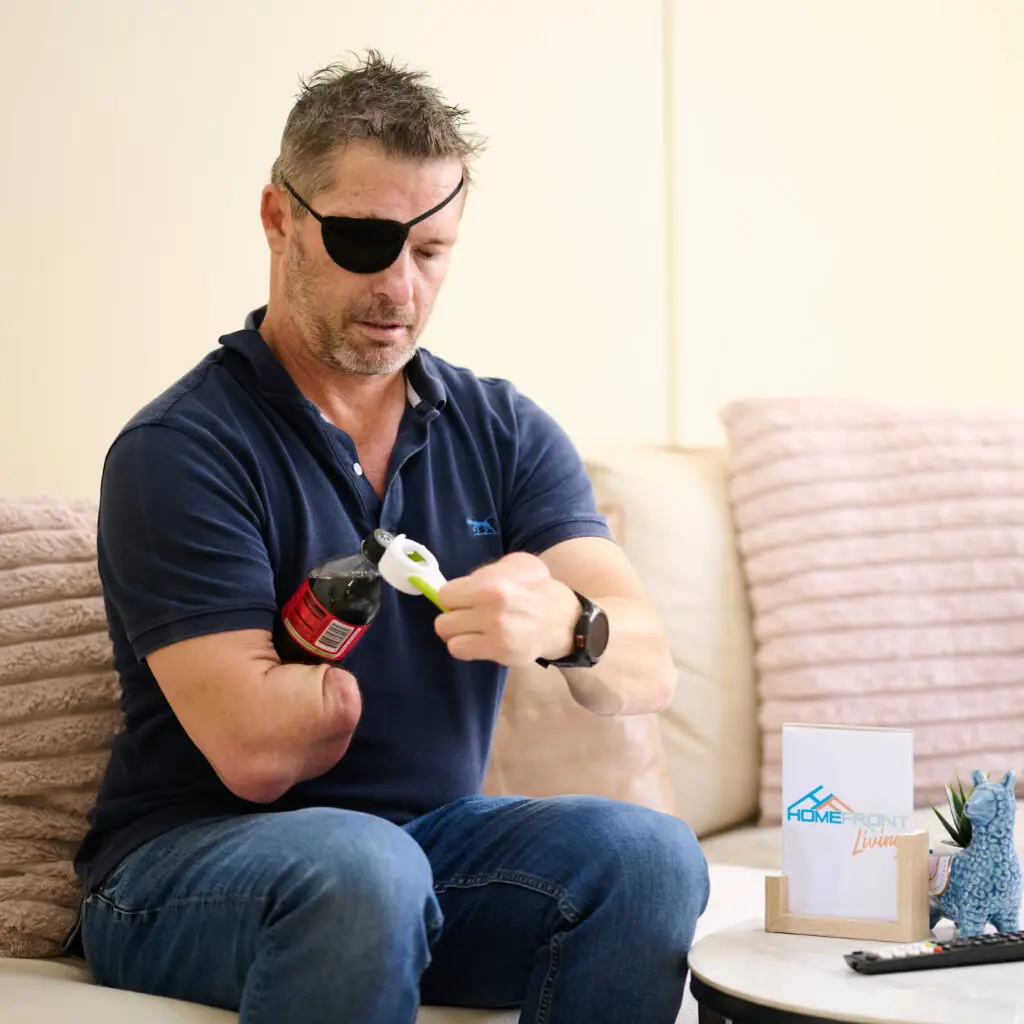
As a veteran with only three fingers and a visual impairment, I’ve had to adapt tasks with a healthy dose of humour and a touch of stubbornness. I’ve become a master of pre-positioning, a sort of real-life memory game where I have a methodical way of finding tools and everyday items, because who needs a full set of fingers when you have a system? I’ve adapted my wardrobe to include clothes with fewer buttons and zippers, or I simply have them altered. With cooking, I use smaller pots of water to reduce weight, which helps to prevent wrist and finger pain from flaring up. Task adaptation can also include online shopping or click-and-collect services, especially for grocery shopping on those days when physical and emotional challenges feel overwhelming. I also read to my children as fluently as possible by either taking photos of the pages beforehand or reading them silently to myself first, so I can be present and participate with my child. It’s a way of saying, “I’m still in the game, just playing by my own rules.”
- Pacing
This is an essential skill for those managing chronic pain or fatigue. The instinct to ‘push through’ is deeply ingrained in our military training, but it can be detrimental in civilian life. Pacing is about recognising our body’s signals and intentionally balancing activity with rest. It could look like scheduling a 15-minute break after every hour of gardening or choosing to do grocery shopping on a less-crowded weekday to reduce stress and physical exertion. This isn’t a sign of weakness; it’s a strategic way to manage our energy and participate more fully in the activities we love.
I have learned the hard way the need to pace activities to reduce elaborate pain and preserve my joints. After repetitive use of my left upper limb, my joints get stiff and ache, which in turn causes my back and hips to ache due to a muscular imbalance. My solution is a highly strategic, almost military-style cleaning schedule. I clean two rooms every second day, allowing the weekend for rest and play, plus everything has a home (things go back after use). I wash my car, followed by a few hours of rest, and then, while listening to my favourite playlist, I tackle the inside. It’s a system that works for me, ensuring I don’t crash and burn.
- Energy conservation
This simple, yet profound, concept means making our environment work for us, not against us. In the kitchen, this could mean storing frequently used items on the counter or in an easily accessible cupboard to avoid reaching or bending. In the laundry room, it might involve using a basket with wheels to transport clothes. Implementing these small changes can save our limited energy for meaningful activities, like spending quality time with family, volunteering, or pursuing a hobby.
I’ve put all my everyday used items between waist and shoulder height so I can easily reach and grasp them with my limited hand function. I also pre-position things to serve as reminders to complete tasks and to reduce overexerting myself during the day, like a kind of personal airdrop for my to-do list.
- Environmental supports
Making simple modifications to our home or workplace can enhance safety and ease. Installing grab rails in the bathroom, using non-slip mats in the shower, or adding a chair in the entryway to sit on while putting on shoes are all examples of supports that can significantly increase our confidence and independence.
Unfortunately, this is where my pig-headedness comes in! I don’t believe in too many modifications because I wish to be seen as ‘normal’, a definition society has kindly provided for me. So, I generally don’t use kitchen or self-care aids. I strongly believe in the principle of “if I don’t use it, I will lose it,” so I do what I can as normally as possible. The environmental modifications I have made have been focused on taps and door handles. This is because continual joint displacement has led to an increase in finger pain, making lever handles and taps the best option for me. It’s a compromise between my stubbornness and my sanity.
- Mental health and wellbeing
This is not separate from the physical strategies of preservation; it’s the foundation. Task adaptation, pacing, and energy conservation are powerful tools because they build a sense of routine, control, and engagement, which are core principles of occupational therapy. These proactive physical adjustments reduce stress and frustration, creating a more stable emotional landscape. However, physical strategies alone are often not enough. True resilience comes from a holistic approach that integrates these physical methods with targeted psychological interventions, guided by a trained medical and psychological team. This integrated strategy helps you cope with challenges while actively building a fulfilling and meaningful life.
Over the years, I’ve learned that a single strategy isn’t enough to handle the complexity of my thoughts and emotions. Like a well-equipped soldier, I need a personalised toolkit to get up and keep moving forward. My approach is a blend of evidence-based therapies and a bit of my own stubbornness:
- Acceptance and Commitment Therapy (ACT): this has been a game changer. It taught me to stop fighting the pain and frustration, and instead, accept that these feelings are part of my experience. My mission isn’t to get rid of them, but to commit to my values and move forward with purpose.
- Exposure therapy: when I feel overwhelmed, I’ve learned to face challenging thoughts or situations gradually. This has helped me build confidence and show myself that I can tolerate discomfort without it completely overwhelming me.
- Mindfulness: this is my anchor. It helps me stay in the present moment, observing my thoughts and feelings without judgement. It’s a powerful way to quiet the noise and be more present with my family.
- Compartmentalising: this isn’t in any textbook, but it works for me. It’s about putting certain thoughts and feelings into a ‘box’ so I can focus on the task at hand. Some call it avoidance, but I call it a tactical manoeuvre. It’s a way for my stubborn, pig-headed self to function and live my life on my own terms.
Adaptation and tailoring our world for enhanced function
When injuries lead to lasting limitations, adaptation becomes a powerful tool. This is where we tailor our environment and use specialised tools to overcome challenges, opening new possibilities for independence and wellbeing. This proactive approach is not about changing ourselves, but about changing our surroundings to allow us to thrive.
Home modifications are a critical component of adaptation. Programs like the Australian Department of Veterans’ Affairs (DVA) Rehabilitation Appliances Program (RAP) are specifically designed to help veterans with this. The RAP provides a range of essential aids, equipment, and modifications to eligible veterans. For a veteran with an amputation, this might mean installing ramps for easier home access while, for someone with a spinal injury, it could involve reconfiguring a bathroom for wheelchair accessibility with grab rails.
Assistive technology (AT) is another cornerstone of adaptation covered by the RAP. This includes a wide array of items, from basic daily living aids to more complex medical equipment. For example, a veteran with arthritis might use specialised kitchen tools with easy grip handles, allowing them to continue cooking. A veteran with significant mobility issues could be provided with an electric scooter to navigate their community. For someone with hearing loss, assistive listening devices can be life changing. These tools are the keys that unlock new levels of independence, so we can continue to engage with the world on our own terms.
As a veteran who has navigated these challenges, I’ve learned that preservation and adaptation are not just therapeutic strategies; they’re a philosophy for living. My pig-headedness has kept me conditioned, but I’ve also had to be smart. My RAP attempts have included new taps and door handles to help with joint dislocation, poor dexterity, and grip strength. It’s a small compromise, but it’s one that has saved me a lot of pain and frustration. While I haven’t needed to use the RAP for many home modifications, I know how to access it for support. The program has been a fantastic resource for my visual aid needs, and it’s also provided vehicle adaptations for me to drive safely and independently, especially with my children in the car. Reclaiming your life is a process, and it’s one that can be profoundly rewarding. By focusing on preservation and adaptation, we can build a future that is not defined by our injuries, but by our resilience, purpose, and unyielding spirit.
Understanding the path to re-engaging with medical support
Re-engaging with medical support is a critical part of a veteran’s journey toward lasting independence. While the instinct to ‘go at it alone’ is a common trait among service members, true strength lies in knowing when and how to seek help! A vast network of professionals and organisations is dedicated to the wellbeing of Veterans and their families. This network includes GPs, specialists, Allied Health Professionals (AHPs), and crucial support groups like Open Arms, the RSL, and other Ex-Service Organisations (ESOs). The DVA’s RAP is also a fantastic resource that provides equipment and modifications based on a clinically assessed need.
The path to re-engaging with this support is designed to be clinically guided and straightforward. It doesn’t matter if you’ve previously stepped away from care; you can always seek support again. The process begins with a visit to your trusted GP, who can provide the necessary referrals under your DVA health card (Gold or White). If you are specifically seeking tools and aids, your GP will refer you to a specified AHP, like an OT or physiotherapist. This professional will then conduct a clinical evaluation to determine which specific aids or equipment would best address your needs. By understanding and using these pathways, you can ensure you are not only getting the support you need but also building a comprehensive care team that understands your unique experiences. The process is clinically guided and supported by DVA’s Allied Health Professional (AHP) treatment cycle, and a referral to an Allied Health Provider will last either 12 sessions or one year, whichever ends first.
Reclaiming your life and independence after service is a deeply personal journey. It’s not a one-size-fits-all process and often requires a long-term mindset grounded in purpose, self-compassion, and the right supports. It’s important to remember that every step you take, whether through physical preservation, emotional resilience, or smart adaptation, is a testament to your strength, not your setbacks! As both a Veteran and an OT, I believe we all deserve the opportunity to live life on our own terms; to claim our own stories and ensure that neither our injuries, nor the perceptions of others, define our identity and future.