Founders with military and emergency service experience are building businesses that solve practical problems in high-pressure environments. On Track Meals is just one example of these businesses moving into commercial markets, where reliability, logistics, and usability influence adoption across emergency services, outdoor industries, and preparedness sectors.
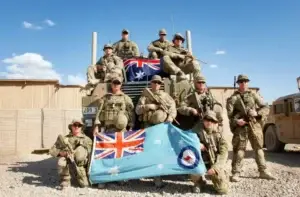
Eric Atkinson never intended to start a food company. His career had been defined by service, structure, and environments where reliability was not a preference but a requirement. First as a cavalry soldier in Iraq and Afghanistan, and later as a firefighter with Queensland Fire and Rescue, he had spent most of his adult life operating in conditions where preparation shaped outcomes, logistics determined success, and small failures could quickly become serious problems.
Entrepreneurship was not part of the plan, but solving problems was. The moment that would eventually reshape his future arrived deep in Papua New Guinea’s jungle, along the Kokoda Track. Eric had joined a trekking expedition as support crew, drawing on his military experience to help guide groups safely through one of the world’s most physically and emotionally demanding environments. These expeditions relied on careful planning, and food was one of the most critical components. Meals needed to survive days of humidity, rough handling, and transport without refrigeration, while still providing enough nutrition to sustain participants through long, punishing days. In environments like these, food stops being a lifestyle choice and becomes operational infrastructure. It affects safety, morale, and the ability to continue.
When the expedition’s long-standing food supplier suddenly shut down, the impact was immediate. There was no ready replacement, and without a reliable food solution, the expeditions themselves were at risk. For Eric, however, the problem was familiar.
He had seen firsthand how deeply performance and morale were shaped by something as simple as a decent meal. During his military deployments, ration packs were essential but often uninspiring, designed primarily for durability rather than usability. He understood how much difference it made when food delivered not just calories, but comfort and energy in difficult environments. He also understood something else that would later prove decisive: when a product is used in extreme conditions, it must be designed for reality, not theory.
Standing on that jungle track, Eric recognised that the supplier’s collapse was not just a logistical disruption. It was a market gap. More importantly, it was one he knew how to fill.
Experience creates opportunity
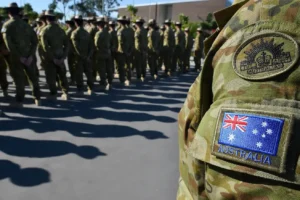
Eric’s ability to recognise the opportunity came from years of accumulated operational experience. Raised in Brisbane’s western suburbs in a family defined by service, he enlisted in the Australian Army at just 17, drawn to the structure and purpose it offered. He served in the cavalry from 2001 to 2008, deploying to Iraq and Afghanistan in roles that demanded constant situational awareness, discipline, and resilience.
In those environments, supply chains were fragile and conditions unpredictable. The difference between a successful mission and a failed one often depended on the reliability of the systems supporting it. Eric learned early to think in terms of contingencies, efficiency, and user needs. Every piece of equipment had to justify its place, and every solution had to work under pressure.
After leaving the military, he continued his path of service by joining Queensland Fire and Rescue. Firefighting presented a different type of challenge, but the same underlying realities. Long shifts, hazardous environments, and physically demanding work meant nutrition was not simply a lifestyle choice. It was part of operational readiness.
At the time, these experiences felt like chapters in a career defined by service. It would only later become clear that they were also preparing him to become a founder.
Building a solution grounded in lived reality
When the Kokoda supplier collapsed, Eric and his business partner Alexis made a practical decision. Rather than searching indefinitely for a replacement, they began experimenting with producing their own meals. The goal was not to build a brand, but to restore operational stability.
“Meals were a big logistical part of Kokoda,” Eric said. “You want good food for your crews. And all of a sudden, we just couldn’t get the product anymore.”
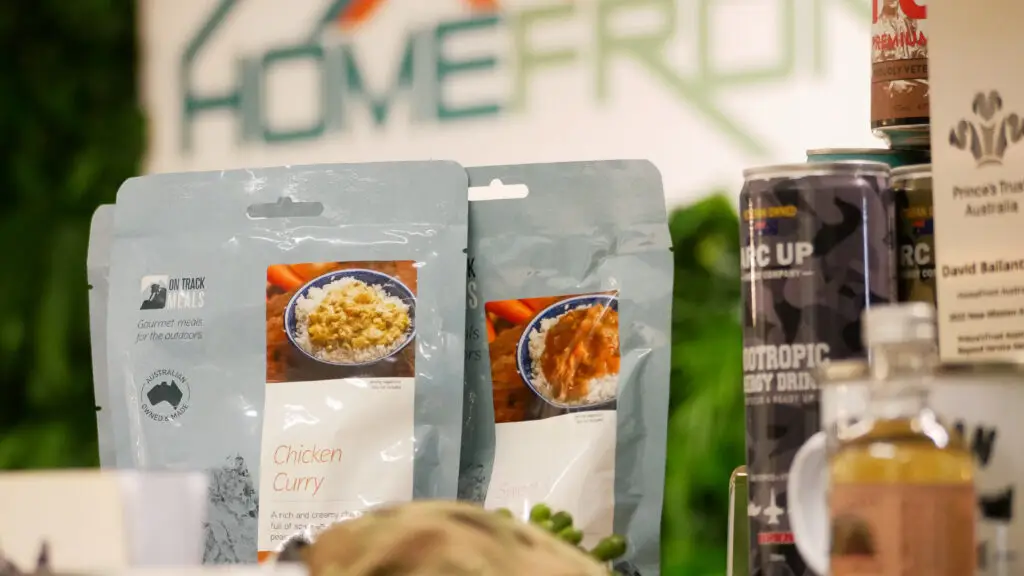
Drawing on military retort packaging technology, they developed shelf-stable meals that could be eaten cold or heated in boiling water.
“They’re not dehydrated, they’re not freeze-dried,” Eric said. “You can eat them as is, or heat them in boiling water. That’s important in emergency situations where you might not have clean water.”
The meals were designed to withstand extreme conditions without compromising taste or nutritional value. This combination, while technically complex, addressed a simple and overlooked need: people operating in demanding environments still wanted food that felt human.
Eric’s military experience shaped every aspect of the product. He understood the frustration of carrying food that failed to satisfy, and he knew that small improvements could have outsized effects on morale and performance. Alexis brought complementary strengths, applying her operational and creative expertise to shape the product’s identity and presentation.
She played a decisive role in transforming On Track Meals from a functional field solution into a credible, scalable brand. In the early stages, the meals were distributed in plain silver retort pouches with simple labels, designed purely for utility rather than presentation. As demand grew beyond expedition use, Alexis led the evolution of the brand’s visual identity, refining the packaging, structure, and overall customer experience so the product could sit confidently alongside established retail offerings while still retaining its operational integrity. Her approach balanced discipline with adaptability. Products were not treated as fixed. Meals were regularly reviewed, rotated, improved, or reintroduced based on real-world feedback and field performance. This process ensured the range remained relevant, practical, and responsive to the needs of the people using it. Together, Eric’s frontline experience and Alexis’ operational and brand leadership created a partnership grounded in both function and credibility, allowing On Track Meals to scale without losing the authenticity that defined its origins.
The initial batches were created out of necessity, but feedback quickly revealed broader potential. Participants noticed the difference. The meals were more enjoyable, more practical, and better suited to the environments in which they were used.
What had begun as a solution to a specific operational problem began to evolve into something larger.
Crisis accelerates clarity
Like many emerging businesses, On Track Meals faced a defining moment during the COVID-19 pandemic. International travel stopped almost overnight, and the trekking expeditions that had provided their initial customer base disappeared.
For many founders, this would have marked the end of the venture. For Eric and Alexis, it forced a strategic reassessment.
They recognised that the underlying need for their product extended far beyond trekking expeditions. Australia had millions of people operating in environments where reliable, shelf-stable nutrition mattered. Hikers, campers, emergency responders, and frontline workers all faced variations of the same problem.
Instead of waiting for travel to resume, they repositioned On Track Meals as a broader commercial offering.
They began expanding distribution, first through independent retailers, then through online channels. The response was immediate and sustained. Customers recognised the authenticity of the product. These were not meals designed in isolation. They were created by people who understood the environments in which they would be used. This authenticity became a powerful competitive advantage.
Scaling through trust and relevance
One of the most significant inflection points came when emergency services began adopting On Track Meals. Firefighters, particularly those working extended shifts during bushfire seasons, needed reliable nutrition that could withstand unpredictable conditions.
For Eric, this represented both a business milestone and a continuation of his personal mission. As a firefighter himself, he understood the realities his customers faced.
“We supplied New South Wales Rural Fire Service,” Eric said. “That’s the biggest fire service in the world.” Eric understood firsthand what mattered in those environments. “Two things increase morale,” he said. “Getting paid, and good meals. We can’t do the first one, but we can definitely do the second.”
The company began expanding its product range to include specialised ration packs and operational support items, responding directly to the needs of frontline users. Each iteration strengthened the brand’s reputation, not through marketing campaigns, but through trust built in real-world conditions.
Rather than attempting to manufacture every component internally, On Track Meals adopted an Australian-first partnership approach. Instead of trying to replicate products that already existed, the company integrated complementary items from trusted domestic suppliers into its ration packs, supporting local industry while improving variety and usability for frontline customers. “Instead of trying to replicate everything and put our name on it,” Eric said, “we bring other Australian products into our ration packs.” This model allowed the company to focus on what it did best while building a broader ecosystem of Australian-made operational support.
Growth followed naturally. Retail presence expanded, online demand increased, and institutional customers began recognising the value of products designed specifically for operational environments. What distinguished On Track Meals was not just the product itself, but the clarity of its purpose.
Founder insight: building from understanding, not assumption
Eric’s path into entrepreneurship illustrates a pattern seen in many successful founders, though it often goes unrecognised at the time. The most effective innovations frequently emerge not from abstract ideas, but from lived experience.
He did not begin with a business plan. He began with a problem he understood deeply. This understanding let him create a product with immediate relevance and credibility. It also shaped how the company approached growth. Instead of trying to serve everyone, On Track Meals focused on serving specific users exceptionally well. This focus created a foundation for sustainable expansion.
As the company matured, Eric and his team began exploring global opportunities, attending humanitarian and disaster-relief conferences and engaging with organisations operating in crisis environments. The same principles that made the product effective in Australian conditions applied equally in international contexts. It’s not one-size-fits-all,” Eric said. “It’s about listening. What do people actually need? What works in that environment?” The potential was significant.
Service evolves into enterprise
Today, On Track Meals is scaling into one of Australia’s fastest-growing purpose-led food brands, supplying customers across multiple sectors and expanding its reach into new markets. Yet Eric continues to serve as a firefighter, maintaining the connection to the frontline environments that shaped both him and his company.
This dual role reflects the continuity at the heart of his story. He did not leave service to become an entrepreneur. He expanded his service into a different form.
On Track Meals exists because Eric recognised a gap and had the experience to solve it. Its growth reflects the broader relevance of that solution, and the universal need for products designed with genuine understanding of their users.
For Eric, the journey into entrepreneurship was not defined by ambition alone, but by responsibility. He saw a problem. He had the ability to address it. Building a company became the logical extension of that decision.
His uniform may have changed, but the mission has not, and he is still feeding the frontline. “If you’d told me in Afghanistan I’d end up doing this,” Eric said, “I think someone would’ve punched me in the back of the head.”
This article is based on discussions with John Coutis.