Accounts of Australia’s wartime experience often confront the limits of how suffering can be documented, remembered, and communicated across generations. Decisions about what to include or omit reflect trade-offs between accuracy, understanding, and respect, raising questions about how national memory balances confronting the realities of conflict with preserving dignity and legacy.
In the early 1960s, my dad sat down to a lunch in his Wagga Wagga home with his mother, his mother’s cousin Lloyd, and Lloyd’s two sons, who were on a brief visit passing through on their way to another town.
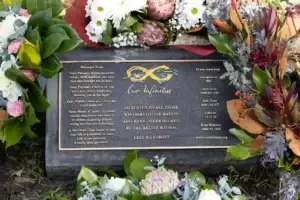
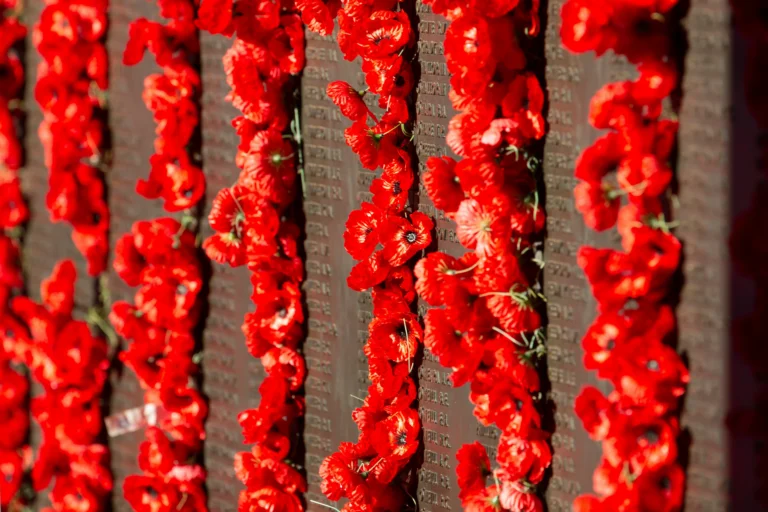
My dad was only 10 or 11 at the time; yet he remembers the lunch as though it was yesterday, because it was the one and only time his mother mentioned the death of her cousin, Owen (Lloyd’s brother) in 1945. Owen died on the Sandakan Death March 80 years ago—, only two weeks before the end of World War II.
At lunch that day, my dad was struck by my grandmother’s exchange of brief, heartbreaking words with Lloyd about Owen and his final days. It was clear the terrible manner of Owen’s death had left a lasting scar on the family, to the point where it was almost impossible to put into words what had occurred.
I was reminded of this story when I saw a report that Lynette Silver had published a book about the exceptionally courageous Vivien Bullwinkel and the Australian nurses who were murdered on Bangka Island in 1942, following the fall of Singapore to Imperial Japan. Lynette is a splendid writer who has, over the years, investigated well beyond the official histories to understand the human details and suffering of Australians during wartime.
Lynette sets out the full story of what happened to Vivien (the sole survivor) and the nurses, including rapes by the enemy that were covered up in official accounts after the war.
The question of why such terrible events would be covered up is a complex one.
Some people will say – and have already argued – that it is an issue to do with malicious control of the official narrative and the desire to protect families from the social shame associated with rape (of course, it is well understood now that this shame is not the women’s to carry; indeed, it is the perpetrators who should hang their heads in shame).
Sadly, this argument is likely true. However, there are also broader reasons why such detail of people’s suffering may not be revealed in full, as details were also not openly shared in relation to what occurred to many of the 15,000 young Australian men captured by the Japanese in 1942.
The injury inflicted on Australia’s national psyche through the enemy atrocities in WWII was profound and long-lasting. Even today, the distressing torture and deprivation that occurred to young Australians in captivity is not really talked or written about much and is only briefly covered around Anzac Day and Remembrance Day.
Put simply, it was and is too overwhelming for the general public to comprehend. So, it is little surprise that authorities – some of whom were well-intentioned, others perhaps less well-intentioned – censored details in public accounts in the years after the war, when national wounds were still open and raw.
When I wrote my previous Anzac Day piece, I struggled with describing the death of Driver Owen. In fact, I had discovered that there were various conflicting accounts. Even now, the Australian War Memorial lists Owen’s death in one record as ‘illness’ (although they acknowledge in another record he was killed). I was saddened when I eventually established that the ‘worst’ account of the manner of Owen’s death was likely the truest. This account is most in line with family letters and oral history.
I wrestled with whether to include one additional piece of information in the article, which effectively represented the worst aspect of the worst account of Owen’s final day. In the end, I did not include it. I worried if I included it, it would take too much attention away from Owen himself and all the brave young men who perished in similar circumstances.
The article is accurate in what I do say about what occurred. It is just that a key detail is left out. But I still am not sure I did the right thing.
Quite possibly, there are no ‘right answers’ to these questions. Indeed, perhaps there are only ‘least wrong’ answers.
For anyone who is called to write on these matters, you can only sincerely do your best to be open and honest, but trust that the details of what happened to the person’s body do not overshadow what ultimately should be remembered which is the person’s own gallant – and unconquerable – spirit and soul.
Originally published on LinkedIn: https://www.linkedin.com/pulse/ever-justification-cover-up-what-happened-australians-margaret-joseph-j6umc/?trackingId=JpCJRrk4QDK24HeAm5nbcg%3D%3D