Debate within the veteran community increasingly reflects broader societal tensions around identity, agency, and how disadvantage is framed and addressed. While many veterans face legitimate challenges in transition, health, and engagement with institutions, there is growing scrutiny of narratives that position grievance as a defining feature of identity rather than focusing on capability and contribution.
In the long shadows of this late afternoon of hyper-identitarianism, a warning light blinks to the Australian veteran community. Now is not the time for a relentless pursuit of victim-class status.
In broader society, the sun is setting on the grievance economy. Its dying light reveals an obvious ponzi, where the least impressive among us scurry to cloak themselves in the most generic hallmarks of their identity for social cachet.
Not their achievements, not their character, not their mojo. Just banal bits of cherry-picked demography selected for its grievance capital and filtered through a grievance lens.
But the lesson for veterans is not about demogrifting; those who do righteously, sincerely and effectively fight demographic causes in our community tend to do so from a substantive approach.
The lesson, and therefore the warning, comes from the identitarians who gravitated towards the siren song of victimology and the problems that it has brought to the victim classes it creates.
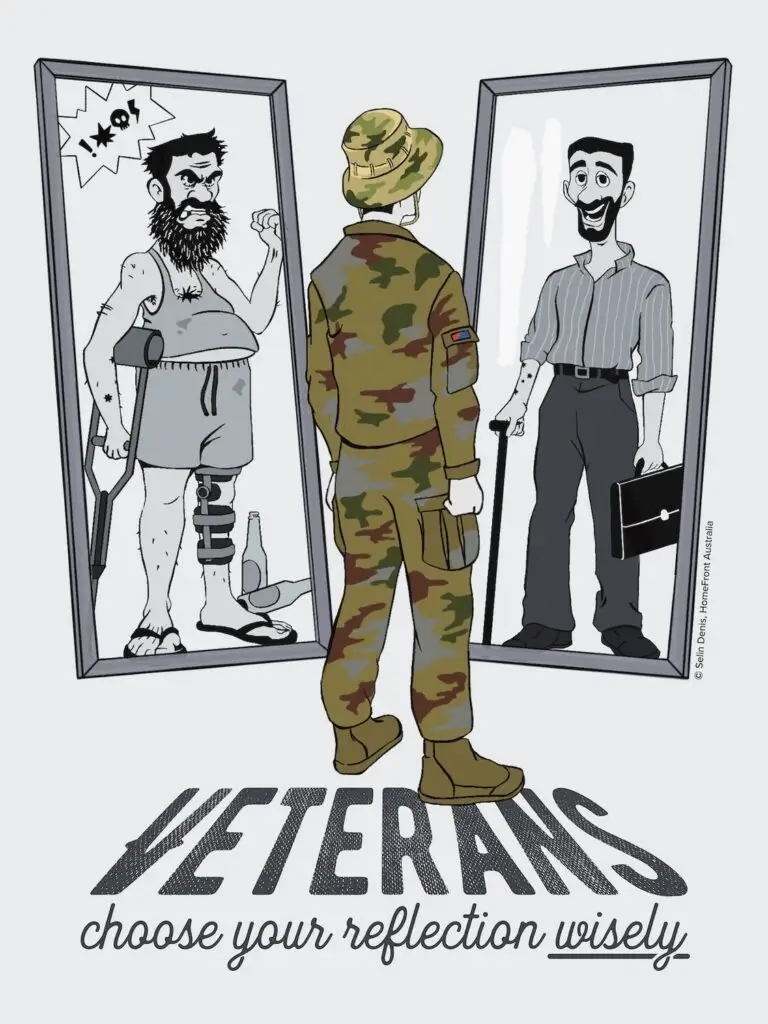
Victimology for me is simply the logical fallacy that “I am X, therefore Y is against me,” or the art of framing every challenge as proof of oppression.
This way of thinking is insidious specifically because at first it appears and feels so empowering. With a unifying banner to rally under, it’s easier to seek recognition or redress. That’s a good thing and look at all we’ve achieved.
The problem is that victimology is a slow-acting poison that spreads. Corrosive to an individual’s life, when it reaches critical mass for a whole identity group, dependency and diminishing returns follow.
Reducing individuals to predefined categories and filtering every experience through a grievance lens is dangerous for veterans specifically because there are plenty of reasons why veterans might feel aggrieved. Some have been wounded in service. Others have battled bureaucracy for years. Some struggle with transition, finding themselves at odds with a world that doesn’t operate by the principles they once knew. These are real challenges.
The danger lies in making these challenges the defining feature of veteran identity. It’s seductive because it provides an external locus of control.
After all, if the world is against me, I’m absolved of responsibility. If the system is unfair, if civvies don’t understand, if the job market is biased, then failure isn’t mine to own. Struggle gets explained in a way that removes personal agency.
If your first instinct is to view every setback through the lens of “hard-done-by veteran,” you may not see the other, more actionable reasons. Maybe that job wasn’t right for you, maybe you need to lift your game. Maybe it just didn’t pan out.
Meanwhile, there are those who trade in veteran grievance, a small but corrosive sliver running the length of our community. Touching politicians, charities, consultants, and media, they find fertile ground in perpetuating this narrative. After all, a veteran community that sees itself as permanently wronged is a community in need of saving. And wherever there is a demand for saviours, there is no shortage of those willing to step in.
This is the grievance economy at work. Thriving on perpetual discontent, rewarding those who amplify victimhood, sidelining those who champion resilience and capability. And like any economy, it has its beneficiaries – the self-appointed guardians, the professional sympathisers, the institutions that package struggle into a marketable product with little real care for the outcome.
But for those it claims to serve, it offers little beyond dependency and diminishing returns.
Ultimately, the veteran brand is at stake. Every veteran walking into a job interview, sitting across from an employer, or even meeting someone new is an ambassador not just for themselves but for the entire veteran community. If the dominant perception is that veterans are angry, aggrieved, or unable to transition, then the rising tide of opportunity recedes for all.
If, instead, the prevailing image is one of discipline, resilience, and adaptability, then doors open.
Beyond elections and commissions, the Australian veteran community has a real choice coming up.
We can go down the path of hyper-identitarianism, aligning with a fading but still real societal trend of grievance-based identity politics, or we can reject the siren song of victimhood and reaffirm what has always made veterans exceptional. Our ability to endure, to overcome, and to adapt.
I’m definitely not saying veterans don’t face real struggles, so please don’t misquote me.
But hardship is not an identity. A service history does nothing to shield you against life’s challenges.
The hardest part to swallow is that no one owes us a fair go just because we served.
The world still seems more than willing though to reward competence, work ethic, and character. And leading with those, rather than grievance, is a better legacy worth fighting for.