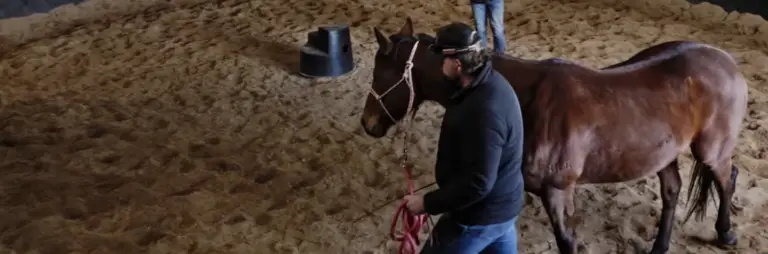
Severe injury in operational environments often marks the beginning of a prolonged process of recovery, adaptation, and renegotiation of identity, shaped as much by systems and support structures as by the injury itself. Michael Lyddiard’s transformation from Explosive Ordnance Disposal to occupational therapy shows how lived experience of trauma and rehabilitation can inform a continued commitment to service, with a focus on restoring function, agency, and participation in others.
Michael Lyddiard does not describe the explosion that ended his Army career as a turning point. That framing implies choice, or at least clarity. The blast was neither. It was abrupt, violent, and final in the ways explosions tend to be. One moment he was doing his dream job he had trained for over years, following procedures designed to keep others alive. The next, his right arm was gone, his right eye destroyed, and his body permanently altered.
What followed was not reinvention in any neat sense. It was survival, then endurance, then a long, uneven negotiation with pain, systems, identity, and anger. The purpose that Michael embraced following the accident was not discovered quickly, but taken, piece by piece, through insistence, resistance, and work.
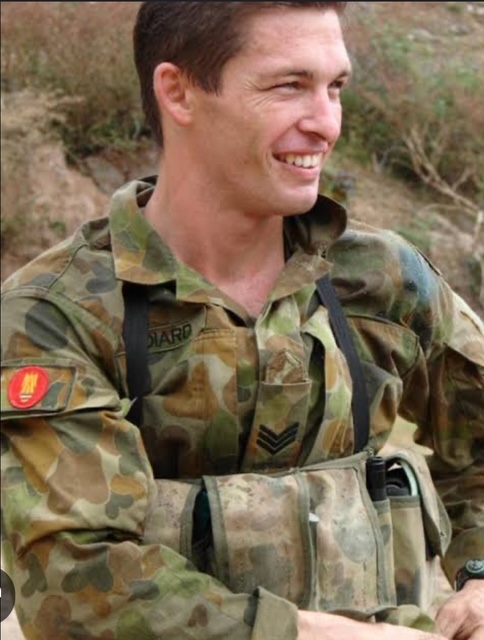
That purpose now lives in a different uniform. Michael is an Occupational Therapist, working with people whose lives have been disrupted by injury, trauma, and systems that struggle to see beyond limitation. He understands rehabilitation not as theory, but as something lived, because he has walked it and ultimately used it to rebuild a life that remains defined by service.
A life shaped early by service
Michael entered the Army young. At seventeen and the son of a Vietnam veteran, he enlisted already steeped in the rhythms and expectations of military life. Service was not an abstract ideal in his household. Discipline, responsibility, and follow-through were inherited values.
By seventeen, the Army had become his world. Structure and accountability suited him. He gravitated toward combat engineering, a field that rewarded adaptability and demanded composure under pressure. Engineers were not expected to blindly follow orders. They needed to think, build, dismantle, and problem-solve in environments where certainty was rare.
That aptitude eventually led him into Explosive Ordnance Disposal (EOD). EOD work strips bravado quickly. It can be slow, methodical, and unforgiving. “Control keeps people alive,” Michael explains. Speed and impulse do not. Every action is procedural and every decision final.
As conflicts intensified overseas, particularly in Afghanistan, roles blurred. The Army did not have enough Army EOD specialists to meet demand and so Army, Navy, and Air Force personnel were re-rolled into IED disposal roles. Michael became part of a small, exhausted cohort operating at the edge of capacity, tasked not only with neutralising devices, but gathering intelligence from them.
His work required proximity. Bomb suits and robots were not always available or practical and sometimes intelligence had to be gathered by hand. “The only way you get biometrics, construction methods, patterns, which is all intelligence that saves other people, is by exploiting the device,” he explains. That meant time, patience, and exposure.
The day the device detonated, Michael was following procedure. The blast did not kill him because the procedure worked — partially. But the blast was enough to end his operational career and take his right arm below the elbow, fingers from his left hand, his right eye, caused visual impairment in his left eye, and any assumption that life would resume as planned.
Recovery without gentleness
Survival marked the beginning of a second campaign — one fought in hospitals, rehabilitation wards, and bureaucratic systems not designed for nuance.
Recovery was neither linear nor contained. Physical trauma collided with psychological injury and Michael’s pain was constant. Sensory disruption and temporary blindness altered how he moved through the world, and fatigue became a baseline. Control (once a professional skill) became something he fought to retain personally.
What surprised him most was not the injury, but the language that followed it. “When I got back to Australia, that’s when I got angry,” he says. “That’s when people started telling me what I couldn’t do.” Doctors, administrators and systems alike delivered the same consistent message: limitations first, possibility later — if at all.
“That goes against all rehabilitation,” Michael says. “You don’t tell someone what they can’t do. You work out how they can engage.” He resisted early and instinctively, challenging decisions and demanding meetings. He refused assumptions. When told he could not return home for Christmas, he pushed until he did. When told certain technologies would not work for him, he proved otherwise. When a specialist told him he would never use a robotic arm, he dismissed her from the meeting — then went on to use one anyway, years later. “I don’t accept being told what I can and can’t do,” he says. “Don’t challenge me like that.”
This resistance was not always elegant. Anger leaked and alcohol became a coping mechanism. Academic, emotional, behavioural relapses occurred with one suicide engagement act. Michael describes being admitted to hospital, being pulled from lectures, even being reported for aggressive behaviour during university years. These were not failures, he insists, but signals. Warnings that adjustment does not happen cleanly, and that resilience is not the absence of collapse, but the willingness to re-engage after it.
The encounter that shifted everything
Occupational therapy entered Michael’s life early while he was still in hospital, long before he ever considered studying it. In the first phase of his recovery, when the scale of his injuries was still being processed and the future felt administratively distant, Michael was focused on one thing: returning to function. He wanted to work, he wanted agency and he wanted tools to be back with his men.
During a hospital stay in Townsville, an Occupational Therapist asked if there was anything he needed before she left. “I said I’d like a workstation,” Michael recalls. “Keyboard, mouse, and writing pen, so I could learn to write again and get back to work.” When she hesitated, he corrected her. “I didn’t ask what you couldn’t do. I asked for a workstation.”
And she did. The moment mattered not because of the equipment, but because of what it represented. The OT did not lead with restriction or caution. Instead, she responded to intent and enabled function. She treated capability as something to be built, not deferred. That interaction stayed with him.
Later, once Michael had returned to Australia and was working in a limited capacity within Defence, different challenges arose. One of the challenges that emerged was his ability to ride to work. His Commanding Officer questioned whether he was safe and able to complete this task independently, raising the possibility of financial penalties. This angered Michael again, because it affected his family directly, where he contacted his rehabilitation provider.
The same Occupational Therapist arrived. Again, she did not start with what he could not do. She assessed, facilitated and coordinated, looking at Michael’s goals and not deficits.
“I wasn’t an easy client,” Michael admits. He was frustrated, demanding, and impatient. But the approach was consistent, practical, grounded, and purpose led. That sequence — first the workstation, then the bike — clarified something for him. Rehabilitation was not about compliance or containment; it was about engagement and asking what mattered and then building toward it. “That’s what shifted everything,” Michael says. “It’s about achieving goals and purpose.”
Choosing occupational therapy
When Michael eventually left the Army, it was not on his terms. A medical discharge arrived abruptly, overruling years of investment, training, and operational value. He was told there was no longer a requirement for “him to be promoted or to attend the Subject 1 Warrant Officer course” after completing all his other warrant offer causes, and no place for him within the system he had served since adolescence.
Rather than retreat, he negotiated. Defence funded his university degree. Later, veterans’ affairs supported the final year. Michael studied full-time while still working in Defence environments, moving between lectures, units, and rehabilitation placements.
He initially considered exercise physiology, but then rejected it because occupational therapy aligned with how he understood recovery. OT did not promise restoration to a former self, but it did focus on enabling life as it exists now. It treated function, identity, environment, and purpose as inseparable. For Michael, who had already lived that reality, the theory gave language to instinct.
“Everything I’d been doing intuitively, from graded exposure to adaptation and rebuilding tolerance, suddenly had structure,” he says. Studying was hard and relapses continued, but he had anchors, including military mates, hospital connections, and tutors who understood when he needed space. “I was lucky,” he says. “Not everyone has that.”
Rebuilding through challenge
Alongside study, Michael reintroduced physical challenge deliberately. Swimming came first because water neutralised asymmetry and progress could be measured quietly. Athletics followed, and endurance events became laboratories for adaptation.
Sport was not therapy in the sentimental sense. It was testing, planning, and acceptance of constraint. “Setbacks weren’t failures,” he says. “They were a roadmap.” Public visibility brought discomfort because of stares, questions and curiosity, but Michael did not retreat. He wanted his children to see that difference did not require apology. “I didn’t want them to think I had to explain myself to exist,” and I also wanted them to understand and appreciate that “you should accept consequences from our own choices and doing“ he said, where he referred to his choice to join the Army and to be a bomb specialist.
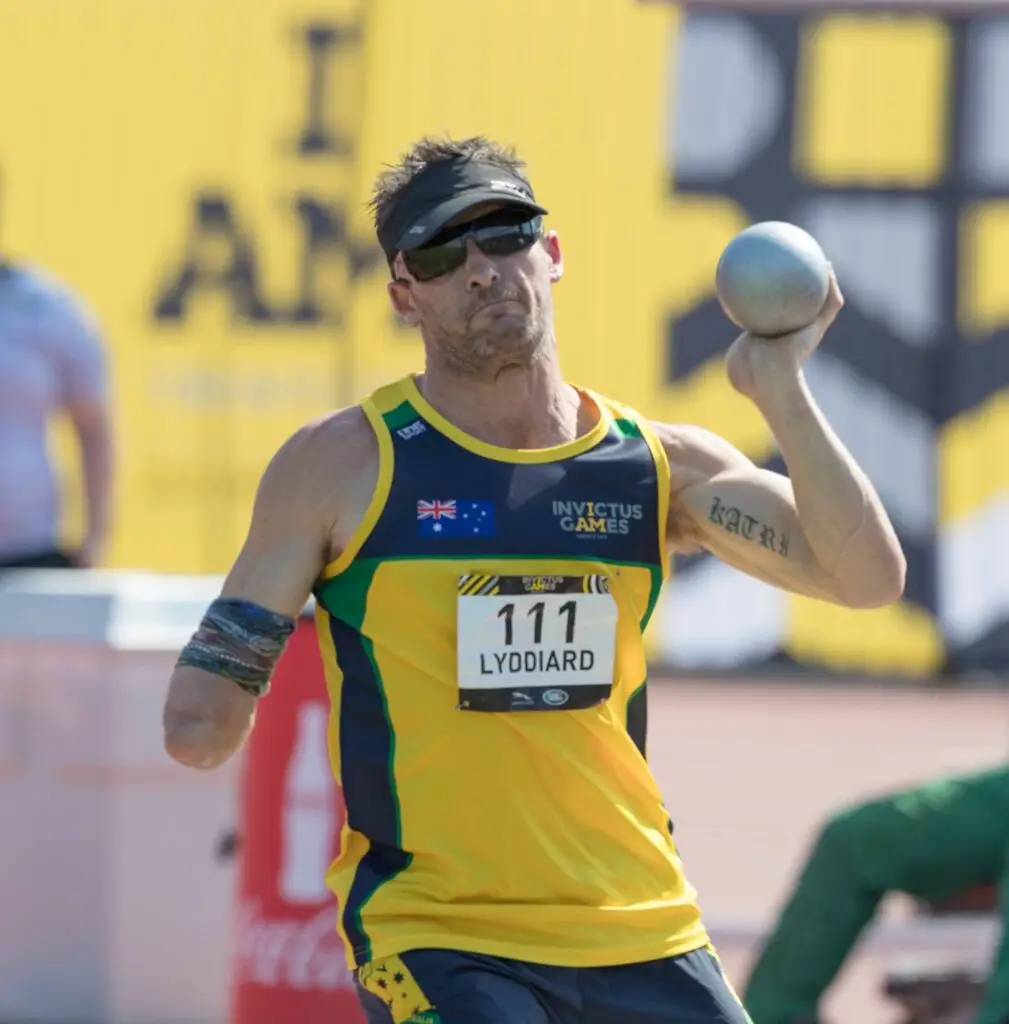
The Invictus Games became part of this chapter, in both a meaningful and complicated way. In his first Invictus games, Michael competed and did extremely well, winning medals. His second games, In Sydney, did not go as well. At one point, injured, he was pressured to continue competing despite worsening pain; he did so through injury aggravation and muscle tears. A coach accused him of lacking the Invictus spirit because he would rather prioritise his health, and the comment stayed with him, not as motivation, but as warning. Purpose, he learned, is not found in validation but in alignment.
A different kind of service
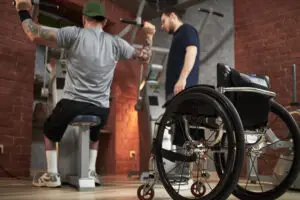
Today, Michael works as an Occupational Therapist, including within Defence rehabilitation contexts, supporting both veterans and civilians whose lives have been disrupted by injury, trauma, and systems that often struggle to account for complexity. His approach is practical and direct, grounded not only in professional training but in lived experience, and shaped by a deep understanding of what it means to lose function, identity, and certainty at the same time.
He does not romanticise recovery, and he does not promise ease. Instead, he offers agency — the opportunity for people to re-enter their lives on their own terms, through deliberate, incremental participation that also includes accepting the challenges of failure. Michael understands that injury affects far more than the body; it fractures identity, relationships, employment, confidence, and the way people imagine their future. His work focuses on helping people reconnect with those parts of life, not through avoidance or abstraction, but through engagement that is thoughtful, structured, and realistic.
Mental health is approached with the same philosophy. Rather than shielding people from discomfort, he works with exposure, regulation, and awareness, recognising that recovery is rarely achieved by retreating from difficulty. The goal is not perfection or restoration, but capacity, the ability to participate meaningfully in life as it exists now.
Michael does not frame his injuries as tragedy, nor does he present his recovery as a story of triumph. What he speaks about instead is choice: the repeated, unglamorous decisions to engage rather than withdraw, to persist rather than disengage, and to remain present even when progress is slow or uncertain. These choices, made daily and often quietly, are what have shaped the life he leads now.
In moving from Explosive Ordnance Disposal to occupational therapy, Michael did not abandon service; he reshaped it. The uniform changed, but the impulse did not. Where his work once focused on neutralising threats to protect others, it now centres on helping people rebuild function, purpose, and participation after loss.
The work is quieter now, absent the immediacy of explosions and bomb suits, but it remains deliberate and exacting in its own way. It requires patience, attention, and an acceptance of complexity, as well as a belief in what people can still do, rather than what they have lost.
For Michael Lyddiard, that continuity of purpose (carried forward, adapted, and chosen) has made all the difference.