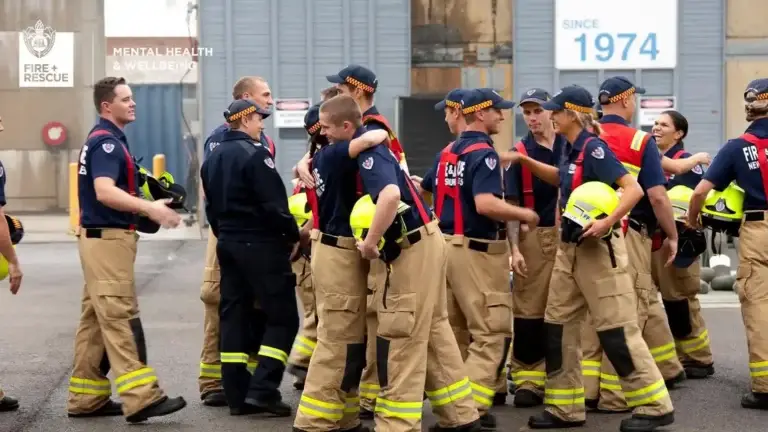
For first responders, the job does not just demand action under pressure. It demands the ability to carry, interpret, and manage stress while still showing up, shift after shift, call after call. This is the part of the role that is rarely defined in training, yet it shapes performance, decision-making, and long-term wellbeing in ways that cannot be ignored.
In high-performing environments, readiness is often measured in response times, operational precision, and the ability to make decisions under pressure. For first responders, this standard is non-negotiable. Yet, as former South Australia Police Senior Constable and now registered counsellor Matt Newlands reflects, there is another dimension of readiness that has historically received far less attention.
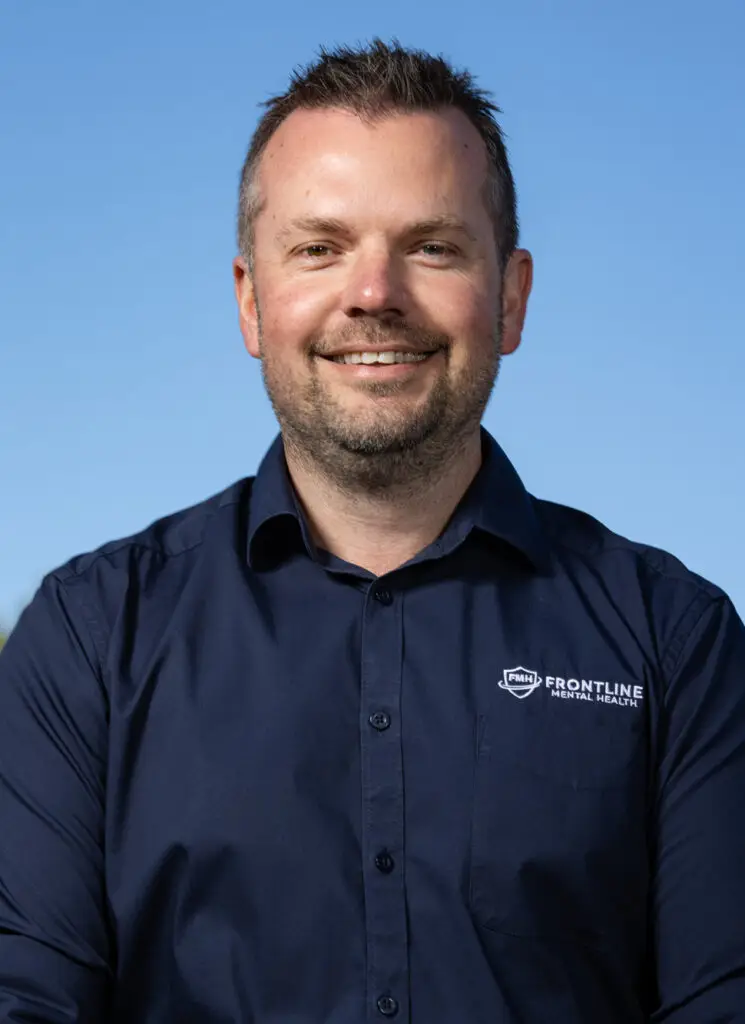
“In 2015, from the outside looking in, life looked pretty well put together, but I was struggling under the immense weight of chronic stress,” he explains.
That struggle, carried quietly, progressed to a point where his behaviour began to impact both his home life and his career. “By the end of the year, I had thoughts and behaviours around suicide, and I had compromised my career and my future.”
Unfortunately, it’s a situation far more familiar than many first responders will admit, although people like Matt are fighting hard to change that narrative.
“My story is not an uncommon one,” he says. “Across policing, military, fire, and emergency services, similar trajectories continue to emerge. High-performing individuals, deeply committed to service, absorb cumulative stress over time without a shared framework to interpret or respond to it.”
At the centre of this gap, Matt identifies something deceptively simple. “What wasn’t available was structured psychoeducation; a shared language around what struggle and stress looks like in these roles, and a focus on prevention.”
Proactively preparing for stress management
This insight now sits at the core of Frontline Mental Health, the organisation he serves as a registered counsellor. Co-founded by individuals like Matt with direct operational experience across policing, military, and air force service, the organisation is built on the premise that credibility and relatability are essential to engagement. The people delivering support understand the context not only clinically, but culturally.
The work of Frontline Mental Health is grounded in a shift in emphasis. Rather than concentrating solely on post-injury intervention, it focuses on preparing individuals before stress becomes destabilising. This approach takes form in the Stress Resilience and Functioning (SRF) program, developed in collaboration with Jon Lane, who served in the Australian Army for 30 years and is currently the Chief Psychiatrist for Dept. of Veteran Affairs.
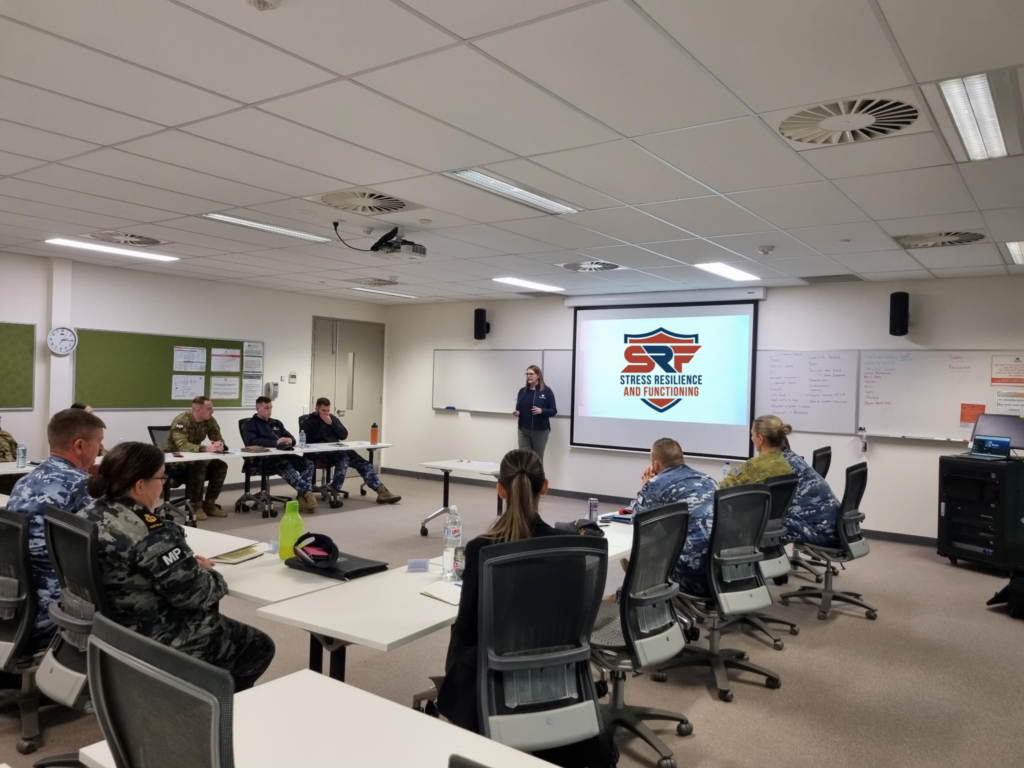
“This isn’t group therapy,” Matt explains. “This is structured mental fitness through education.” For many first responders, traditional therapeutic models can feel misaligned with the way they are trained to operate. The SRF program meets them within a familiar paradigm. It’s structured, task-oriented, and grounded in applied learning. Over eight modules, participants engage with concepts like stress physiology, emotional regulation, service identity, and interpersonal relationships, supported by reflection exercises and practical strategies, all leading towards a more precise understanding of stress.
Stress isn’t the enemy, as long as it’s recognised and managed
“We’ve been told that stress is a bad thing,” Matt says. “That’s not necessarily true at all.” Within frontline roles, stress is both inevitable and, at times, functional. The challenge lies in recognising when it shifts from a performance enhancer to a sustained burden, and having the tools to respond accordingly.
One of the more nuanced dynamics the program addresses is emotional suppression. In operational settings, this is often a necessary skill. “It’s not helpful if I arrive to provide a death message and I burst into tears,” Matt notes. “I’ve got a job to do.” Over time, however, this adaptive behaviour can extend beyond the workplace, affecting relationships, identity, and overall wellbeing.
“We become exceptionally good at suppressing emotions,” he says. “Frustratingly though, it seems that we’re not very good at taking them back home again.”
The program introduces a language through which these patterns can be explored without judgement. Participants begin to recognise their own responses, understand the role of emotions, and apply strategies that support regulation rather than avoidance. This is reinforced through peer engagement, where shared experience creates a form of normalisation that is often more powerful than formal instruction.
Leveraging community and connection to rewrite the narrative
What has been particularly notable in the delivery of the program is the way participants gravitate towards connection. Whether delivered in person or virtually, sessions consistently extend beyond their scheduled time as individuals continue conversations with peers. In many cases, relationships formed within the program persist long after its completion.
“A lot of people are actually drawn to the social connection,” Matt observes. It’s within this space that a different kind of dialogue begins to take shape, one where individuals who have spent years operating in silence find a way to articulate what they are experiencing, often for the first time.
The implications extend beyond individual wellbeing. Teams begin to develop a shared language around stress and performance. Leaders gain greater visibility into the pressures their people are navigating. Early signs of strain are more readily identified, and support can be engaged before issues escalate.
For organisations, capability is redefined, no longer limited to physical and tactical readiness, but incorporating psychological preparedness as a core component of sustained performance.
The program has now been delivered to military personnel and first responders across Australia, with strong engagement and positive outcomes reported. Participants describe a clearer understanding of their own responses, improved emotional regulation, and a renewed sense of control over how they navigate their roles.
Importantly, the model is designed to be embedded within organisations. Through a train-the-trainer approach, agencies can build internal capability, ensuring that support is delivered by individuals who understand the specific cultural nuances of their environment.
This adaptability reflects a broader truth that Matt returns to throughout his work. The challenges faced by first responders are not confined to a single service or role. They are shared across a spectrum of professions defined by exposure to sustained pressure and responsibility.
“Frontline looks like lots of different things,” he says. “Stress and struggle might look like different things day to day, but there are frontline services out there in all industries.” What remains consistent is the need for a more deliberate approach to preparation.
Wellbeing should not be the sacrifice of service
For Matt, the trajectory from his own experience to his current role has been shaped by a clear perspective on what is possible. The conditions that led to his struggle were predictable. With the right education and support, different outcomes can be achieved.
“We don’t believe that our wellbeing has to be the sacrifice of service,” he says. “We can acknowledge the demands of the role, while recognising that capability can be strengthened through understanding, preparation, and connection.”
Across fire stations, police units, emergency departments, and military bases, there are individuals who continue to carry the weight of their experiences quietly. Many remain highly effective in their roles, even as the cumulative impact of stress builds over time.
What Frontline Mental Health offers is not a departure from that reality, but a way of engaging with it differently. A structure through which individuals can understand their responses, connect with others who share similar experiences, and apply strategies that support both performance and wellbeing.
In doing so, it introduces a different kind of readiness that sits alongside operational capability and ensures that those who serve are equipped not only to respond in the moment, but to sustain that service over time.