Australia’s emergency services face increasingly complex incidents that require police, paramedics, firefighters, hospitals and government agencies to operate as a coordinated system. Joint training, shared procedures and practical lifesaving skills can reduce delays and improve casualty outcomes, particularly in high-threat environments where responders must manage danger, uncertainty and urgent medical needs at the same time.
Disasters have a way of exposing decisions that were made years earlier. When a bushfire changes direction, an active armed offender enters a crowded public space or an improvised explosive device turns a routine response into a complex rescue operation, the outcome is rarely determined by the actions taken in those first few minutes alone. It reflects years of planning, training, investment and collaboration that either prepared people to work together or left them relying on systems that had never truly been tested under pressure.
Matthew Richardson has spent much of his professional life examining that difference.
A registered nurse, registered paramedic and tactical medicine specialist with more than twenty-five years’ experience across pre-hospital care, emergency medicine, remote healthcare and counterterrorism, Richardson has worked with emergency services, government agencies and international organisations to understand how people survive high-threat environments. His work has taken him from Black Saturday, where he narrowly escaped with his own life, to advising tactical medicine organisations in Australia and overseas. At the Disaster and Emergency Management Conference, he presented on the planning, training and collaboration required to strengthen Australia’s response to high-threat incidents.
Emergencies expose the weaknesses already present in a system, particularly when agencies that are highly capable within their own disciplines must suddenly operate together under pressure.
Preparing beyond familiar disasters
Australia, he argues, has become highly skilled at preparing for the disasters it knows well. Fire, flood, cyclone and storm are woven into the country’s emergency planning, and agencies regularly train for those events. The challenge lies in preparing for incidents that sit outside those familiar patterns, particularly acts of mass violence and other high-threat environments where the boundaries between policing, emergency medicine and disaster management become far less distinct.
“We don’t just have to talk about it,” Richardson said. “We must train.” Richardson has deep respect for the police, firefighters, paramedics and clinicians who routinely place themselves in dangerous situations. His concern is that these organisations continue to prepare largely within their own operational environments, even though the incidents placing the greatest demands on the system require them to function as one.
When separate agencies must operate as one
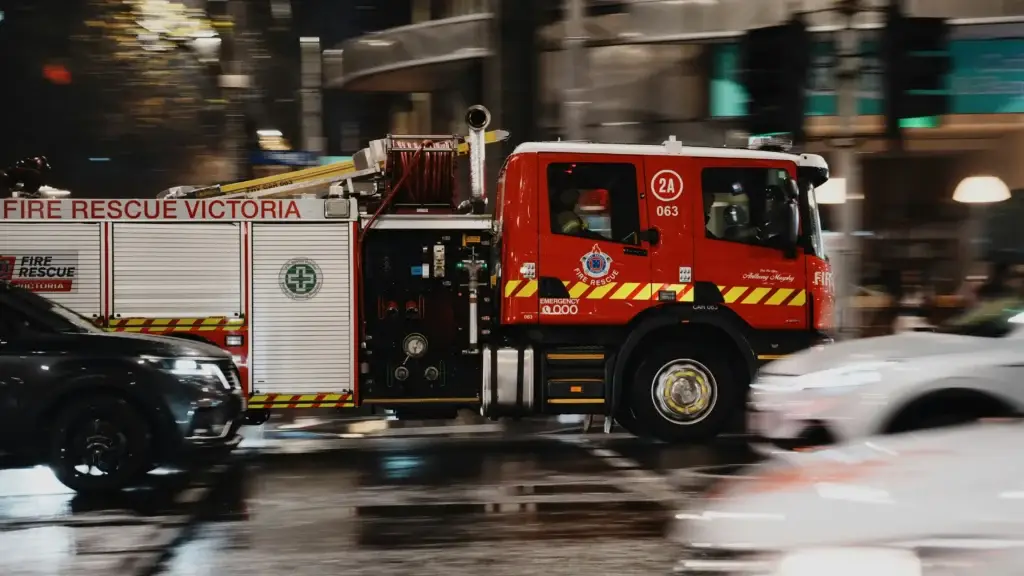
Events such as Wieambilla, Bondi Junction and international terrorist attacks have demonstrated that modern emergency response rarely unfolds in neat stages where one agency completes its work before another begins.
Police may still be managing an active threat while casualties require urgent treatment. Ambulance crews may need access to environments that remain dangerous. Hospitals may begin receiving multiple critically injured patients while communication systems are still evolving and information remains incomplete. These situations demand coordination rather than sequential response, yet coordination is impossible if organisations have never trained together before the emergency occurs.
Building a shared national approach
Richardson believes Australia has an opportunity to learn from international experience instead of waiting for domestic events to expose the same shortcomings. Countries that have faced repeated acts of terrorism have refined approaches to casualty care, triage and interoperability through painful experience. Australia has access to that knowledge, but translating it into national practice requires agencies to move beyond adapting overseas frameworks independently and instead develop a collaborative approach that reflects Australian conditions.
“Why don’t we make it our own?” he asked. “Let’s learn from what has happened internationally and build a national collaborative approach.”
For Richardson, collaboration extends well beyond agreeing on doctrine. It requires emergency services to understand one another’s capabilities, limitations and operating procedures before they encounter them during a crisis. Police, ambulance and fire services each bring highly specialised expertise, yet differences in medical equipment, treatment protocols, communications and operational doctrine can become obstacles when agencies are required to work together under intense pressure.
He described repeated examples from large-scale exercises where individual agencies performed well within their own disciplines but struggled once responsibility crossed organisational boundaries. Patients who survived the initial injury experienced delays because systems for accessing, treating and extracting casualties had not been rehearsed collectively. Communication became fragmented, assumptions differed between agencies and opportunities to save lives were lost, not through a lack of dedication, but through a lack of shared preparation. The issue is particularly evident in the period immediately following an injury.
Closing the vacuum of care
Richardson refers to this as the ‘vacuum of care’, describing the time between the moment a casualty is injured and the point at which advanced medical teams are able to provide treatment. Every minute within that period carries increasing consequences for patients suffering catastrophic bleeding or airway compromise, yet Australia has limited capability to move medical care safely into higher-threat environments.
While specialist units exist in some jurisdictions, national capability remains inconsistent, leaving responders with different equipment, different training and different expectations depending on where the incident occurs.
Simple skills that preserve life
His response is deliberately pragmatic. Rather than arguing that every responder should become a tactical clinician, Richardson advocates equipping more people with the simple skills most likely to preserve life until definitive care arrives. Applying an effective tourniquet, packing a catastrophic wound, opening an airway and moving an injured person to safety are interventions that do not require years of specialist medical education. They require appropriate equipment, evidence-based training and regular practice under realistic conditions.
“We don’t need advanced medicine in those first moments,” he explained. “We need people who can do the simple things well.”
That emphasis on simplicity also applies to the wider emergency system. Sophisticated equipment and highly specialised capabilities have an important place, but effective multi-agency response depends on clear communication, shared situational awareness, common language, rehearsed procedures and honest after-action reviews. Together, these fundamentals determine whether complex systems function effectively under pressure.
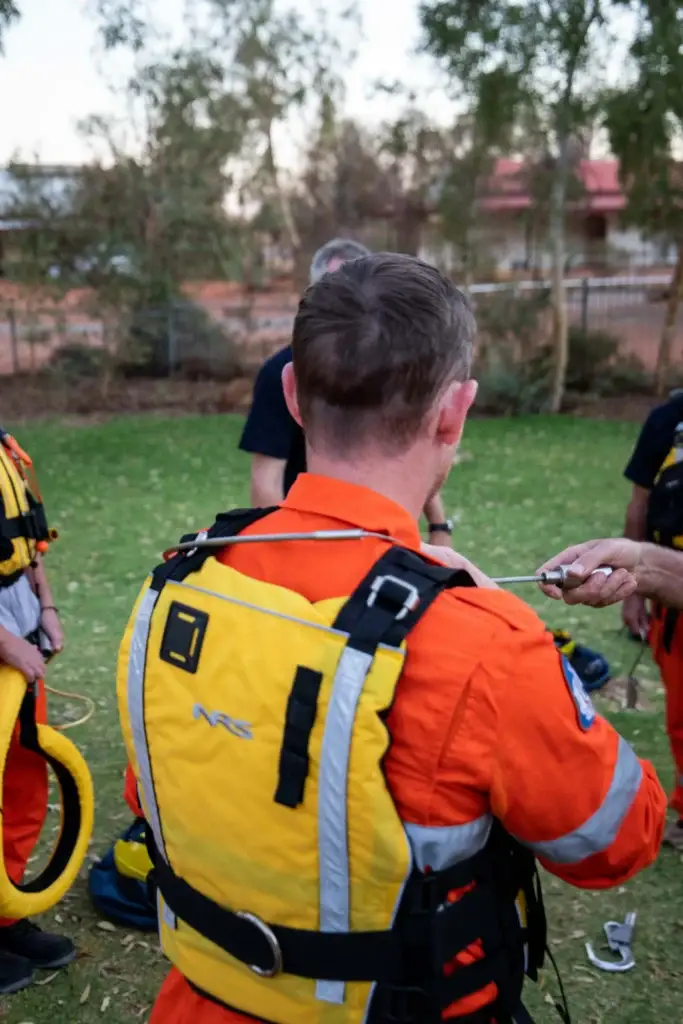
Turning collaboration into an instinctive response
He pointed to the United Kingdom’s JESIP principles, which emphasise co-location, communication, coordination, joint understanding of risk and shared situational awareness. Their value lies not in introducing revolutionary concepts, but in providing a disciplined framework that helps different organisations work together when uncertainty is greatest. Richardson believes Australia already possesses many of these ingredients; the challenge is embedding them consistently across jurisdictions and exercising them often enough that collaboration becomes instinctive rather than aspirational.
Training, in his view, should also reflect the realities responders are likely to encounter. Exercises that involve only one agency or conclude after a short scenario provide useful technical practice, but they rarely reproduce the complexity of prolonged, multi-agency incidents. Richardson described international exercises lasting many hours, involving hospitals, communications centres, emergency services and government agencies simultaneously, allowing participants to experience not only clinical challenges but also fatigue, uncertainty, resource limitations and the cumulative pressure that accompanies major incidents. Those exercises reveal weaknesses that remain invisible during shorter, more controlled scenarios.
The same approach applies beyond terrorism to bushfires, industrial accidents, hazardous environments and other emergencies where responders face evolving threats. Regardless of the hazard, organisations must understand how they will communicate, share risk, coordinate resources and support one another before lives depend on those decisions.
Preparedness therefore becomes less about predicting the next emergency than about building systems capable of adapting when circumstances change unexpectedly.
Emergency management depends on the resilience of relationships between organisations as well as the capability of individual responders. Highly capable agencies working independently cannot achieve what connected systems accomplish together, making organisational leadership central to preparedness.
The conversations that matter most are held before an emergency begins, when agencies have time to learn from one another, resolve differences and practise together. By the time a major incident unfolds, the quality of those relationships, systems and decisions will shape the response and determine whether the system is ready to meet the moment.