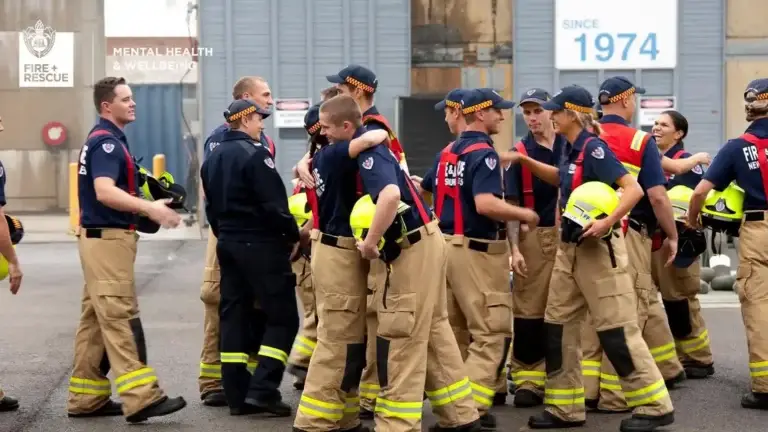
Repeated exposure to injury, loss and distress can gradually reshape the wellbeing, judgement and worldview of frontline personnel. Understanding vicarious trauma helps emergency service workers and leaders recognise its cumulative effects, examine difficult decisions in context and seek support. Structured debriefing, honest reflection and trusted peer relationships can help sustain those who regularly care for others.
Nick Bell spent more than three decades with the Northern Territory Fire & Rescue Service, where he served as a Watch Commander and responded to fatal crashes, structural fires, hazardous material events and rescues in extreme conditions. His work brought him into close contact with people experiencing severe injury, loss and distress, while his leadership roles required him to make decisions that could shape the outcome of an incident.
Repeated exposure to these experiences can gradually affect a person’s emotions, thinking, physical health and view of the world. Bell describes this as vicarious trauma, drawing on the understanding he developed throughout his 33-year career.
“Vicarious trauma is the emotional, cognitive and physical strain that develops through exposure to the trauma of others. Over time, it can profoundly change how you see the world and your place within it.”
The cumulative impact of exposure
Frontline emergency work involves direct and sustained contact with people at their most vulnerable. Firefighters enter environments filled with fear, pain and uncertainty, where they may need to comfort victims, provide physical assistance or remove people from dangerous situations.
“We see people bleeding, screaming and crying, and we become intimately involved in what they are going through. We touch them, help them and pull them out.”
Bell encountered this reality early in his career when he began attending serious vehicle accidents as a young firefighter. The scenes carried an immediate emotional impact, alongside the realisation that similar experiences would continue throughout his working life.
“It affected me deeply. There was a surreal moment when I understood that what I was seeing was real and that this would be part of the work.”

Each incident added to a growing body of memories and emotional responses. The effect developed through the accumulation of experiences, particularly when an incident involved loss, difficult decisions or outcomes that remained unresolved in his mind.
How command increases the pressure
As Bell moved into leadership, responsibility became a significant part of his exposure. He continued to witness distress and loss while also directing crews, allocating limited resources and making decisions under intense pressure.
One incident remains prominent in his memory. Bell was commanding the response to a fast-moving fire involving multiple casualties and limited resources. Conditions changed rapidly, requiring a series of immediate decisions. Crews eventually brought the fire under control, although lives were lost.
“When I went home that night, I felt sick. I felt as though I was collapsing emotionally, physically and spiritually.”
Command responsibility can extend the impact of an incident long after the operational response has ended. Bell began reviewing his decisions, considering the alternatives and questioning whether different actions might have changed the outcome. This internal examination became closely connected to feelings of guilt.
His wife helped him separate the distress caused by the loss from personal blame. “She told me that I could feel bad about what had happened, but I could not carry guilt for it.”
The distinction gave Bell a way to acknowledge his care for the people involved while assessing his decisions within the circumstances he faced. Feeling sorrow reflected his empathy and awareness of the consequences. Misplaced guilt kept him attached to an outcome shaped by many factors, including conditions beyond his control.
Recognising changes in thoughts and behaviour
Vicarious trauma can appear through physical strain, emotional exhaustion, withdrawal and changes in judgement. Following the fire, Bell felt overwhelmed and struggled to process the experience. Its effects continued through his reactions and interactions in the days that followed. “I wanted to get away from everything. My instinct was to run.”
Some signs develop more gradually. A person may become emotionally fatigued, interpret situations differently or find that strong feelings are shaping how they understand an event. Bell learned to distinguish between perception, which can be influenced by an immediate emotional response, and perspective, which considers the wider circumstances.
“When we look at something through emotion, we form a perception. Perspective helps us understand the context and make the best decision available to us.”
For Bell, developing perspective created enough distance to examine an incident more clearly. It allowed him to identify the influence of trauma on his thinking and regain a sense of control over how he processed the experience.
Using debriefs to build perspective
Structured debriefing formed an important part of operational practice within the fire service. Crews held immediate discussions at the scene and later conducted more detailed reviews of the response. These processes allowed Bell to reconstruct events, examine the decisions made and understand how conditions developed.
“I was able to go through the entire job, deconstruct it and gain a clearer perspective on what had happened.”
Effective reflection required Bell to acknowledge both his operational decisions and his emotional responses. He had to consider the outcome within the circumstances of the incident, including the information, resources and time available to him at each stage. “Being honest with yourself can be painful, but that honesty can also set you free.”
This process helped him identify the difference between accountability and self-blame. Accountability involved reviewing decisions, learning from the response and applying those lessons in future incidents. Self-blame focused his attention on an outcome he could no longer change and prevented him from recognising the limits under which crews had operated.
Reconsidering failure and success
Bell found that incidents had the greatest emotional impact when he believed the outcome represented a personal failure. The expectation that he should be able to control events collided with the uncertainty of emergency response, where conditions can change quickly and available resources may fall short of what the situation requires.
“My vicarious trauma was strongest when I experienced a loss or believed I had failed. I would keep going over it and punish myself.”
Over time, Bell developed a broader understanding of failure and its place within professional growth. Accepting that difficult outcomes could occur despite sound decisions helped him review incidents more constructively.
“Recognising that failure is part of success changed my perspective and helped me learn without allowing the outcome to define me.”
Emergency response involves variables that no individual can fully control. Recognising those limits allowed Bell to maintain accountability while evaluating his performance within the conditions he faced. He could identify lessons from an incident without assuming personal responsibility for every consequence.
The support of people who understand
Peer support also played an important role in Bell’s recovery. After the fire, a colleague approached him and acknowledged the difficulty of the decisions he had been required to make.
“He put his arm around me and said, ‘We need people like you who are prepared to make decisions like that.’”
The comment came from someone who understood the demands of frontline command and the uncertainty that accompanies operational decisions. That shared professional understanding gave the reassurance particular weight and helped Bell place his actions within the wider response.
Support within emergency services can develop through formal programs, debriefs and access to professional care. It can also emerge through conversations with colleagues who recognise the emotional demands of the work and create space for an honest response. For Bell, connection reduced isolation and reminded him that responsibility for an incident was carried within a team and an operational system.
Living with the cost of care
Bell views vicarious trauma as a consequence of caring deeply about people encountered through the work. Empathy allows frontline workers to respond with commitment and humanity, while repeated exposure to pain can leave a lasting emotional and physical burden.
“When you feel another person’s pain, you experience part of the cost that comes with doing this work.”
The discomfort associated with these experiences also contributed to Bell’s understanding of leadership, trauma and the needs of other frontline workers. As he reflected on his career, he began to see that experience as a source of insight he could use to support others.
“I have tried to accept the discomfort and remain grateful for what it has taught me. Perhaps those experiences have given me something useful to offer.”
Integrating these experiences into his professional and personal identity allowed Bell to recognise their impact without allowing them to determine how he saw himself. The incidents remained part of his history, alongside the knowledge, judgement and compassion he developed through responding to them.
Building a sustainable response to trauma
Bell’s experience points to a combination of practices that can help frontline workers manage vicarious trauma throughout their careers. Perspective supports clearer judgement when emotions are influencing perception, while honest reflection allows difficult incidents to be examined within their full operational context. Separating sorrow from misplaced guilt protects people from carrying responsibility for factors outside their control.
Structured debriefs provide an opportunity to review decisions and identify lessons, while trusted colleagues can offer support grounded in shared experience. A balanced understanding of failure helps frontline workers retain accountability and continue learning without turning every difficult outcome into a personal judgement.
Together, these practices provide a way to process the cumulative effects of frontline work and continue serving in high-pressure environments. Bell’s account shows how experience can be integrated through reflection, connection and a clearer understanding of responsibility, allowing those who care for others to protect their own capacity to keep doing so.