Seventy-five years after ANZUS formalised Australia’s security alliance with the United States, escalating conflict and pressure for greater allied defence spending are testing the balance of responsibility. Australia’s current investment, limited operational contributions and dependence on offshore munitions production raise a pressing question about whether national preparedness matches the strategic risks confronting the region.
This month Australia’s most important security alliance turns 75. Despite the early exit of our cousins across the ditch, ANZUS remains the cornerstone on which Australia’s Defence and National Security strategy has been built. In the Trump era Australians are more frequently questioning the reliability of our principal Ally but to our longest serving Prime Minister Robert Menzies, the ANZUS treaty ensured Australia had a ‘great and powerful friend’ and was his crowning achievement.
Presidents and Prime Ministers come and go and indeed in 2029 President Trump’s term will finish. This column will not seek to re-litigate the value of the Alliance or the policy of a particular President but instead consider whether in the 75th year of the ANZUS treaty is Australia a ‘lifter’ or a ‘leaner’ in this arrangement. In an era where the arc of autocracies forge closer ties it is prudent to ask ourselves whether what part are we playing in supporting our Ally to protect and preserve the interests of the forces of the free?
Is Australia strategically underinsured?
Underinsurance describes a risk where a customer has an insurance policy that does not adequately protect the asset insured. Where a home & contents policy that is less than the cost to the home insured as an example. Likewise strategic underinsurance could describe the situation when a nation state runs down its resilience and ability to respond should disaster or indeed conflict occur. In a geopolitical context that Canberra politicians routinely describe as the most dangerous since World War II, is Australia strategically underinsured?
Our US ally has made it clear that in the current context it considers the minimum NATO members and allies and partners in the Indo Pacific should be investing in Defence is 3.5% of Gross Domestic Product. This represents a marked increase from Australia’s present investment which instead hovers close to 2%. Even with adjustments for creative accounting Australia maintains Defence spending at rates far closer to that of the Unipolar moment than to levels maintained by this nation during Cold War I.
The era of boutique contributions has ended
In the Post Cold War I era of wars of choice against insurgents and inferior forces, Australia could make boutique contributions to US led operations on a neat schedule. We as a nation have grown used to minimising the costs of our own Defence and relying on calculated contributions that focused on alliance management. But the era of cheap peace has now ended. Long and large war has returned, and even non state actors such as the Houthis and Hezbollah are wielding ballistic missiles, rockets and attack drones. Iran is showing that even the might and power of America cannot keep US bases in the Middle East safe from long range strike.
To date Australia has minimised our contribution to both theatres. While our Bushmasters and M777 howitzers are playing a part on the side of Ukraine, ADF personnel have been limited to training Ukrainian troops. Our contribution to the war against Iran has been niche – albeit highly valuable – in the allocation of E7-A Wedgetail aircraft to support the United Arab Emirates integrated air and missile defence. Our limited surface and subsurface fleet have not made a substantial contribution to US led efforts to secure sea lanes of communication in the Middle East. Instead of boots on the ground or a substantial supply of the consumables of combat, Australia has prioritised design and delivery of the ‘focused force’ at a peacetime pace.
Rebuilding an industrial base designed for conflict
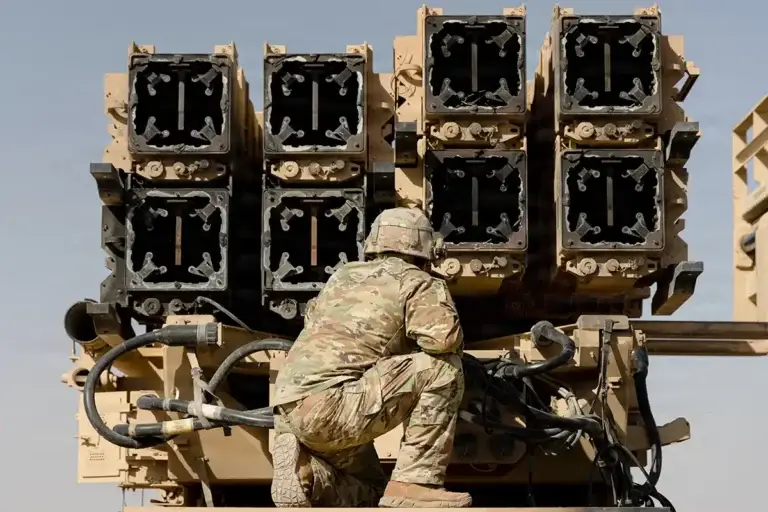
Likewise, we have hastened slowly to rebuild the Industrial base which will be required to mobilise and scale if the worst should occur. With a few notable exceptions, the missiles and munitions our military depends on to stay in the fight are made in single sites offshore that have long back orders and customers already in conflict ahead of us in the queue. A nation that once played an outsized role in the Arsenal of Democracy has now outsourced and offshored, hoping deliveries arrive just in time and not far too late.
Matching strategic rhetoric with defence investment
There is no question that geopolitical risk has greatly increased in our times. Our globalised, interconnected world is already feeling the impact of two very different but equally impactful wars in Ukraine and the Middle East. The premium we must pay for peace has increased, but without the political will to match rhetoric with revenue the bill for bolstering the capacity and capability for the Australian Defence Force continues to be delayed.
The warning Australia has heard before
On this 75th anniversary of ANZUS, a treaty never enacted by the United States, it also important to reflect on the past to inform the present. ANZUS formalised what had been forged in the heat of battle. The US contribution to the defence of Australia and in pushing back the Japanese from an empire that extended to the arc of island nations to our North.
On the 14th March 1942, Prime Minister John Curtin made a public address to the people of America. It is worth revisiting to reflect on the state of a Nation that faces an existential threat, with language almost jarring to the present condition of the Lucky Country one again complacent after a long peace:
“We, the allied nations, were unready. Japan, behind her wall of secrecy, had prepared for war on a scale of which neither we nor you had knowledge. We have all made mistakes, we have all been too slow; we have all shown weakness – all the allied nations. This is not the time to wrangle about who has been most to blame. Now our eyes are open.”
For all the theatre of the speech it can be argued Australia was well aware of the threat of Japan before Pearl Harbour. Then Managing Director of BHP Essington Lewis warned the Australian Government of the Japanese threat in 1934. The second Sino-Japanese war had been raging since 1937 if not before. Japan had signed the Axis agreement in 1940 and had occupied modern day Vietnam by mid 1941.
The lesson from our history is that Australia hopes for peace until the threat of War is clear and present. We have a cultural bias towards ‘She’ll be right mate’ and an understandable tendency for the average Australian to be focused on cost of living. Unless an exceptional cadre of political leaders are around the cabinet table material preparations, mobilisation and scaling in advance of conflict is unlikely to occur.
The growing cost of relying on hope
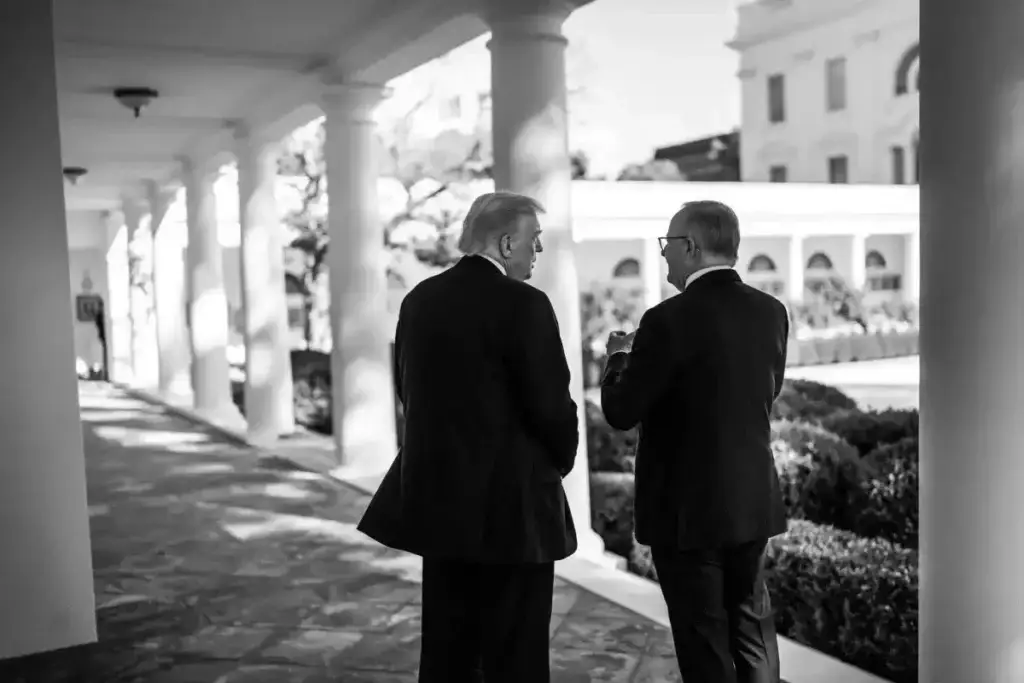
For all President Trump’s rhetoric and pressuring of select allies and partners to bear a greater share of the burden of Defence and National Security, Australia appears to have avoided a similar fate. Perhaps plans to field a boutique force with nuclear submarines in a decade and giant novelty cheques has been enough to placate our primary Ally. But strategic underinsurance is a bet that fortune will favour the ill prepared. That inaction will be rewarded with a peace dividend.
Hope is not a strategy. In the most dangerous geopolitical circumstances since World War II the price of peace is becoming expensive. But the cost of conflict will be far worse – particularly for a nation caught napping. Time to rediscover our national ability to prudently prepare and rebuild resilience.