Connection within veteran and first responder communities is often built through shared experience rather than structured conversation, particularly for those navigating transition or ongoing challenges. Environments that prioritise participation, familiarity, and peer proximity can rebuild trust, purpose, and confidence, while also enabling continued forms of service that evolve beyond formal roles.
There is a particular kind of connection that doesn’t need to be explained. It doesn’t begin with introductions or unfold through long conversations about what someone has been through. Instead, it sits quietly in the background, built on recognition rather than disclosure, and it is this kind of connection that organisations like Buddy Up Australia have learned to facilitate with remarkable precision.
Across Australia, Buddy Up brings together veterans and first responders in environments deliberately designed to feel ordinary on the surface. Activities range from outdoor adventures to informal group events, yet, beneath that simplicity, there sits a deeper intention.
The goal is not to create a space where people are asked to unpack their experiences, but rather to create the conditions where connection can happen naturally, without pressure or expectation. As Tina Innes, national operations manager for Buddy Up Australia explains, members rarely spend time discussing their service in detail; instead, they come together, participate, and enjoy the experience alongside others who simply understand what that service (and transitioning to ‘civilian’ life) represents.
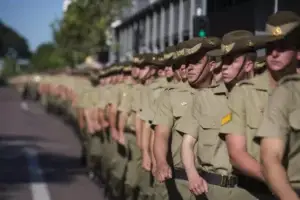
In many traditional support environments, the emphasis is placed on sharing, processing, and verbalising experiences, which can be valuable but is not always what people are ready for or even looking for. What Buddy Up recognises is that, for many, the first step is not conversation but proximity. It’s the ability to stand next to someone who has seen similar things, without needing to explain them, that begins to rebuild trust, confidence, and a sense of normality.
The quiet architecture of connection
However, what makes this model work is not just the members themselves. It’s the volunteers who create the structure that lets these moments of connection happen.
At first glance, the role of a volunteer might seem straightforward: helping organise events, ensuring things run smoothly, and perhaps assisting with logistics on the day. In reality, the role is far more nuanced. Volunteers act as the connective tissue of each gathering, setting the tone, facilitating introductions, and creating an environment where interaction feels natural, rather than forced. Tina describes them as the focal point of each event, not because they lead in a traditional sense, but because they enable others to engage.
“They’re not there to provide peer support in a formal way,” she explains. “Their role is to facilitate it, to bring people together, to create a space where members can connect with each other.”
This subtle distinction shifts the entire dynamic. Instead of positioning volunteers as helpers and members as recipients, the structure becomes far more balanced. Volunteers are there to guide the environment, but the real value is created in the interactions between members themselves. It’s an ecosystem of connection, rather than a one-directional model of support.
Yet, this role also comes with weight. Volunteers are responsible not only for the practical aspects of each event, but also for safety, risk management, and the emotional tone of the experience. They are often first aid trained, they manage group dynamics, and they ensure that every participant feels included without being singled out. It is skilled, attentive work, even if it is rarely described that way.
Service doesn’t stop, it changes shape
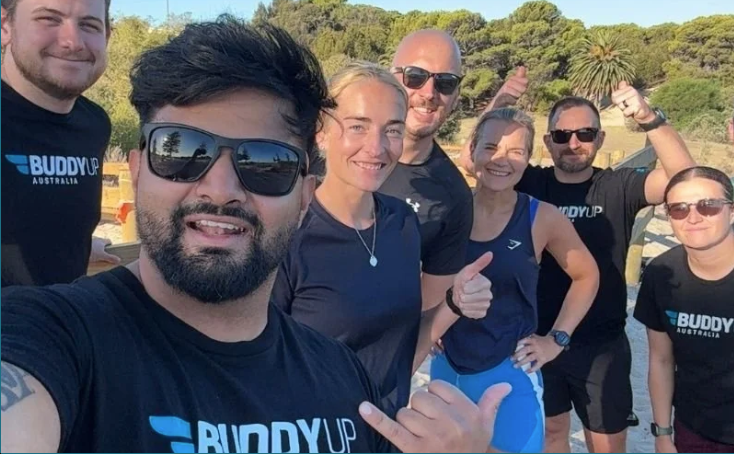
What becomes increasingly clear through organisations like Buddy Up Australia is that many of these volunteers are not separate from the community they serve. They are acting first responders, service members, or veterans themselves, all individuals for whom the concept of service does not end with their formal roles.
There is a continuity here that is both powerful and, at times, fragile. Many volunteers arrive at Buddy Up Australia as members first, attending events, building connections, and gradually finding themselves drawn to contribute more.
“It’s often those who engage regularly and connect with the broader mission who step forward to take on volunteer roles,” says Tina. “They shift from participant to facilitator, from being supported to supporting others, which is deeper than simply giving back.
“For many who have spent years in roles defined by responsibility, teamwork, and service, stepping away from that environment can leave a gap that is difficult to articulate. Volunteering offers a way to retain that sense of contribution, even if it’s in a different form.”
At the same time, it’s not without its challenges. The very people most inclined to volunteer are often navigating their own complexities, whether related to health, financial pressures, or life transitions. Tina points out that personal circumstances can limit how active volunteers are able to be. This could be because volunteers are still actively serving, and so their free time is limited, or, particularly within communities where medical discharge or retirement is common, the body has a more limited ability to spend time volunteering. The desire to serve remains strong, but the capacity to do so is not always consistent.
This creates a delicate balance. Buddy Up Australia relies on individuals who are deeply committed to the mission, yet those same individuals may face constraints that make sustained involvement difficult. It is a reminder that purpose, while powerful, does not exist in isolation from practical realities.
Beyond conversation, towards something more human
Perhaps the most compelling aspect of Buddy Up Australia’s approach is how intentionally it avoids overcomplicating connection. Events are not designed as forums for discussion or platforms for sharing personal challenges. In fact, there is a conscious effort to keep the focus on the activity itself.
The result is something that feels both simple and, in many ways, profound. People come together, they participate, and, through that shared experience, they begin to form bonds that do not require explanation. Tina reflects on how little is actually said about service during these events, and yet how strongly that shared background underpins the connections that form.
There is also an understated reciprocity at play. In one example, she describes a participant who, while supporting someone else through an activity, walked away with a renewed sense of achievement and confidence. In these moments, the lines between giving and receiving blur. Support is not something that flows in one direction; it’s something that emerges through interaction.
This is where the model reveals its deeper insight. Human connection is not always built through conversation or intervention. Sometimes, it’s built through doing something together, through small acts of encouragement, and through the quiet recognition that someone else understands.
Holding onto what matters
As conversations around mental health, community support and volunteering continue to evolve, there is a tendency to focus on scale, systems, and solutions. These are important, but what Buddy Up Australia illustrates is that the foundation of all of this remains fundamentally human.
Connection does not always need to be engineered. Purpose does not always need to be redefined. In many cases, both already exist, waiting for the right environment to bring them forward.
What organisations like Buddy Up Australia offer is not just a program or a service, but a framework that lets these elements surface. Through volunteers who continue to serve in new ways, environments that prioritise shared experience over structured dialogue, and a deep understanding of what connection actually looks like in practice, they are quietly addressing a need that is often overlooked.
In doing so, they remind us that service does not end when a role concludes. It evolves, adapts, and, when supported in the right way, continues to shape lives long after the uniform comes off.