Sustained exposure to high-pressure environments demands closer examination of how resilience is defined within veteran and first responder communities. Traditional models that emphasise endurance and suppression are being reconsidered alongside approaches that recognise recovery, regulation, and peer connection as essential to long-term performance.
There is a particular kind of exhaustion that doesn’t show up on any performance review. It builds quietly over years in the people who pride themselves on never going down. The ones who were first in, last out. Who held it together when others couldn’t. And who, when asked how they were doing, said “fine” and meant it enough to keep going.
I’ve spent years working alongside this community: veterans, first responders, and the people who run toward what everyone else runs from. One of the most consistent things I see is that the culture that made them effective is often the same culture that makes it hardest to heal.
It’s the belief that resilience means endurance, that strength means not being affected, and that the most capable person in the room is the one who never shows the cost.
That belief is causing harm and it’s time we said so clearly.
What we got wrong about resilience
I recently joined the Curious Collective podcast where I spoke with Ben Pronk, a former Special Operations officer and co-developer of the Resilience Shield model alongside Tim Curtis and Dr Dan Pronk. Ben has dedicated significant work to changing the way high-performance communities understand resilience, and the distinction he draws is one I think every person in a service role needs to hear.
We discussed how resilience is not the ability to absorb unlimited stress without breaking. No organism can do that, and no nervous system is built for that. What gets sold as toughness—the stiff upper lip, the keep moving, the don’t let it touch you—is actually the absence of recovery. And without recovery, the system doesn’t get stronger, it just gets closer to collapse.
This isn’t a soft concept. It’s biology.
The body keeps a running tally
One of the most useful frameworks Ben shared is the idea of the stress bucket. Every difficult experience adds to it, whether it’s a traumatic incident, a high-stakes decision, sustained operational pressure, or cumulative exposure to others’ pain. Early on, there’s room. Things feel manageable, and people function well and assume they always will.
But the bucket fills without intentional practices to release that load and, when it does, it’s rarely a catastrophic event that tips it over. It’s something small: a conversation that shouldn’t have landed the way it did, a reaction that felt completely out of proportion, or a moment where the body finally said “enough”.
From the outside, that moment looks like weakness. From the inside (and from a nervous system lens), it’s what happens when a system has been under load for too long with nowhere to put it.
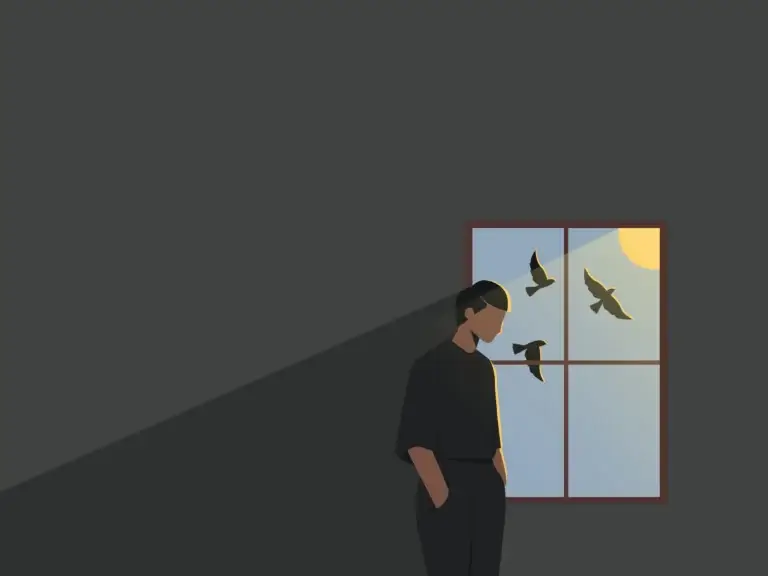
Your body has been sending signals the whole time. The disrupted sleep. The irritability. The hypervigilance that follows you home. The flatness that settles in when there’s finally quiet. These aren’t signs of weakness. They’re signals from a system doing exactly what it’s designed to do, which is trying to protect you.
The problem isn’t the signals. The problem is that we were trained to override them.
Recovery is not a reward. It’s the work.
True resilience—the kind Ben and his colleagues have built the Resilience Shield model around—includes two distinct capacities. The first is the ability to keep functioning under pressure. That matters. In operational roles, it’s essential. But the second capacity is just as important, and far less talked about: the ability to recover.
We don’t question this logic when it comes to physical injury. No one tells an injured athlete to just push through and see what happens. Instead, a torn hamstring gets physio; a stress fracture gets rest and rehabilitation. And yet, when it comes to the invisible load, the psychological, emotional, and nervous system cost of sustained service, that’s exactly what we expect people to do.
Recovery isn’t weakness. It isn’t stepping back from who you are. It’s what makes sustained performance possible at all. Sleep, movement, nutrition, connection, and time to process aren’t luxuries. They are the practices that keep the nervous system regulated and the bucket from overflowing.
You don’t have to figure this out alone
One of the things that makes this community both extraordinary and uniquely vulnerable is the culture of self-sufficiency. You were selected, trained, and valued for your ability to handle things independently. Asking for help, especially with something as invisible as how you’re coping, can feel like a fundamental contradiction of everything that got you here.
But peer connection is not a soft add-on to recovery. It is one of the most powerful regulators of the nervous system we have. Being seen and understood by someone who has genuinely lived it, who doesn’t need the context explained, who gets the dark humour and the silence and the particular weight of this work, is not just comfort. That is co-regulation; it’s the nervous system finding safety.
The shift I see in people when they stop trying to manage everything in isolation and let themselves into a genuine, peer-led, people-who-get-it community, is profound. It doesn’t erase what they’ve been through, but it changes what they do with it.
What it actually looks like to be resilient
Resilience is not the person who never goes down. It’s the person who has learned how to come back and who has built the practices and the relationships that make coming back possible.
It includes the discipline to rest without guilt and the humility to say, “This is heavy, and I need support”. It’s the self-awareness to recognise when your system is telling you something, rather than overriding it again.
Perhaps most importantly, it includes the understanding that taking care of your nervous system is not separate from your ability to serve. It is what makes continued service sustainable.
The “tough it out” version of resilience kept a lot of us upright for a long time, but it was never the whole story. The whole story includes recovery, community, and listening to the signals your body has been sending all along.
That’s not weakness. That’s the other half of strength.