Charities founded on lived experience begin with a clear sense of purpose shaped by direct exposure to a specific need; however, that purpose can become harder to preserve as organisations grow and formalise. Maintaining alignment between the founding intent and day-to-day decision-making becomes a central consideration for organisations seeking to scale without losing direction as governance structures evolve and leadership expands.
Founding a charity is rarely just about starting an organisation. More often, it begins with a deeply personal moment, leading to a realisation that something in our community needs to change, and a determination to do something about it.
For many founders, the early days are driven almost entirely by passion and lived experience. There are long hours, uncertainty, personal financial risk, and countless hurdles to overcome. But there is also something incredibly powerful in those early stages: clarity of purpose. The organisation exists because the founder saw a need and chose to act.
However, over time, something interesting happens. If the charity succeeds—if it begins to grow, attract supporters, build partnerships, and deliver real outcomes—the structure around it inevitably changes. Governance becomes more formal, policies must be developed and implemented, boards are put in place, and professional management is introduced.
All of these things are important and necessary for growth. Unfortunately, through my own work as a volunteer and numerous conversations in the not-for-profit sector, I have seen a pattern emerge that concerns me.
The realities of growth, even in the non-profit sector
A passionate founder builds something meaningful from the ground up. Their personal values, experience, and mission shape every decision. The organisation develops momentum and begins to expand.
Then, as governance structures evolve and leadership transitions occur, the founder sometimes steps away or is gradually pushed aside. In some cases, they are even voted out entirely.
What follows can be subtle at first, but becomes noticeable over time. The organisation still exists, the programs continue, and the branding remains the same. However, something fundamental begins to change.
The spirit (the authenticity, the urgency, the lived understanding of the community being served) that once drove the work can slowly fade. Decisions begin to prioritise different metrics, the mission becomes diluted, or the culture changes.
In some cases, the incredible work that once made the organisation special begins to lose its direction. This is something I think about often.
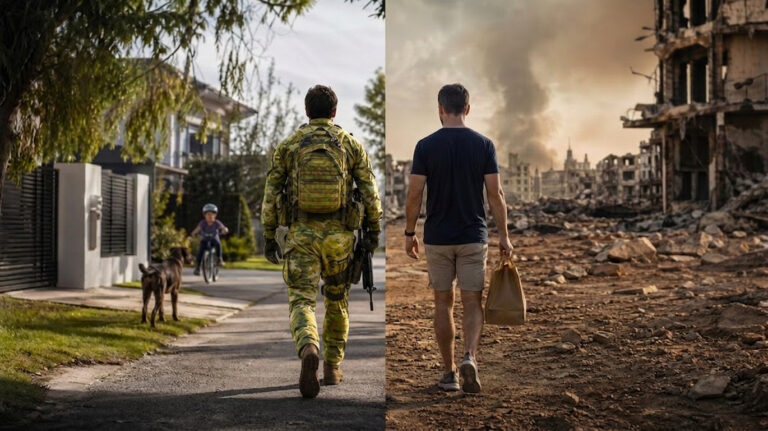
Living a mission
As the founder of Our Mate-Ship Limited, I am incredibly proud of what has been built so far. The organisation was created to provide wellness days on the water for current and former military members, emergency services personnel, and their families—all people who spend their lives supporting others but often struggle to find spaces where they, themselves, can decompress and reconnect.
The idea itself was born from personal experience and a desire to prevent others from reaching the difficult place that I once found myself in.
Like many founder-led initiatives, the organisation started small. It was driven by purpose, rather than scale. Every decision was guided by a simple question: does this genuinely help the people we are trying to serve?
As Our Mate-Ship grows, I know the structure of the organisation will need to evolve. Growth means bringing in new people with new expertise. It means strengthening governance, improving systems, and building capacity to deliver programs sustainably. These are all positive developments.
At the same time, they raise important questions that I believe many charity founders quietly wrestle with:
- How do we grow an organisation while protecting the integrity of the values it was founded on?
- How do we ensure that scale strengthens the mission, rather than diluting it?
- How do founders remain part of an organisation’s DNA without unintentionally becoming a barrier to its development?
I know that the goals I have for Our Mate-Ship are ambitious, and that achieving them will require strong teams, capable leadership, and the ability to evolve over time. My role within the organisation will inevitably change as it grows, and that is as it should be.
I do not believe founders must hold on to every operational decision forever. Healthy organisations require distributed leadership, robust governance, and fresh perspectives.
However, I do believe that the founding vision of a charity—the reason it exists in the first place—is something worth protecting.
The founder-led initiative
Founders carry a particular kind of knowledge. It’s not just strategic knowledge or institutional memory; it’s the lived understanding of why the organisation exists and who it exists for, particularly when the founder is a veteran whose purpose is to serve others. Many not-for-profit organisations that support ex-defence and ex-first responders were built by people like myself; we’ve experienced the challenges of transitioning, required mental and physical support, and now want to help others like us.
That perspective can be incredibly valuable as organisations grow and face increasingly complex decisions. The challenge, of course, is finding the balance.
Too much founder control can hinder growth and discourage new leadership. Too little founder involvement can allow the organisation to drift away from its original purpose.
Some organisations navigate this transition successfully, and others struggle with it, which is why I’m increasingly interested in learning from those who have already walked this path.
There are many founders who have successfully grown their organisations while remaining connected to the values that inspired them in the first place. Some have transitioned into different roles within the organisation, and others have built governance structures that intentionally protect the founding mission.
Their experiences and lessons could be incredibly valuable for the next generation of founders. Personally, I know that I will always remain connected to the organisation I helped create, but I also understand that what that connection looks like will change as the organisation grows.
Growing without losing sight of the mission
Leadership is not static. It changes with the needs of the organisation. What matters most is ensuring that the core principles that inspired the organisation remain intact; in the case of Our Mate-Ship, that includes honesty, integrity, and a genuine commitment to serving the people it was created to support.
These values are easy to articulate when an organisation is small. The real test is whether they survive success. So, I would genuinely welcome insights from others who have navigated this journey.
If you have founded or led a charity through periods of growth and transition, I would be grateful for your perspective. What governance structures helped protect your mission? How did you balance founder involvement with organisational independence?
What lessons did you learn, perhaps the hard way, about maintaining integrity as your organisation expanded?
The not-for-profit sector is filled with people doing extraordinary work. By sharing experiences and lessons, we can help ensure that, as our organisations grow, they continue to reflect the purpose that inspired them in the first place. Building an organisation is one challenge. Ensuring it stays true to its mission as it grows may be an even greater one.