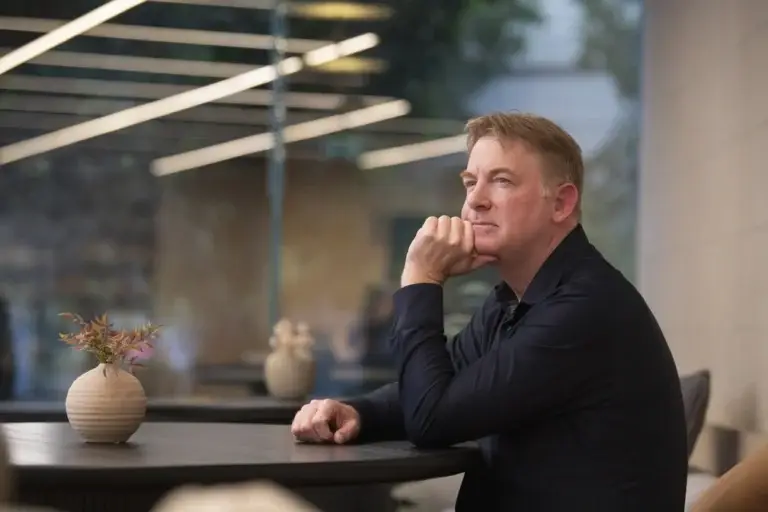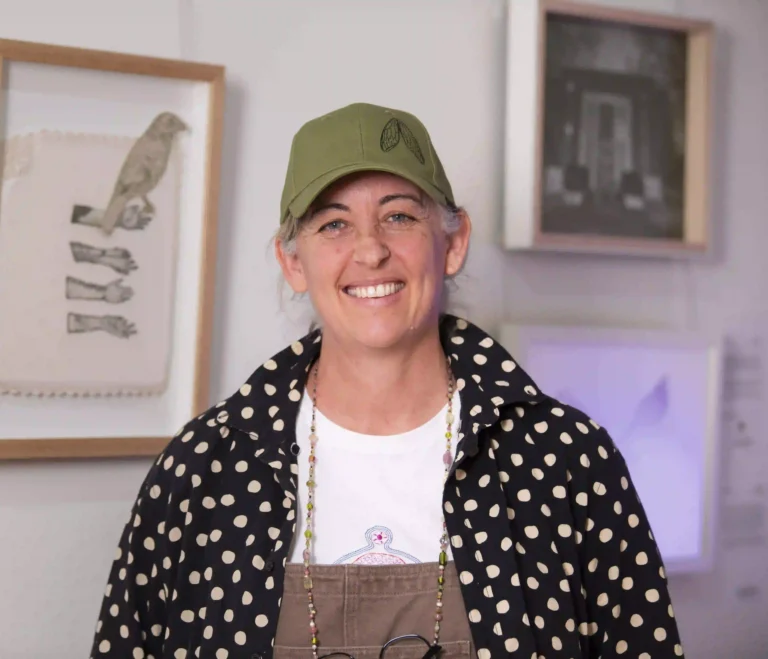
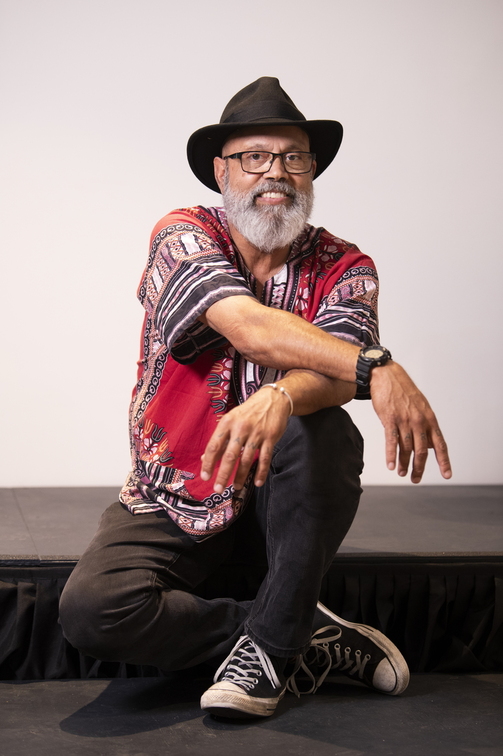
The stories people tell about themselves shape identity, belonging and how they understand their place within a wider community. For veterans, Aboriginal Australians and others whose experiences are often interpreted through institutional or historical narratives, retaining ownership of those stories can carry particular significance. The work of Bardi, Jawi artist, veteran and storyteller Ron Bradfield Jnr explores how listening, storytelling and creative expression can help people recognise the many experiences that form their identity, while creating space for Australian history, military service and contemporary life to exist as interconnected parts of a much larger story.
Long before stories are written down, they are spoken. They pass between generations around kitchen tables, campfires, worksites and family gatherings. They explain where people belong, how communities remember, why places matter and what it means to carry responsibility for one another. Stories become the way we make sense of ourselves, yet they also shape the way others understand us. The longer a story is repeated, the easier it becomes to mistake it for the whole truth.
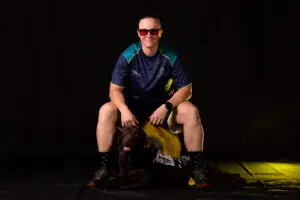
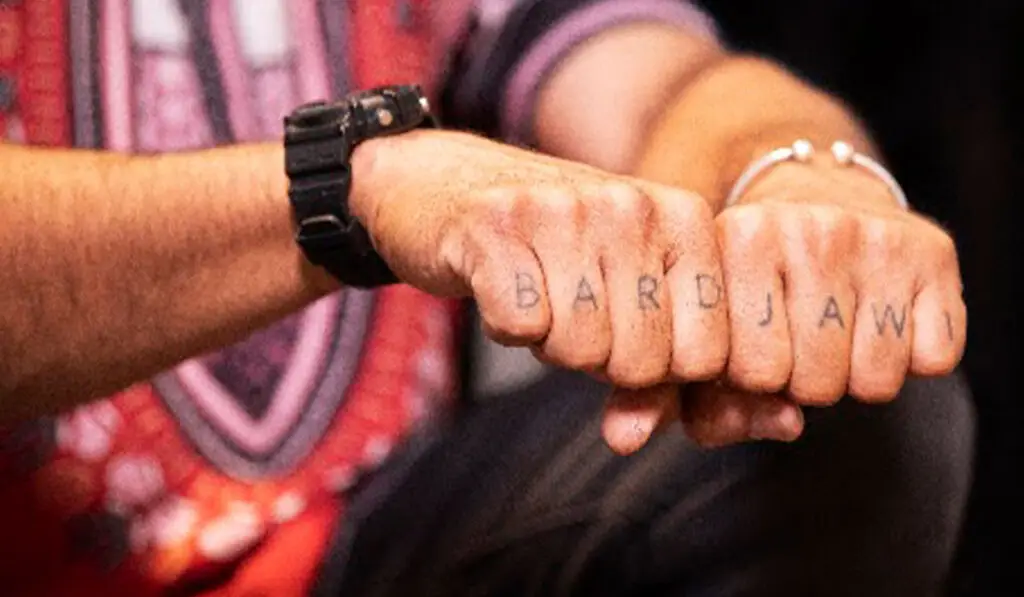
Ron Bradfield Jnr has spent much of his life thinking about that distinction. An Aboriginal man of Bardi, Jawi heritage, former member of the Australian Army and Royal Australian Navy, community worker, artist and professional storyteller, Ron has devoted decades to helping people reclaim ownership of their own narratives. His work has taken him into remote communities, classrooms, galleries, theatres, veteran organisations and conversations with people navigating profound trauma, but the work itself has remained remarkably consistent. Whether he is making an installation, telling a story on stage or sitting quietly beside someone in distress, he is creating space for people to recognise themselves with greater honesty.
That work, he believes, begins with listening. “I’ve become somebody who has no problem sitting in people’s stories,” he says. “People need someone who will simply listen without trying to fix them. They need to know they have been heard.”
Storytelling begins with listening
It’s a philosophy that sounds uncomplicated until you consider how rarely it happens. Much of modern life rewards quick opinions, immediate solutions and certainty. Listening without interruption requires something different. It asks for patience, restraint and the willingness to let another person’s experience remain entirely their own.
Ron learned early that those stories should never become his to carry. “My job isn’t to own someone else’s story,” he explains. “It belongs to them. I can sit with them while they tell it, and if they decide they want help afterwards, we can talk about that. Otherwise, it’s their story.”
Over many years of working with young people experiencing violence, self-harm and homelessness, alongside Aboriginal communities living with the consequences of suicide and intergenerational trauma, he discovered that being genuinely heard often became the first step towards healing. His role was never to stand in front of people. It was to sit beside them.
That understanding eventually reshaped the way he thought about storytelling itself. Most people imagine storytellers as gifted speakers, yet Ron believes the opposite is true. “The thing about a really good storyteller is that they know how to listen.”
The observation shifts storytelling from performance to relationship. Stories do not exist independently of people, but emerge through trust, observation and lived experience. They ask to be received before they can be shared. Listening therefore becomes the first creative act, because it lets another person’s experience exist without judgment or interruption.
Rooted in history, but facing the future
When Ron began telling stories professionally, he did so because he had grown tired of hearing other people explain what it meant to be Aboriginal.
Throughout his career he had been invited into schools, organisations and community events to speak about culture. Those invitations were often generous, but they also carried assumptions. Too frequently, Aboriginal people were expected to represent history rather than contemporary life, as though culture belonged safely in the past instead of continuing to evolve alongside everyone else’s.
“I made a conscious decision to tell true stories that belonged to me,” he says. “Nobody gets to argue with my experience because it’s my story.”
His stories are deliberately grounded in the present. He begins by placing audiences in a recognisable moment, inviting them into the same room, street or memory before gently expanding the conversation into larger questions about identity, belonging and history.
“I’m not a yesterday person,” he says. “I’m a today person, just like you. We’ll become tomorrow people together.”
Those words quietly challenge one of Australia’s longest-standing habits. Aboriginal history is often discussed as though it belongs entirely to another time, while Aboriginal lives continue unfolding in the present. Ron’s stories refuse that separation. They include military service, hospitals, family, grief, humour, friendships and everyday life because those experiences are every bit as Aboriginal as the oldest stories carried across Country.
History remains present, but it is carried forward through living people rather than preserved behind glass. The same philosophy shapes the objects he makes.
Leaving our marks on the world
Ron rarely talks about art as though it exists apart from ordinary life. Instead, he speaks about making marks.
Human beings, he says, have always made marks. They carved them into stone, painted them onto bodies, scratched them into bark, stitched them into clothing, wrote them on paper and now arrange them into pixels on glowing screens. The materials continue to change, but the impulse remains remarkably familiar. We make marks because we want to remember, communicate and leave something of ourselves behind for others to encounter.
That idea removes the distance that often surrounds contemporary art. An installation in a gallery is no longer separate from a drawing in the dirt or a story shared around a kitchen table. Each becomes another way of saying, “This happened. I was here. This mattered.”
His own works often bring together objects carrying different parts of his identity. Traditional Bardi, Jawi cultural materials sit comfortably beside references to military service, contemporary life and family history because Ron has no interest in separating those experiences into neat categories. He understands identity as something layered rather than divided. “We’re all an amalgamation of different things,” he says. “That’s how complex we are.”
Perhaps the clearest example is an installation built around his mother’s story. His mother was taken from her family as part of the Stolen Generations and, like many Aboriginal people forced into domestic service under the Aboriginal Protection Acts, she worked for wages that were never paid to her.
Ron transformed that history into an installation called Dirty Washing, constructing a 22 metre washing line carrying more than five hundred empty pay envelopes stamped with the word “Protected”. Visitors walked beneath the line, brushing against the envelopes as they passed, physically entering the space occupied by one family’s history.
The work carries deep personal significance, yet Ron never presents it as belonging only to his family. “If I’m going to tell my story, then I’m going to tell my mother’s. If I tell my mother’s, I’m also telling the story of this country.”
He asks a question that sits quietly beneath much of his work. “Why wouldn’t we talk about these stories? They’re all part of us.”
There is no accusation in the way he asks it. Instead, there is an invitation to recognise that Australia’s history belongs collectively to everyone who lives here, regardless of where their own family story began.
A story broken into chapters
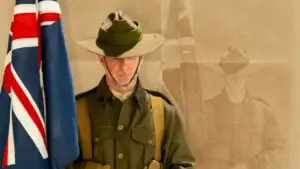
That generosity has shaped the way Ron has worked with veterans for many years. Having left Defence in 1997, he has remained deeply connected to the veteran community, although he resists letting military service become the defining feature of anyone’s identity.
The uniform provides purpose, structure and belonging, but eventually everyone returns to civilian society carrying experiences that cannot always be explained through rank or service alone. Ron believes the transition becomes easier when people remember that military service forms one chapter of a much longer life rather than its complete story.
He also recognises that institutions, like families and societies, tell stories about the people within them. Sometimes those stories are helpful, but they can also become limiting.
One of the phrases he hears regularly within Defence is that “we’re all green.” The intention is to emphasise unity, yet Ron gently challenges the idea because it overlooks the richness of the lives people bring with them before they ever put on a uniform.
“We all arrive with different histories,” he says. “Where we’ve come from matters, and where we go afterwards matters too.”
His own life reflects that complexity. He is simultaneously a veteran, a Bardi, Jawi saltwater man, a son, a father, an artist, a storyteller, a mentor and someone living with blood cancer that remains in remission. None of those identities competes with the others. Together they form the person who stands before audiences today.
“My stories matter because they’re part of all our stories,” he says. “When was the last time any of us really wrote our own?” It is a question that feels increasingly relevant in a world saturated with other people’s opinions.
We are constantly told who we should become, how success ought to look and what experiences deserve attention. Against that noise, Ron’s work offers something unexpectedly gentle. He asks people to become curious about their own lives, notice the stories they have inherited, decide which ones still serve them, and then to speak honestly about the ones that have shaped them. He does not ask audiences to agree with him but simply to recognise themselves.
Finding shared spaces in lived experience
Perhaps that is why his work resonates across so many different communities. Veterans, Aboriginal families, artists, students and people who have never set foot inside a gallery all recognise the same human instinct beneath his practice. Every one of us wants to know that our life has meaning. We all want to believe our experiences deserve to be remembered, and each one of us hopes that when we finally tell our story, someone will care enough to listen.
Ron has spent a lifetime telling stories, yet listening remains the practice he values most. Whether he is standing in front of an audience, working alongside veterans, assembling an installation or sitting with someone whose life has been shaped by grief or trauma, he returns to the same quiet discipline of letting another person speak without interruption. The story belongs to the person who lived it. His role is simply to make enough space for it to be told.
That philosophy extends beyond his work as an artist or storyteller. It shapes the way he understands community, military service, history and identity. Every person arrives carrying experiences that deserve to be recognised in their full complexity rather than reduced to a single label or chapter. Veterans are more than their service. Aboriginal people are more than history. Families are more than the hardships they have endured. We are all, as Ron reminds us, still becoming tomorrow’s people.