Leadership within Australia’s defence institutions continues to reflect broader shifts in national attitudes toward authority, merit, and representation in traditionally male-dominated professions. The appointment of the country’s first female Chief of Army marks not only a significant institutional milestone, but also a cultural indicator of how perceptions within the Australian Defence Force and wider community may be evolving. At a time when defence capability, recruitment, and organisational trust remain under scrutiny, the relatively restrained public reaction to such a historic promotion suggests a changing relationship between gender, leadership, and military service in modern Australia.
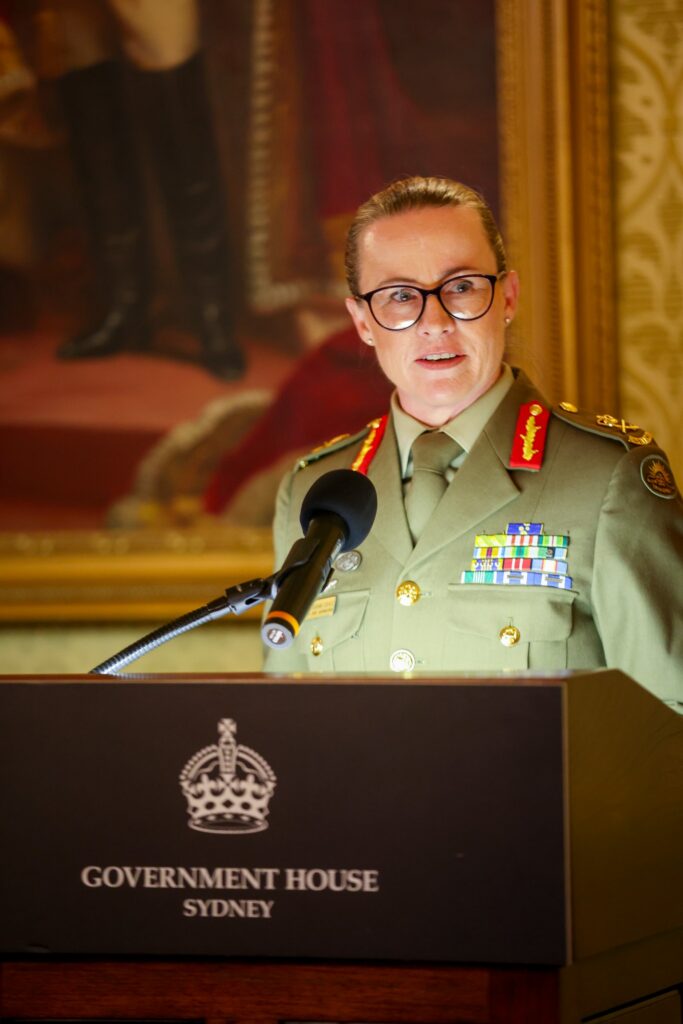
The Australian Defence Force reached a milestone recently with the promotion of Lieutenant General Susan Coyle AM CSC DSM, who was appointed as the first female to be the Chief of Army.
It’s good to see a woman achieve such great heights, and even more so one who began in the Army Reserve as a soldier in 1987, before going on to complete a science degree at the Australian Defence Force Academy and graduating from the Royal Military College in 1992 into the Royal Australian Corps of Signals.
The 1980s was a pretty hard-core time for women to join the Army. I know because I joined the Army as an enlisted soldier in 1989. It was a time when women weren’t seen as one of the boys, but almost as the enemy as we ‘had it so much easier than the blokes’ (according to some of the blokes I worked with early in my decade-long service). However, this taught me some valuable life lessons very early in my tenure. It taught me to (generally) behave, take on board some rather harsh criticism, develop discipline, a solid work ethic, an even higher pain tolerance and a life-long pursuit of fitness. This school-of-hard-knocks environment made me tough, and the proof in this appointment is that it made Lt Gen Coyle tough too.
Now, the focus of this opinion piece is not just about tough 80s army chicks (I joined with Senator Jacqui Lambie and she is a beacon of tough). Instead, I want to focus on the historically monumental promotion of the first female Chief of Army Lt Gen Susan Coyle. I can guarantee that she has heard, seen and experienced it all during her time in the military. I’m not saying Army service was all bad, but you do witness every extreme in the military and the rainbow of emotions and behaviour from people due to both the stressful, and joyful nature of the job. Working successfully and achieving so much speaks to the sheer mettle of this woman, something that isn’t built overnight, but shaped over years in an environment that tests you daily.
The moment the backlash didn’t land
Although I worked mainly with aviation, I was rarely treated as a woman, after all there is no gender as you lower down from a helicopter (only fear and focus) and I was always treated as a member of the team. So, while I applaud the first woman in such a role, I want to stress that many of us didn’t want to be labelled as the only ‘woman’ in a crew; we just wanted to be a high-functioning member of the team.
I’d like to bet that Lt Gen Coyle was bracing herself for extreme reactions to her promotion, for the haters to come out, and for the blowback that comes with earning what has long been the most masculine role in one of the most male-dominated institutions in the country. I’m pleased to say there wasn’t.
I know this sentiment might disappoint a few who were expecting outrage, but from my observations, and in researching this piece, I was struck by how limited the backlash actually was. A handful of nasty, disrespectful social media critics surfaced, and some mainstream media coverage amplified those voices, but they remained just that – a small, noisy minority rather than the dominant narrative.
Former ADF chief, retired Admiral Chris Barrie AC, who led the charge for women to go to sea in the 1990s, did not hold back when he told ABC radio the derogatory comments were “disgraceful”. “Anyone who mistakes the gender of somebody for not being competent is an idiot and has no respect for how this country really works,” he said, underscoring just how out of step those views are.
That’s not to say there was complete silence though. There were murmurs about tokenism, suggestions the decision was about optics rather than merit, as well as hand-wringing fear that the Army would go soft, and some questioned whether this was a cultural shift too far, too fast. But what stood out to me wasn’t the criticism itself, because ‘us gals’ know that kind of commentary has followed women in uniform for decades. It was how limited that commentary was. It didn’t dominate the conversation, or set the tone, and importantly, it didn’t land with the same force it once would have.
So, does this mean the tide has changed? I’m hesitant, and possibly even scared, to think this, let alone write it publicly.
I am, however, absolutely bloody chuffed that someone had the guts to make the decision to promote Lt Gen Susan Coyle AM CSC DSM, and she had the bloody guts to accept it. It is one of those special moments where I’m quietly proud to be Australian. I’m also bloody proud of our defence force taking this momentous step, which is not because she’s a woman, but because she’s the right leader.
And maybe, just maybe, that’s the real milestone.