Australia’s growing reliance on space-based infrastructure is reshaping the national conversation around sovereign capability, defence resilience, and industrial self-sufficiency. As geopolitical instability exposes vulnerabilities in global supply chains and allied dependency, pressure is increasing on Australia to develop domestic capability across critical technologies, including launch systems, satellite infrastructure, and advanced manufacturing. The push to establish a sovereign space industry reflects broader concerns about national security, economic resilience, and Australia’s long-term position within an increasingly contested strategic domain.
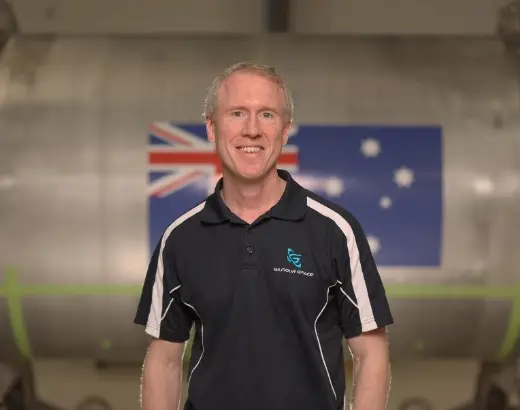
It has taken global conflict for Australia to start taking its own space industry seriously. That is the unmistakable message from Adam Gilmour, co-founder and CEO of Gilmour Space Technologies, who says the shift in government thinking over the past six months has been real, but long overdue.
“I think they’re getting serious about getting Australian companies to do things [and] I think Iran was a part of that,” Gilmour said in an interview with OpOz. “Ukraine did kind of help a little bit in the narrative, but Iran definitely sped it up.”
For years, Australia has relied almost entirely on foreign space infrastructure such as data, satellites and launch capability, which mainly comes from the United States and is great while it works. “We rely on every other country… people can turn things off, or stop providing the capability,” Gilmour said.
This is not a hypothetical risk as we know from Covid, when allies couldn’t even rely on each other for face masks and latex gloves. The pandemic showed how quickly supply chains can collapse. More recently, the global conflict has exposed something more uncomfortable, which is that critical capability can be diverted, delayed or denied.
The diversion of NASAMS (National Advanced Surface-to-Air Missile System) capability to the UAE to defend against attacks from Iran is a case in point. “That would not happen if an Australian company was building those missiles; it’s as simple as that,” he said. “That’s the reality of having Australian companies make things for the country, is that no other government is going to tell you to move it somewhere else. You have to have resiliency in anything you critically depend on, and space is one of those things.”
Building Australia’s space capabilities
Today’s geopolitical reality is now bleeding into how governments are thinking about space. Australia currently has no sovereign space capability and relies on allies for everything from communications and intelligence, to applications across farming, mining and transport.
Gilmour Space Technologies’ ambition is clear: to build, launch and operate Australian-made satellites on Australian rockets from Australian soil.
“A launch pad, sending satellites that are made in Australia, with sensors that are made in Australia, on rockets that are made in Australia, to space,” he said.
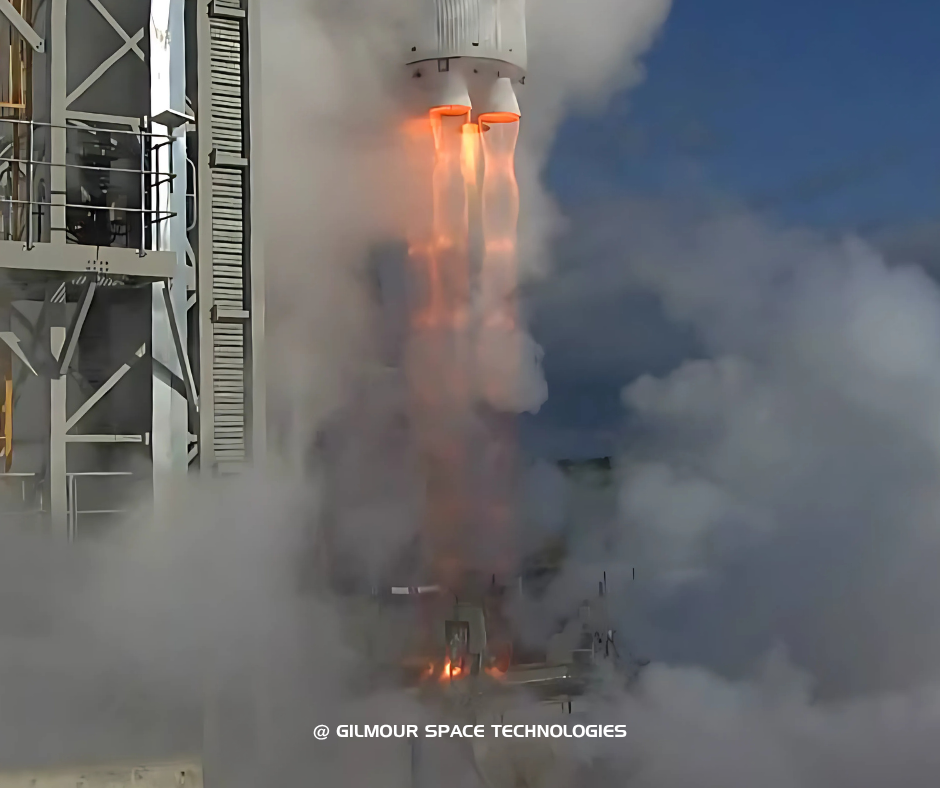
Last year’s Eris rocket launch was not about reaching orbit, Gilmour explained, but about proving their system worked, and in many ways it did. The rocket cleared the pad, the guidance and navigation systems held, and even with an engine issue, the rocket continued to climb.
More importantly, the launch validated something much less visible than the news footage suggests, and that was the infrastructure, the team and the orchestration required to get a rocket off the ground. It took years of work, hundreds of components, and a launch campaign that tested everything from fuel systems to structural integrity under extreme vibration.
“It’s like an orchestra, you could see the team getting better and more confident as they went along and by the time they went into the launch, they were very confident in what they were doing, and so that confidence moves into the next launch campaign,” Gilmour said.
That confidence now carries into the next campaign. The first launch was slow, technical and expensive, with regulatory delays alone costing the company at least $20 million in downtime.
Backing local procurement
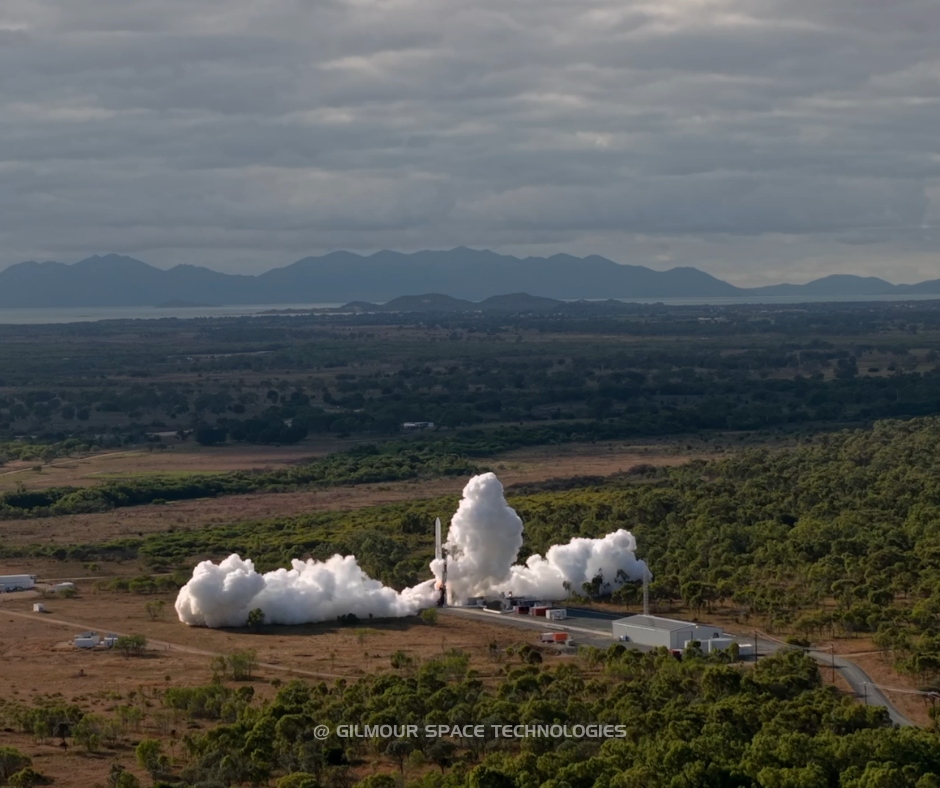
The next launch is expected at the Bowen site in July, with the company targeting orbit on fourth mission, currently slated for 2027.
Beyond launches, the biggest problem is not funding, but procurement. Capital is available and investors understand the opportunity because space is as much a commercial play as it is a strategic one. “The rest of the world is pouring boatloads of money into their local defence and space industries,” Gilmour said.
His solution, when asked what he would change if given a single wish from government, is simple and modest: a defined percentage of defence capability spending directed to Australian companies.
“So you might say 10 per cent of the capability (that’s fighters, subs, drones, missiles, space tech) has to go to Australian companies,” he said. “That would be a good start because 10 per cent is a meaningful amount of money … not just for the Australian companies, but for the defence of the nation.” Even a shift of that scale could change the landscape and unlock billions into domestic development.
There is a deeper tension running through the industry, because even though Australian may be able to build a space industry, the question is whether it can retain it. While Australia will remain home, the company has the US and Japan on its radar for expansion.
An IPO is also under consideration in the next few years, potentially on US markets. And while a dual listing in Australia remains possible, the direction is clear that scale, capital and speed sits offshore. It is a familiar story in tech: build locally, but grow globally.
Gilmour Space Technologies’ timeline is ambitious, but if successful it would mark a point where Australia begins to build a genuine sovereign space capability, rather than relying on others to provide it.
“If we do what we want to do, we’ll be a top three country in the Western world,” Gilmour said. If not, the status quo holds, dependence remains, and Australia stays on the sidelines of a domain it increasingly relies on.