Veteran wellbeing is increasingly understood as extending beyond clinical treatment to include the social, cultural and creative factors that influence recovery, resilience and quality of life. As organisations explore new approaches to supporting transition and trauma recovery, programs that strengthen connection, purpose and identity are contributing to a broader conversation about how veterans can be supported to rebuild meaningful lives after service.
It is nothing like a parade ground. There is no scorching heat, freezing dawn, gravel crunching beneath polished boots or standing so still that every bone and muscle aches for permission to move.
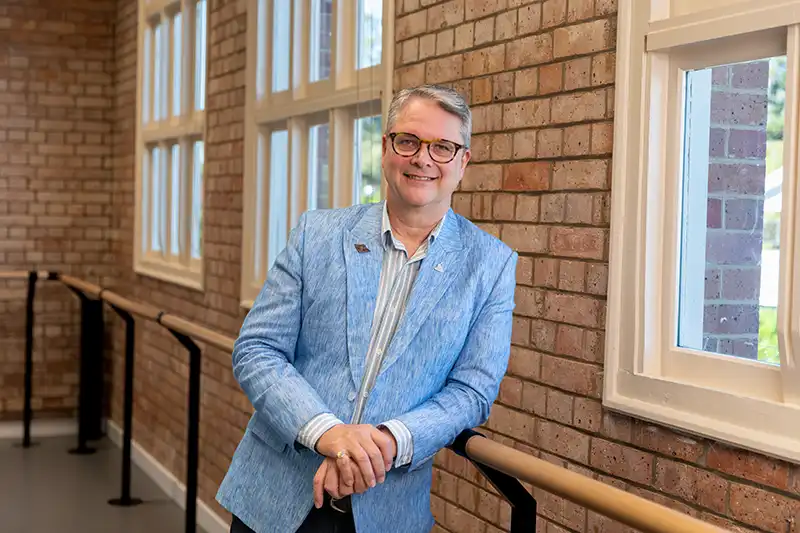
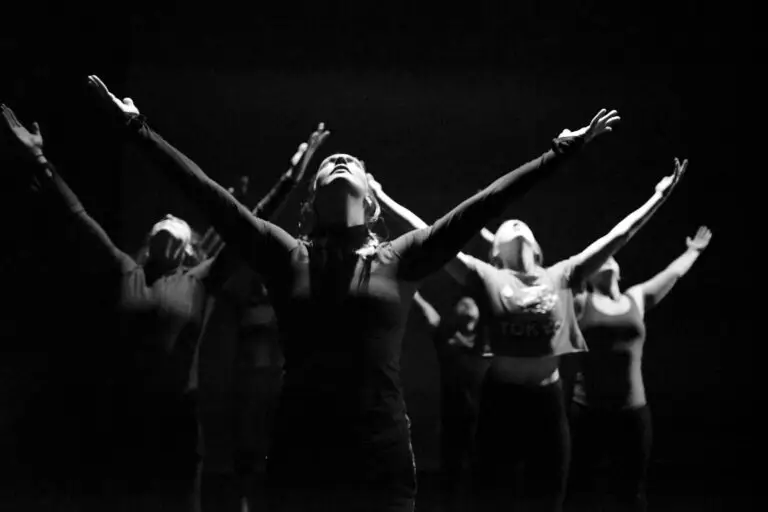
Instead, sunlight spills across the polished timber floors at the home of Queensland Ballet in Brisbane. Ballet barres line the walls, a piano stands silently near the entrance, while around the room conversations are punctuated by nervous laughter as a group of veterans prepare for something they never thought they’d do – they are here to dance.
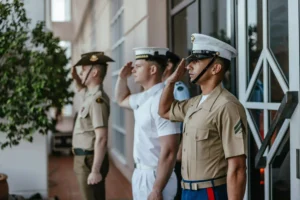
No, they are not being conscripted into becoming professional ballet dancers, they are willing participants in Dance for Veterans, a program developed by the ADF and Lieutenant Colonel Dr Rick Maher in partnership with Queensland Ballet and RSL Queensland, which uses creative arts such as movement, storytelling and teamwork to help veterans reconnect after trauma.
Dr Maher believes many veterans have been dancing throughout their careers – they just didn’t know it – because military drill and classical ballet share common movement foundations.
“Everyone who’s actually been in the military is already a ballet dancer – they just call it doing a parade,” Dr Maher told OpOz.
Dr Maher, a former dancer himself, said ballet was picked because its movements are deeply rooted in military movement, developed during the reign of King Louis XIV of France based on the Royal Horse Cavalry and the Musketeers. He explained that the structured teaching methods and symbolic movements closely resemble military drill, allowing veterans to draw on movement patterns and commands they had unknowingly practised throughout their service.
“We’re taking an artistic or creative format that is actually already part of an embodied movement practice of the people that are involved in it,” Dr Maher said.
The body remembers
Drawing on the work of renowned trauma researcher Dr Bessel van der Kolk, Dr Maher explained that trauma differs from other mental health conditions because the body is remembering an event that occurred and then the brain follows.
“By incorporating a highly regulated and regimented series of movement, that also regulates things like breathing and having to focus on balance, you’re creating processes that contribute to the regulation of neurological processes,” he said.
“Trauma is not like you can be cured of it – it happened – it is in your life and it’s a permanent experience in your world. The trick to trauma recovery is not to be in a position where you are cured of the trauma, it’s really about, how do you then adapt to, how do you develop coping mechanisms?”
“I think one of those ways in which you can explore what it means to you and how you redefine who you are after a trauma can be through creativity and storytelling and you can do that through visual art, writing or dance or anything like that.”
Dr Maher said the program was not designed to replace clinical treatments, but instead to complement therapies such as psychology, psychiatry or pharmaceutical interventions.
“What we’re doing is creating a greater wellbeing package for people that then enhances the clinical outcomes.”
Since the program began, participants have shown significant improvements in psychological wellbeing, physical health, social relationships and perceptions of safety, using the World Health Organisation’s Quality of Life assessment.
An important part of the healing process is giving veterans another language through which to tell their story. Movement and storytelling within a team environment allows participants to communicate experiences that words alone cannot express to friends, family or clinicians.
For one veteran, that language became a step towards rebuilding a life he had all but given up on. “He was referred by psychologists and he had already resigned himself to take his own life that week,” Dr Maher said. “At the end of the first session he approached me and his comment was that he didn’t realise that he could be relied upon nor could he rely upon other people anymore. And you know, he indeed didn’t take his life.”
Dr Maher said the veteran completed the program, has since found employment, began studying, and now helps support other veterans. He said the program also helped him build new friendships through a renewed sense of achievement, creativity and belonging within a community.
Long-lasting healing
Dr Maher believes those outcomes are no accident and stem from rebuilding many of the qualities veterans often lose when they leave military service, including purpose, belonging and connection. The culture and identity issues are also aligned in the program that reflect the Army, Navy and Air Force “tribes”, he said.
“A cultural practice is about serving others rather than yourself, and particularly juxtapositioned against what we see in current society where hyper-individualism is celebrated,” Dr Maher said. “Military culture is … the group gives me identity, we derive value because we are part of a greater group.”
The program helped another veteran rebuild his relationship with his family after years of estrangement. He has not spoken to his daughters for two years before they attended the final performance at the end of the course.
“His youngest, who had danced, actually showed up to watch his final performance piece and it was the first time he’d seen her in ages,” Dr Maher said.
“The first thing she said to him after he completed was, ‘I’m so proud of you Daddy’, and he burst into tears.
Dr Maher said the pair have since rebuilt the relationship and now enjoy attending the ballet together.
Editor’s note: The author participated in the introductory Dance for Veterans program before withdrawing because of a (pre-existing) injury.