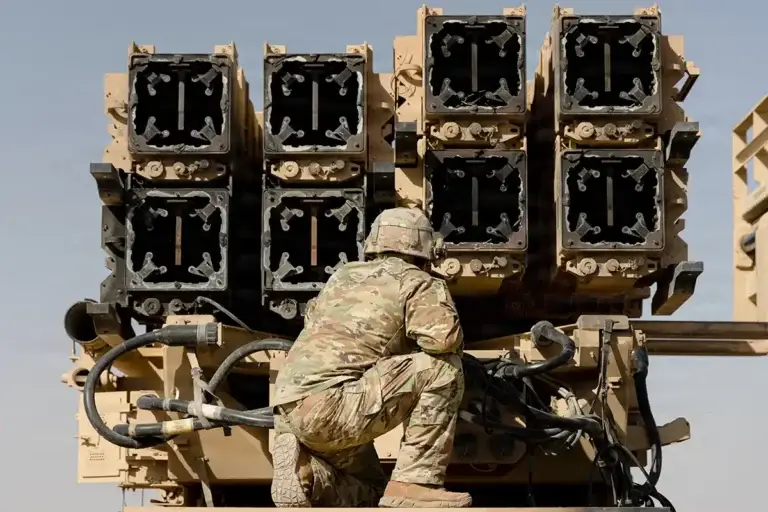
Australia’s defence investment is increasing as strategic uncertainty places greater pressure on the nation’s ability to sustain military capability over time. While major weapons programs remain central to Defence planning, recent conflicts have highlighted the importance of production capacity, resilient supply chains and the ability to manufacture equipment at scale. Building greater sovereign industrial depth could create a larger role for Australian small and medium businesses, including veteran-owned companies with operational experience and specialist expertise, across manufacturing, components, testing and sustainment.
The Australian defence conversation is stuck on the wrong noun. We argue about the budget, but the budget is not the problem. The Auditor-General has spent eighteen years documenting what happens after the money is appropriated, and the answer is that it moves slowly, in small batches, through a very small number of very large companies.
There is a version of this article that tells veterans in business to aim high; chase the prime contract, build the exquisite thing, get on the panel. This is not that article.
The last four years of open-source conflict have demonstrated something the Australian defence industrial conversation has been slow to absorb: in a long war, the decisive industrial question is not how good the weapon is. It’s how many of them you can make this month, in your own country, out of parts you control. This is exactly one of the major current issues in the current Middle East conflict.
Before anything else: I am not an economist, a defence acquisition specialist or a lawyer. Nothing below is business or legal advice. If you are considering moving a company into this market, take the export-control section near the end to a professional before you spend a dollar.
The problem is not the money, it’s the throughput
The Auditor-General’s 2024–25 Major Projects Report covers 21 acquisition projects worth $81.5 billion; that’s around 32 per cent of Defence’s total acquisition budget. Across those 21 projects, the median schedule slippage against the original government-approved delivery date is 21 months. The average is also 21 months. Summed across the portfolio, 404 months, with CMATS (Civil Military Air Traffic Control System) representing the largest contributing factor to the slippage.
That is not a scandal. That is a system operating as designed. Large, integrated, single-source acquisitions carry long design phases, foreign supply chains and integration risk. They deliver capability that cannot be bought any other way. But they cannot be surged. A production line built to deliver a handful of exquisite items a year does not become a line that delivers thousands because the strategic circumstances got worse. That’s operating as designed.
There is a second problem that lies underneath it. Of the 21 project data sheets in that report, 19 contain information Defence has withheld from publication. The Auditor-General has now issued four consecutive Emphases of Matter about it. Whatever the security justification, and there is one, the practical effect is that the public cannot see the schedule performance of most of the portfolio. Guided weapons and explosive ordnance, one of the thirteen capability elements in the Integrated Investment Program, is not covered in the report at all.
Ukraine and Iran did not prove that cheap wins, they proved that production rate wins
The National Security and Defence Council of Ukraine states that as of 2026 the country’s industry can produce more than eight million first-person-view drones a year, across more than 160 companies ranging from large factories to small specialist firms. Analysts speaking at CSIS (Center for Strategic and International Studies) put the average unit cost of those drones at somewhere between two hundred and one thousand US dollars.
On the other side of the equation, CSIS’s Missile Defense Project reports analyst estimates of US$20,000 to US$50,000 for an Iranian Shahed-type one-way attack drone. That figure deserves a caveat, and most commentary skips it: economist Esfandyar Batmanghelidj has argued in detail that these estimates are derived unscientifically and may not reflect true production cost at all. Treat the number as an order of magnitude, not a fact.
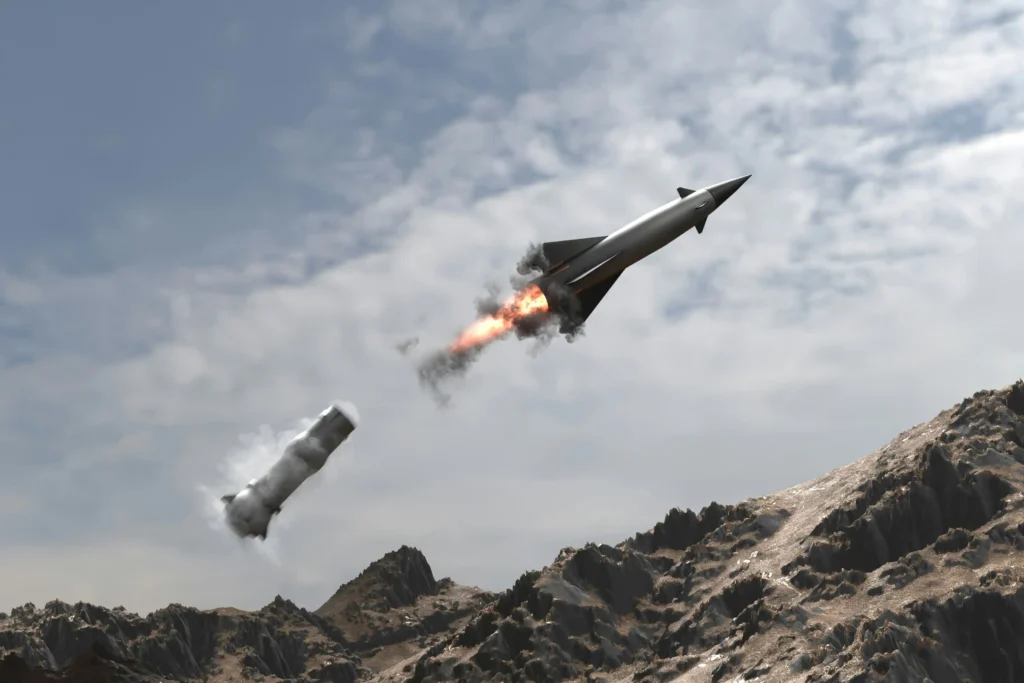
But the order of magnitude is the whole argument. It does not matter whether a Shahed costs twenty thousand dollars or eighty. It matters that the thing shooting it down costs more, and that the side firing them can build them faster than the side stopping them can replace interceptors. Ben Dullroy made exactly this point in these pages earlier this month: million-dollar missiles cannot be spent on thousand-dollar drones indefinitely. It’s bad business economics 101.
The objection: cheap things lose to sophisticated things
They do, routinely. FPV drones fail against armour, electronic warfare, weather, and competent air defence. Nobody sane proposes swapping an air-defence system for a shed full of quadcopters, and the layered architecture Australia is buying exists because the high-end threat is real.
The claim is narrower than that, and it’s a claim about industry rather than tactics. A country that can only build at the top of the market has one production rate, and it is slow. A country that can also build at the bottom has a second rate, supply chain, and set of manufacturers who are not competing for the same scarce engineers. Depth is the capability. Cheapness is just how you afford depth.
Australia has made the bet; but only at the top
Give the guided weapons program its due. GMLRS (Guided Multiple Launch Rocket System) production began at Port Wakefield in December 2025, the second facility of its kind outside the United States. Kongsberg’s Naval Strike Missile and Joint Strike Missile factory at Newcastle Airport, backed by up to $850 million, is due into production in 2027. Defence describes an investment of up to $21 billion in the enterprise over the decade, and a long-term goal of 4,000 GMLRS a year by 2029.
Now read the fine print. Defence’s own account notes the parts are initially coming from the United States. Analysis published by ASPI (Australian Strategic Policy Institute) notes that agreement to produce some GMLRS components locally begins in 2029, and that it is not yet clear which components. Assembly is not manufacture. It is a real and necessary first step, but it is not the same as being able to build the round when sea lanes are contested, or global warming reduces the ability to ship cargo through the Panama Canal. This means air transport is required, and Australia has limited strategic lift resources.
Where a veteran-owned business actually fits
Not as a prime. The Auditor-General’s May 2025 audit Maximising Australian Industry Participation through Defence Contracting concluded that Defence “has not maximised Australian industry participation through the administration of its contracts.” Every one of the eight contracts examined had one or more important shortcomings. Where suppliers had industry commitments, only 12 of 59 relevant measures were reported as being against them. Of 768 internal contract surveys, 209 or 27 per cent, recorded industry-participation obligations as simply “not applicable.” Nine recommendations were made. Defence agreed to all nine.
That is a system in which sitting downstream of a prime and waiting for flow-down work is a poor business model.
The addressable market is elsewhere. In calendar 2022, of roughly 15,000 Defence procurements, more than 600 met the industry-participation threshold, including over 400 materiel and non-materiel contracts in the $4–20 million band. Defence itself was the Commonwealth’s largest procurer that period, at $38.69 billion, 51.7 per cent of all Commonwealth contracting. The 2024 Defence Industry Development Strategy names seven Sovereign Defence Industrial Priorities, and two of them read like a brief written for a small company: domestic manufacture of guided weapons, explosive ordnance and munitions; and development and integration of autonomous systems. A third, test and evaluation, certification and systems assurance, is work that a former maintainer, armament technician or trials officer already knows how to do.
Components. Fuzes. Airframes. Batteries. Test rigs. Certification support. Sustainment. Counter-drone. The unglamorous middle of the supply chain is where a fifteen-person company with operational credibility can actually compete, and it is the part of the industrial base that has to exist before “sovereign” means anything. This concept has been done before in Australia, successfully, by both public and private companies.
Read the rules before you buy the tooling
This is the part that often ends companies. The Defence Trade Controls Amendment Act 2024 commenced on 1 September 2024. It did two things at once. It created a licence-free environment for most military and dual-use transfers between Australia, the United Kingdom and the United States: genuinely useful. It also added three new offences to the Defence Trade Controls Act 2012, including section 10A, which captures supplying controlled technology to a foreign person inside Australia. Hiring an engineer on the wrong visa can now be an export.
Before you commit capital: get advice on whether your product sits on the Defence and Strategic Goods List, on Defence Industry Security Program membership, on record-keeping obligations, and on whether any part of your supply chain touches US ITAR-controlled technology. This is specialist legal work. It is not optional, and it is not something to resolve after the first order.
Four questions before you pivot
- Can you build the hundredth unit as cheaply as the tenth? If not, you have a prototype business, not a production business.
- What percentage of your bill of materials is sourced from a country that might be in the conflict? That number is your real sovereignty figure.
- Are you selling a platform, or a part? Parts have fewer competitors, faster qualification and lower capital requirements.
- Have you had an export-control opinion in writing? Before tooling. Not after.
What the last four years actually taught
The reforms are real. The Defence Delivery Group stood up on 1 July 2026, consolidating three delivery organisations under a National Armaments Director, and becomes an independent Defence Delivery Agency in July 2027. The stated intent is clearer demand signals and stronger commercial discipline. That is precisely what a small supplier needs, and it deserves to be judged on whether it arrives.
But no reform to the acquisition system produces industrial depth on its own. Depth is a thousand small decisions by a thousand small companies to build something boring, locally, at rate, and to keep building it when the strategic environment improves, and everyone else loses interest.
Veterans are unusually well placed to make that decision, not because service confers engineering skill, and not because it substitutes for a competent board, but because a former armament technician knows what a magazine depth problem feels like from the inside of a hangar at three in the morning, and that knowledge is worth more in a supply chain than another slide deck about disruption.
The arsenal won’t be rebuilt by the companies that build the best thing. It will be rebuilt by the ones that can build the ordinary thing, here, next month, and again the month after that.