Mental health remains one of the most significant long-term health challenges affecting Australia’s veteran community, with many veterans continuing to experience complex conditions long after their military service ends. As new evidence-based therapies become more widely available through funded treatment pathways, attention is increasingly turning to how advances in psychiatric care are expanding recovery options for veterans who have not responded to conventional approaches.
With one in three people with depression developing treatment-resistant illness and only half of PTSD patients responding to standard therapies, a new generation of approved and funded treatments is dramatically changing what recovery looks like for veterans.
For many veterans living with depression or post-traumatic stress disorder (PTSD), recovery is not a straight line. It’s often a long, uncertain journey marked by trial-and-error treatments, repeated hospital admissions, disrupted family relationships, and the growing belief that nothing is going to work.
Traditional approaches have helped thousands of people recover, but they have also revealed a significant gap in the mental healthcare system. Depression and PTSD remain among the most difficult conditions to treat predictably, particularly when standard therapies fail to deliver meaningful improvements.
The scale of the challenge is difficult to ignore
According to Department of Veterans’ Affairs transition data, almost half of transitioning veterans experience a mental health condition within a 12-month period. Over a lifetime, three in four veterans will be diagnosed with a mental health condition, while one in four will experience PTSD.
Yet the statistics that concern psychiatrists most emerge after treatment begins.
Around one in three people with depression will develop treatment-resistant depression, meaning they do not respond adequately to conventional antidepressants and psychological therapies. For PTSD, outcomes are even more challenging, with only around half of patients achieving a strong response through standard treatment pathways.
“The reality is that many people do everything they are asked to do,” says Dr Ted Cassidy, psychiatrist, Executive Chair of Monarch Mental Health Group, and Director of Mental Health Services at Total Veteran Healthcare. “They take the medication, attend therapy, engage with clinicians, and still remain unwell. By the time many patients reach us, they often feel they have somehow failed treatment, when in fact they are experiencing a very common clinical pathway.”
That pathway has become increasingly familiar to clinicians working with veterans.
A story that is all too common
When Matt first presented to Dr Cassidy in 2024, his story reflected the experience of many veterans living with long-term mental health conditions.
A former Royal Australian Navy diver who had served for 16 years, Matt had already spent nine years navigating depression and anxiety. He had been admitted to psychiatric hospitals on four separate occasions, tried multiple antidepressants, struggled with chronic sleep disruption, and increasingly relied on alcohol to cope with daily life.
His family relationships were deteriorating. His quality of life was shrinking. Importantly, Matt’s story was not unusual.
“Most of the people I see have been unwell for years before they arrive,” says Cassidy. “They have often cycled through multiple medications, multiple admissions, and multiple providers. What they are looking for is not another version of the same treatment. They are looking for something that can move them forward.”
Over the past decade, a new generation of therapies has emerged to address exactly this challenge.
These treatments are no longer experimental concepts sitting on the fringes of medicine. They are approved by Australia’s Therapeutic Goods Administration (TGA), funded through Medicare and the Department of Veterans’ Affairs, and increasingly incorporated into mainstream psychiatric practice.
Together, they are reshaping what recovery can look like for people who previously had few remaining options.
Rewiring the brain through Transcranial Magnetic Stimulation
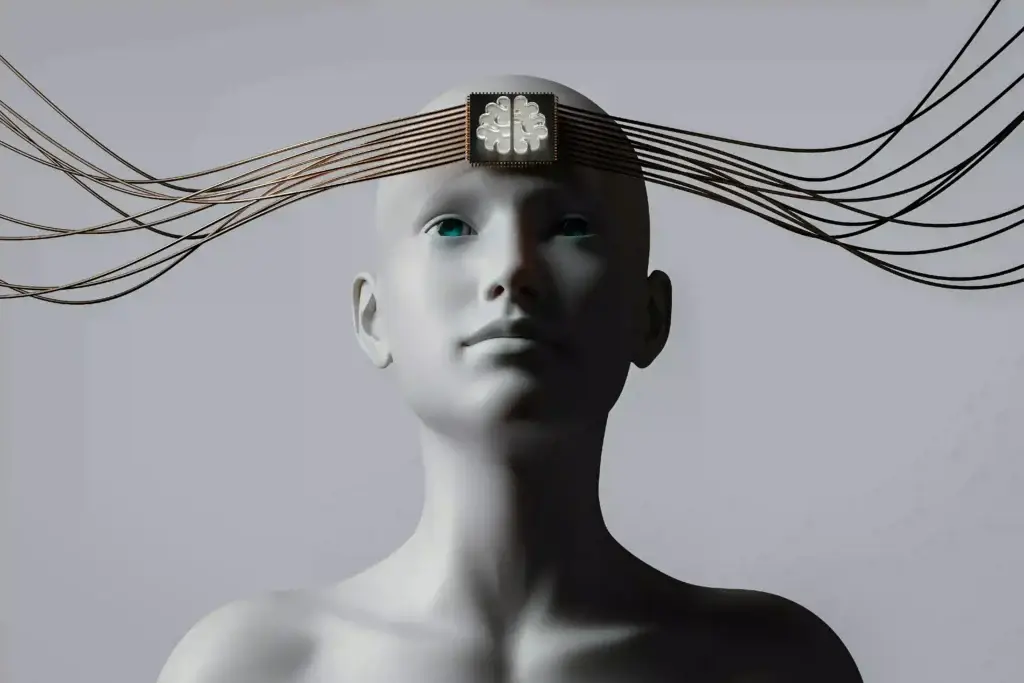
The first step in this evolving treatment pathway is Transcranial Magnetic Stimulation (TMS).
TMS uses powerful magnetic fields to stimulate areas of the brain involved in mood regulation. Because magnetic fields pass through skin and bone, treatment can be delivered without surgery, sedation, or medication changes.
Patients remain awake throughout the procedure and return home immediately afterward.
“TMS allows us to activate positive mood pathways directly,” Cassidy explains. “It is a highly targeted treatment that can be delivered safely in an outpatient setting, and it gives many people an opportunity to improve without adding another medication.”
The treatment is one of the most extensively researched interventions in modern psychiatry, supported by decades of clinical evidence and tens of thousands of patients worldwide.
Approximately six out of ten people with treatment-resistant depression experience a significant improvement or complete remission following treatment.
Recent changes to DVA funding pathways have also dramatically improved access, allowing veterans to commence treatment almost immediately following psychiatric assessment.
For veterans in regional Australia, accelerated treatment protocols are proving particularly valuable. Rather than attending appointments over six weeks, patients can now complete treatment intensively over several days.
A new class of antidepressant
For patients who continue to experience symptoms, the next step may involve esketamine. Approved in Australia and listed on the Pharmaceutical Benefits Scheme, esketamine represents the first entirely new antidepressant class introduced in more than three decades.
Unlike traditional antidepressants, which target serotonin and noradrenaline systems, esketamine works through glutamate pathways involved in neural connectivity and brain plasticity.
“The significance of esketamine is not only that it works differently,” says Cassidy. “It is also the speed at which many patients begin to notice changes. We often see improvements emerging within days rather than weeks.”
Administered as a supervised nasal spray in a clinical setting, esketamine offers another option for people whose depression has remained resistant to conventional treatment. Like TMS, response rates sit at approximately six in ten patients.
Importantly, these therapies are not competing alternatives. They can be layered strategically to build on previous improvements. That is exactly what happened in Matt’s case.
After completing an accelerated course of TMS, Matt experienced meaningful improvements in mood and functioning. However, progress had plateaued. Rather than abandoning one treatment and replacing it with another, his clinical team added esketamine.
The results accelerated. By early 2025, Matt was sleeping eight to nine hours a night. He was experiencing positive dreams for the first time in years. He had travelled overseas with his family, rebuilt relationships with his children, eliminated psychiatric hospital admissions, and reduced his alcohol consumption to occasional social drinking.
The changes extended far beyond symptom scores. His life had expanded again.
Accelerating therapy through psychedelic-assisted treatment
For a smaller group of patients, another treatment option is now available. Australia became the first country in the world to establish a regulated pathway allowing authorised psychiatrists to prescribe MDMA-assisted therapy for PTSD and psilocybin-assisted therapy for treatment-resistant depression.
While psychedelic-assisted therapy often attracts public attention because of the medicines involved, Cassidy emphasises that its true value lies in the therapy itself.
“This is fundamentally a therapy program,” he says. “The medicines create a state that allows people to engage with therapy more effectively. They help us access conversations and therapeutic progress that might otherwise take years.”
The treatment involves approximately 80 hours of clinician-supported therapy delivered over several months, including preparation sessions, full-day treatment sessions, and extensive integration work.
For PTSD in particular, results have been remarkable. Large international clinical trials have demonstrated response rates approaching 67 per cent, substantially exceeding outcomes typically achieved through conventional PTSD treatment alone.
“What we are seeing is an acceleration of therapeutic progress,” Cassidy explains. “In some cases, patients achieve more meaningful engagement with trauma therapy in a single treatment day than they have been able to achieve over many months of traditional therapy.”
A different way of thinking about recovery
Perhaps the most significant shift emerging from these treatments is not any individual therapy, but the way they can work together.
Mental health care has traditionally been viewed as a series of separate interventions. Patients either respond to antidepressants, or they do not. They either complete therapy, or they move on to something else.
Cassidy argues that this approach overlooks the cumulative power of sequential treatment pathways.
Consider a cohort of 100 people living with depression. Traditional treatment approaches successfully help around 60 people recover. Forty remain unwell. Applying TMS to that remaining group sees approximately 60 per cent improve. Introducing esketamine helps another significant proportion. Psychedelic-assisted therapy then assists many of those who continue to struggle.
When the therapies are viewed as a connected pathway rather than isolated options, the number of people left without meaningful improvement falls dramatically.
“Once you start layering these evidence-based treatments logically, you move from a situation where large numbers of people remain chronically unwell to one where only a very small number have not yet responded,” says Cassidy.
By the end of that pathway, only two or three people out of the original hundred remain without a substantial response.
For clinicians, veterans, and families who have spent years navigating the uncertainty of depression and PTSD, that represents a profound shift.
The story of veteran mental healthcare is no longer defined solely by the limitations of existing treatments. Increasingly, it is becoming a story about what happens when multiple evidence-based therapies are combined strategically, funded appropriately, and made accessible to the people who need them.
There are still challenges ahead. No treatment pathway delivers certainty, and no clinician would suggest every patient experiences the same outcome.
Yet the landscape has changed dramatically. For a generation of veterans who have often carried invisible injuries long after their service ended, the question is no longer whether options exist beyond traditional treatment. The question is whether enough people know they are available.