Access to major contracts can create significant growth opportunities for Australian businesses, particularly as investment in infrastructure, defence, manufacturing and Brisbane 2032 generates new procurement activity. Securing that work depends on more than technical capability, with buyers assessing financial resilience, governance, proven delivery and organisational risk well before a tender reaches the market. Understanding how procurement decisions develop can help smaller businesses strengthen their commercial readiness, build visibility and compete more effectively for opportunities that might otherwise pass them by.
Every business owner has heard the story. A major project is announced, a contract worth millions of dollars is awarded, and afterwards, someone inevitably says, “We could have done that.” Sometimes they’re right.
Technical capability is rarely the reason good businesses miss procurement opportunities. More often, they were never in the room when the conversation began.
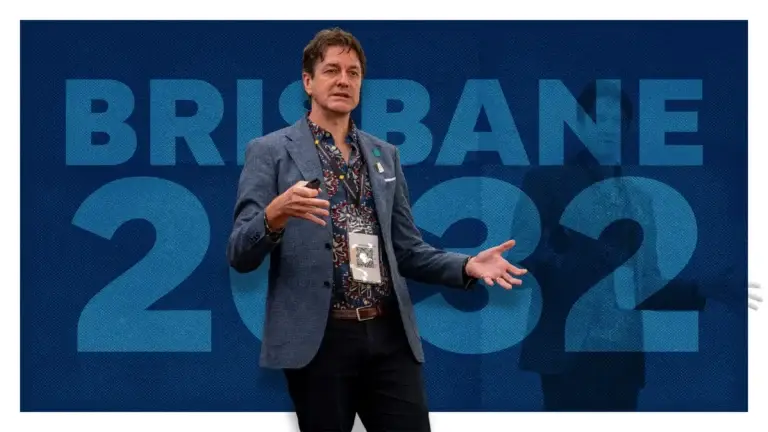
At VetCon26, Mike Swart, CEO of ICN Queensland and the Queensland Manufacturing Institute, and Karen Lenton, Stakeholder Engagement Manager at ICN Queensland, offered a rare look behind the procurement process. Together, they explained why capable businesses fail to make procurement shortlists, how major buyers evaluate suppliers long before tenders are released and what business owners can do today to improve their chances of securing work on projects such as Brisbane 2032 and beyond.

Why capability alone does not win contracts
For Swart, the lesson came from personal experience. Twenty-five years ago, he owned a business that specialised in satellite communications. After completing an assessment across several mine sites in Tanzania, he submitted a proposal for work worth more than $30 million. Technically, he knew he could deliver the project. Commercially, however, he represented an enormous risk. His business was turning over less than $1 million a year.
Looking back, he realised he had been asking the client to place extraordinary trust in an organisation that lacked the financial scale, governance structures and commercial maturity expected for a contract of that size. The project owner was not simply evaluating whether he understood satellite communications. They were asking whether his business could absorb risk, manage complexity and remain financially stable throughout the life of the project.
That experience fundamentally changed the way he understood procurement. “It wasn’t about whether I could do the work,” Swart explains. “It was about the risk I represented.”
Many business owners assume procurement is primarily an assessment of technical capability. Swart argues that capability is only one part of a much broader picture. Buyers are also evaluating governance, financial resilience, insurance, certifications, previous delivery, business continuity, ethical obligations and organisational maturity because every procurement decision is ultimately a decision about risk.
That perspective helps explain why smaller businesses are sometimes surprised when they lose work to larger competitors. The larger organisation may not necessarily have greater technical expertise, but it often provides greater confidence that the project will be delivered successfully under changing circumstances.
Building visibility before the opportunity arrives
Swart believes one of the biggest misconceptions among small and medium-sized enterprises is that procurement begins when a tender appears online. In reality, much of the important work happens months, and sometimes years, before suppliers are formally invited to respond.
Project owners begin by understanding the market, identifying capable suppliers, defining work packages and determining how those packages will be evaluated. By the time a shortlist is created, businesses that have invested in their visibility, documentation and market presence are already significantly ahead of organisations that only become active once procurement officially opens.
This is where many otherwise capable businesses quietly fall behind. Karen Lenton describes a company’s supplier profile as its business CV. It is often the first impression procurement teams receive, yet many businesses complete it once and never revisit it. Others fill it with generic descriptions that say very little about what they actually deliver.
A statement like “family-owned business” may feel meaningful to the owner, but it tells a procurement team almost nothing about capability. Buyers want to understand what problems a business solves, what experience it brings, where it operates and how it delivers value. That information needs to be immediately visible because procurement professionals are searching for capability, not marketing language.
“The profile is your business CV,” Lenton explains. “It’s what buyers see before they know anything else about you.” That profile also needs regular attention.
Businesses evolve continuously. New certifications are obtained, projects are completed, staff join the organisation and service offerings expand. Every one of those developments strengthens a supplier’s credibility, but only if the information has been updated before procurement begins. An outdated profile tells buyers that a business has stood still, even when the opposite is true.
The same principle applies to expressions of interest. Many organisations treat EOIs as preliminary paperwork rather than an important commercial opportunity. Swart and Lenton see them differently. An expression of interest is often the first formal opportunity to demonstrate that a business understands both the project and the procurement process itself.
Submitting an incomplete response, failing to answer the questions properly or overlooking requested information can remove a business from consideration before its technical capability is ever assessed. Procurement teams have neither the time nor the obligation to fill in the gaps on behalf of suppliers.
“There are projects where incomplete submissions are simply excluded,” Swart says. “You haven’t followed the process.” His advice extends beyond individual submissions because tendering itself is a professional skill.
Learning to think like a buyer
Many business owners devote years to mastering their trade but invest very little time learning how procurement works. As a result, they write responses that describe their business rather than answering the specific questions evaluators need answered. They assume quality will speak for itself instead of recognising that procurement is a structured decision-making process built around evidence.
Training in tender writing, Swart argues, provides a significant commercial advantage because it teaches businesses how buyers actually evaluate proposals rather than how suppliers naturally describe themselves. The evaluation process itself is also more structured than many suppliers realise.
Drawing on analysis of thousands of procurement packages and more than 200,000 supplier submissions, ICN identified consistent themes influencing buying decisions. Organisational capability, quality systems, supplier diversity, local content, proven delivery, environmental management, governance, financial strength and cyber security all contribute to the confidence buyers develop in a supplier before awarding work. These criteria extend well beyond technical expertise because they help procurement teams understand whether a business can deliver consistently throughout the life of a project.
That confidence is reinforced through evidence. Previous projects, documented outcomes, certifications, client references and clearly demonstrated delivery capability all reduce uncertainty for buyers. Every completed project becomes part of the commercial story a business tells about itself, making future procurement decisions easier because confidence has already been earned.
Relationships also matter, although perhaps not in the way many people imagine. Swart is careful to distinguish relationship-building from preferential treatment. Probity rules prevent procurement teams from favouring suppliers during active procurement processes. Those rules are essential to maintaining fairness and transparency.
Earning buyer confidence over time
Before procurement begins, however, businesses have every opportunity to become known through industry engagement, supplier briefings, capability presentations and networking events. Familiarity does not guarantee contracts, but it does reduce uncertainty because buyers have already developed an understanding of the organisation and its capability. As Swart observes, people naturally feel more comfortable making decisions about businesses they know than businesses they have never encountered before.
Lenton offers one final piece of advice that many businesses overlook: Even unsuccessful expressions of interest create value.
Submitting an EOI places a business before procurement teams, establishes visibility and creates future opportunities for engagement. Organisations that consistently participate become recognised within the market, while those waiting for the perfect opportunity remain invisible.
“You don’t win work by not submitting an expression of interest,” she says. Procurement is not a single event that begins when a tender is published. It’s an ongoing process of building credibility, demonstrating capability and reducing perceived risk over time. Every project completed, profile updated, certification earned and well-prepared submission contributes to the confidence buyers develop long before contracts are awarded.
Good businesses do not miss opportunities because they lack talent. More often, they miss them because they underestimate how much preparation takes place before procurement formally begins. Those who understand the process recognise that winning work starts well before the tender appears, through the quiet work of building a business that buyers already trust before they ever ask it to compete.