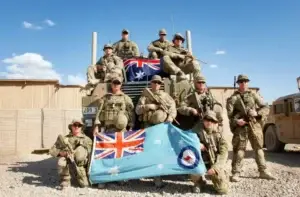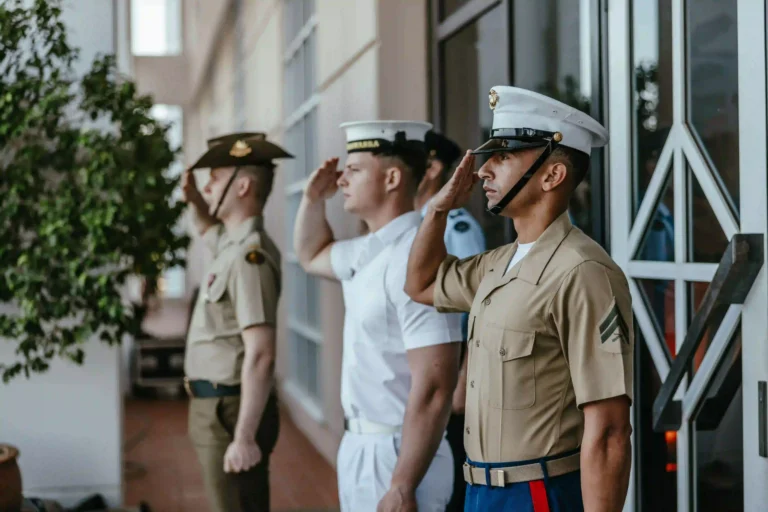
Writing about remembrance requires choices about how to honour individual service while navigating public debate over war, military history and national responsibility. Human stories can make sacrifice accessible to wider audiences, but they also attract criticism over omitted detail, political decisions and contested campaigns. Clear distinctions between government policy and individual service remain essential to respectful commemoration.
Each remembrance piece begins with a name, a photograph or a fragment of a life cut short. Turning that material into a story for contemporary readers has taught me as much about the audience as the person being remembered. These are the five lessons that have stayed with me.
1. There will always be people who want to discuss the “why” of wars, rather than honour and remember the person who sacrificed.
Wars are tremendously complex events, often involving overlapping national, alliance, historical, political, military and strategic factors. It is simply not possible to cover those factors adequately where the primary focus is the individual human story.
However, this does not stop people from wanting to litigate the “why” of any war and from criticising the author for failing to cover those issues (I have been called a “war-mongerer” for this reason.)
War is by its very nature a terrible thing. It is little surprise people want to make sense of war and demand full answers. But it is not always possible to explain quickly and comprehensively on social media why wars take place and why a country like Australia may have decided to contribute forces. Indeed, the question of whether a war is justifiable is necessarily a separate discussion from the question of any individual’s service and courage within that (contested) war.
2. Most readers prefer human stories, over military detail. Military and military history communities do not always accept this fact.
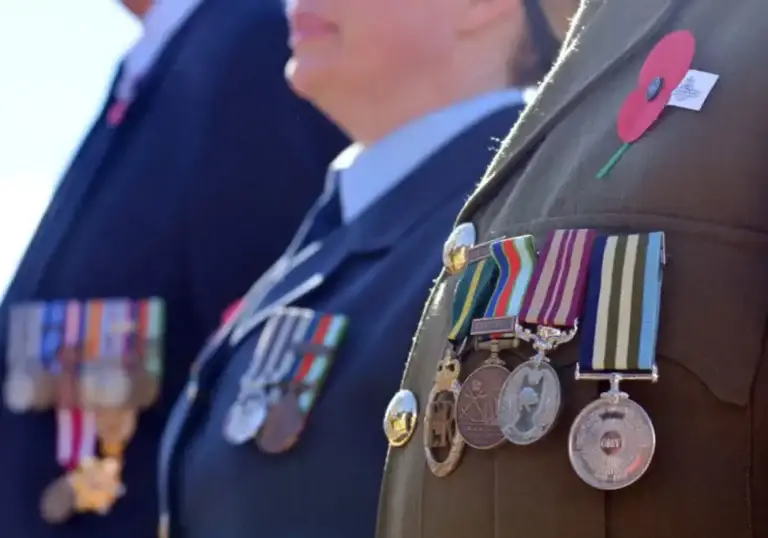
Writing for newspapers and social media is fraught in this respect. Some in military or military history communities dislike any attempt to summarise or generalise broad themes and experts may seize on any omission of details. For example, I have been criticised for failing to include all of the medals and honours received by a person or the name of the unit in which he or she served. But when you are writing in a very short format (either a post or an article) you have to move the story along. Unfortunately, you cannot afford to “spend” your very short word limit on details which are important from a military point of view but are ultimately tangential to the human story.
Either you reach a large audience by keeping your stories high-level and accessible to anyone (including people with less developed literacy skills), or you reach a much smaller audience by adding layers of sophisticated detail to the narrative.
3. Some people believe that governments who make the decisions to go to war and the soldiers who fight those wars are one and the same. So, they reject any attempt to honour anyone who has served Australia on the basis that everyone is equally “guilty” for war.
This is an absurd assumption but it is one which gained credence in Australia during the Vietnam War, when leaders of the anti-war movement often failed to draw a distinction between Government decision-makers and the ordinary soldiers sent to Vietnam (some of them very young and undertaking compulsory National Service). Because of this failure to draw clear, respectful boundaries in the public debate, veterans were often treated poorly on their return to Australia.
Obviously, in a country like Australia, the Government makes the decision on when to go to war, the nature of the country’s contribution and how that war is conducted. Whilst a few very senior military commanders might shape that decision-making process, realistically the vast majority of individuals in the military have no control over such decisions.
So, ultimate accountability always lies with the government of the day – and certainly not with relatively junior members of the armed forces (who are also usually the most likely to lose their lives in war).
4. Some people are muddled and confused about “war crimes.”
Every time I post on the incredibly gallant RAAF pilots and crew who flew in WWII in the European theatre, this criticism will arise. I will post a picture of a 19-year-old who lost his life when his plane was shot down over Nazi Germany and at least one or two people will demand to know why I am honouring a person who bombed civilians or committed “war crimes”.
I am not entirely clear where this assessment is drawn from. I assume it is because of controversies around certain Allied bombing campaigns which caused civilian deaths in Nazi Germany. Of course, leaving aside both the complex issues related to ethical targeting of sites in war and the gruesome aggression of Nazi Germany, the core issue remains point three.
None of the young men themselves who so courageously fulfilled their missions had any control over the locations and targets they were set. So, it is nonsensical to refuse to acknowledge their extraordinary bravery, when many of them knew, as they climbed into their planes, there was not much better than a 50 per cent chance they would return from that mission alive.
More broadly, the term “war crimes” is today flung around carelessly on social media by people who appear to have very little understanding of what conduct actually constitutes a war crime.
5. The lack of compassion from some will never cease to be deeply shocking.
When a person’s sacrifice for our country is dismissed, trivialised or mocked by commenters, there is very little the author can do. Because you cannot argue with such casual callousness and ghastly irrationality.
It is possible some of these narratives are driven by enemies of the West and our country. Nevertheless, regardless of the individual or their motivation for their comments, the greatest and most overwhelming truth remains that these people who “comment” are freely living their lives today, whereas so many young men who served in our past did not even make it to the age of 30.
Lest we forget.