Ukraine’s shortage of high-end air defence interceptors is creating dangerous gaps as Russia intensifies attacks on cities, energy systems and military infrastructure. Yet Russia also faces limits in producing the ballistic missiles most capable of penetrating Ukraine’s layered defences. Understanding both constraints provides a fuller assessment of the current air war and its likely trajectory.
The air war over Ukraine is increasingly described through a single lens: Kyiv is running short of high end interceptors. That problem is real, last night in Kyiv we awoke to ballistic attacks with little or no warning. These attacks are dangerous, real and do harm innocent people. The reality is that Ukraine cannot defend every city, airfield, logistics hub and industrial facility against Russia’s ballistic missile campaign, particularly when Patriot class interceptors remain globally scarce and expensive. What interceptors Ukraine does have are being prioritised for winter defence when energy systems will be under maximum pressure.
But this framing captures only one side of the problem. Russia also faces significant shortages and constraint which probably aren’t discussed enough.
Russia’s ballistic arsenal and production is more limited than we usually appreciate
Russia’s air campaign can look far more sustainable than it actually is. Large Russian strike packages create the impression of an almost limitless arsenal. A night involving hundreds of drones, cruise missiles and ballistic weapons has enormous psychological and political effect. The scale of the attack itself becomes part of the message: Russia can keep doing this forever.
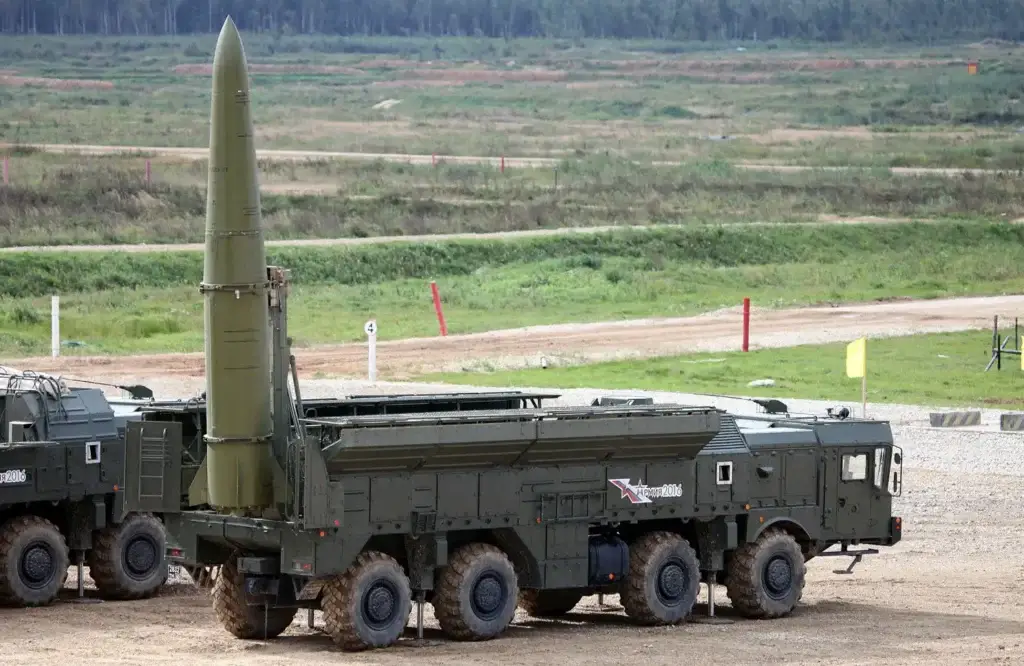
But ballistic missiles are not Shahed type drones. They cannot be produced in comparable quantities and they cannot be replaced cheaply. Current estimates place Russian production of Iskander-M ballistic missiles at roughly several dozen per month, with far smaller numbers of Kinzhal and Zircon weapons added to the inventory. The exact figures are uncertain, but the broad industrial reality is not. Russian ballistic missile production is measured in dozens per month, not hundreds.
That creates an important distinction between Russia’s ability to launch a large attack and its ability to regenerate the weapons consumed in that attack. These weapons are rationed out and even if all of them get through, it won’t win Russia the war. Ukraine already has the lived example of its pre-Patriot days where Russia’s air campaign was significantly less opposed than it is today.
If Russia fires ballistic missiles faster than it manufactures them, it must draw down stocks accumulated before and during the war. That stockpile may be substantial, but it is not infinite. This is the part of the missile war that is often obscured by the visibility of successful strikes.
The Patriot shortage is going to hurt but it won’t be enough
Ukraine is a very large country with a dispersed military system. Its armed forces operate through thousands of potential targets: command posts, ammunition depots, rail junctions, bridges, airfields, repair facilities, training areas, energy infrastructure and defence industrial plants.
Even if every Russian ballistic missile reached its intended target, several dozen new missiles per month would not be enough to systematically dismantle that network. They can impose severe costs. Russia can disrupt operations. They can create periods of local Ukranian exposure and heavily impact power systems this winter. But, Russia cannot, at current production levels, substitute for an operational breakthrough on the ground.
This is why ballistic missiles should be understood as an enabling capability rather than a war-winning one. They become strategically decisive when combined with successful ground operations, collapsing logistics, air superiority or a broader breakdown in the opponent’s ability to regenerate forces. Russia has not yet achieved those conditions and is unlikely to.
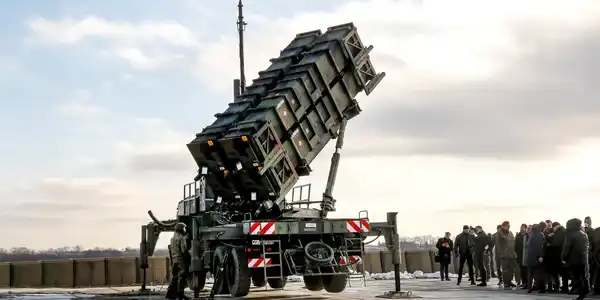
Ukraine’s air defences are mature and offset most of Russia’s non-ballistic arsenal
The scope of Russia’s problem extends well beyond ballistic missile production. Ukraine’ operates a highly mature, layered air defence which significantly counters many of the other ways Russia might otherwise generate strategic air power.
Shahed/Geran type drones can still saturate defences and cause serious damage, but they are increasingly contested by mobile fire groups, electronic warfare, interceptor drones and short range systems. Subsonic cruise missiles can be engaged by a much broader range of Ukrainian air defence platforms.
Most importantly and we don’t even consider this enough, Russia cannot conduct the kind of large scale heavy bombing campaign that would ordinarily allow a major air force to compensate for shortages of precision missiles. Sending formations of bombers or strike aircraft over heavily defended Ukrainian territory would be standard practice for the USAF but for Russia it would be suicide. Ukraine has therefore denied Russia one of the classic means by which air power can generate mass. This is a win.
This forces Russia to use toward stand off weapons, glide bombs near the front, and above all the small inventory it possesses of ballistic and hypersonic missiles capable of penetrating the densest defences. This creates a fundamental asymmetry in Russia’s strike problem: the weapons it can produce in very large numbers are also the weapons Ukraine is best equipped to counter, while the weapons most capable of defeating those defences are precisely the ones Russia cannot manufacture in sufficient volume. Russia does not lack ways to inflict damage on Ukraine. It lacks enough of the weapons capable of reliably penetrating mature Ukrainian air defences to turn that damage into a decisive strategic air campaign.
Russia is trying to compensate by buying from North Korea, it won’t be enough
Russia has attempted to offset its missile constraints in part through procurement from North Korea. The most important systems are North Korean short-range ballistic missiles, generally identified as KN-23 and KN-24 variants, which offer Russia an additional source of weapons without consuming domestic Iskander production. They also tend to carry relatively large warheads, making them useful against area targets, industrial facilities and infrastructure where sheer explosive weight can compensate for lower precision. But this is a supplement, not a solution. North Korean missiles have generally demonstrated poorer accuracy and reliability than Russia’s best domestic ballistic systems, reducing their value against hardened or geographically compact military targets. They are also extraordinarily expensive weapons to procure, transport and sustain when compared with drones, glide bombs or artillery, meaning Russia is paying a premium for an imported capability that is still inferior to the Iskander in several important respects.
More fundamentally, North Korean supply does not alter the geographic problem Russia faces in Ukraine. Ukraine is a very large country with a dispersed military, industrial and logistics network, considerable strategic depth, and thousands of potential targets. A heavier warhead can increase the destructive effect of an individual strike, but it cannot compensate for insufficient numbers or poor accuracy across such a large target set.
Even substantial North Korean deliveries therefore allow Russia to increase the frequency and weight of ballistic attacks rather than transform them into a genuinely decisive strategic bombardment. They help Moscow preserve domestic missile stocks and generate additional pressure on Ukrainian air defence, but they do not provide the scale required to systematically destroy Ukraine’s military infrastructure or negate the advantages Ukraine derives from dispersion and geography. In effect, Pyongyang is helping Russia stretch a scarce high-end capability further. It is not removing the underlying scarcity. While it’s extremely annoying that North Korea is often a more reliable, albeit expensive, partner for Russia, it’s not going to be sufficient to change the strategic landscape.
A good deal of the narrative is shaped by Ukranian diplomacy
Much of the public discussion around the missile war is shaped by Ukrainian diplomatic messaging, and that needs to be understood for what it is: a rational effort by a country at war to influence allied decision-making. Kyiv has every incentive to emphasize the scale of Russia’s missile threat, the inadequacy of existing interceptor stocks and the consequences of delayed Western deliveries. That messaging is not false. Ukraine genuinely does face a shortage of high end interceptors, and every gap in Patriot or comparable coverage creates real vulnerability. But diplomatic messaging naturally concentrates attention on the Ukrainian side of the scarcity equation.
The purpose is to secure more air defence systems, more missiles and faster production from allies, not to provide a detached assessment of Russia’s own industrial constraints. As a result, public debate can easily move from the accurate proposition that Ukraine needs more interceptors to the much broader implication that Russia possesses an effectively limitless supply of offensive missiles. It does not. Understanding the air war requires separating battlefield reality from advocacy. Ukraine is right to warn that insufficient interceptor supply creates dangerous windows for Russian strikes, but those warnings should not obscure the fact that Moscow is also husbanding scarce high-end weapons, drawing on foreign suppliers and making difficult choices about which targets justify their expenditure. Both shortages are real and are true at the same time.
Ukraine is getting better at impacting Russian production
There is an another reason to be cautious about making assumptions around current Russian missile production indefinitely: Ukraine is increasingly able to attack the industrial system that produces those weapons. Deep strikes against missile plants, explosives facilities, propellant producers, electronics manufacturers, machine tool infrastructure and supporting energy assets are intended not just to destroy finished weapons, but to interfere with the production chain behind them. Missile production depends on a comparatively narrow network of specialised machinery, skilled labour, precision components and chemical inputs. Repeated attacks on that network can create bottlenecks that are substantially harder to replace than damaged factory walls. It would be just as valuable to Ukraine for allies to send deep strike ammunition and funding to degrade the production structure which supports Russia’s missile program.
Russia has already spent years adapting its defence industry to sanctions, component shortages and wartime demand. Additional disruption therefore falls on a system operating under sustained pressure rather than on an untouched industrial base with unlimited redundancy. Each requirement to disperse manufacturing, harden facilities, replace specialised machinery or reorganise supply chains consumes money, skilled personnel and production time. Even unsuccessful Ukrainian attacks impose costs by forcing Russia to invest in air defence, physical protection and redundancy around facilities that previously operated safely hundreds of kilometres from the front.
This makes Ukraine’s expanding long range strike capability a strictly dominance choice. The objective is not necessarily to destroy Russia’s missile industry in a single campaign. It is to steadily increase the cost and difficulty of producing every additional missile. As Ukrainian drones and domestically produced deep strike weapons gain greater range, payload and accuracy, an increasing proportion of Russia’s defence industrial base becomes vulnerable. The effects may therefore become more significant over time: slower production, interrupted supply chains, greater dispersal costs and increasingly scarce specialised components. Russia’s missile constraint is consequently not static and Ukraine’s own ballistic program is coming online.
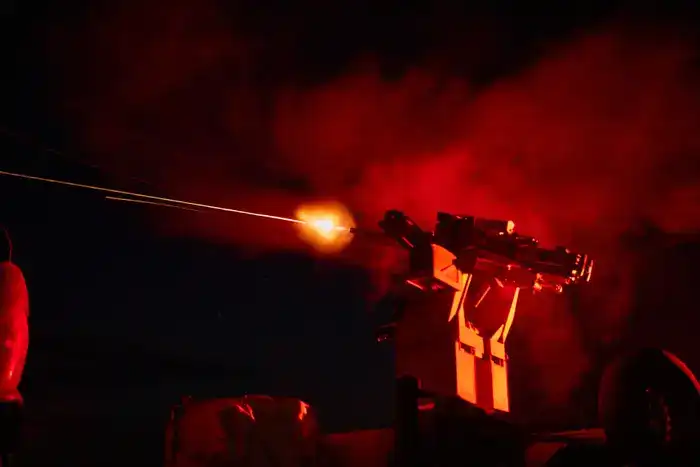
We’re in a dangerous window but not on the cusp of a decisive Russian air campaign
Ukraine’s interceptor shortage is real, dangerous and likely to produce painful consequences, particularly for those of us in Kyiv and for civilians looking at a very hard winter. More Russian ballistic missiles will get through. Critical infrastructure will be damaged. Civilians will be killed. Ukraine will be forced to make increasingly difficult choices about what it can protect. This will happen while the world hoards missiles for campaigns of choice as Ukraine faces a war of necessity. This is legitimately unfair, unjust and a policy failure of the west.
However, none of that should be confused with Russia acquiring a decisive strategic advantage. The central problem for Moscow remains scale. Russia is not China. It does not have sufficient industrial capability to generate high end ballistic weapons at the scale it needs to win. The weapons Russia can manufacture in enormous quantities are the ones Ukraine has become increasingly effective at defeating. The weapons most likely to penetrate those defences remain scarce, expensive and slow to replace.
That makes the current period a dangerous window rather than a fundamentally changed strategic balance.
Russia will attempt to exploit that window aggressively and it will come with an information operation attached. Ukraine should expect attacks on energy infrastructure, defence industry, logistics and other high value targets while Patriot ammunition remains limited or even non-existent. Western governments should therefore move urgently to expand interceptor deliveries and production. But they should also recognise that defence is only half of the equation. Providing Ukraine with the means to attack Russian missile production, specialised suppliers, propellant facilities and supporting industrial infrastructure may ultimately destroy more future Russian missiles than attempting to intercept every weapon after it has already been launched.
The longer-term trajectory is therefore not favourable to Moscow. Russia is consuming finite stocks, purchasing costly foreign substitutes and defending an industrial base that is becoming increasingly exposed to Ukrainian deep strikes. Ukraine, meanwhile, is expanding interceptor drone capability, improving its layered air defence, increasing domestic deep strike production and bringing its own ballistic capabilities online.
Russia can still make the missile war considerably worse. It can inflict significant damage and exploit periods of Ukrainian vulnerability. But inflicting damage is not the same thing as achieving strategic decision. The air war is as much of a stalemate as parts of the frontline and Russia is doing what it usually does, killing civilians as an offset for its failure to achieve victory.
The real question is whether Russia can convert its temporary advantage in interceptor availability into the destruction of Ukraine’s ability to continue fighting before that window closes. At present, there is little reason to think it can. Ukraine has an interceptor shortage but Russia has a scale problem. And over the long course of this war, Russia’s scale problem may prove considerably harder to solve.