ANZAC Day occupies a unique place in Australia’s national identity, bringing together millions of people each year through shared ceremonies of remembrance, reflection and sacrifice. This opinion piece explores the relationship between those traditions and Australia’s changing religious landscape, examining whether the rituals, symbols and values embedded within ANZAC commemorations reveal a deeper spiritual dimension than is often recognised in contemporary public debate.
2021 Australian Census data reflected that Australians who reported having ‘No Religion’ were the second largest and fastest growing category within the Religious Affiliation section of the survey. In the last ten years, those identifying as having ‘no religion’ has steadily increased from approximately 22.3 per cent in 2011 to 38.9 per cent in 2021. Correspondingly the ABS also noted that the proportion of the population reporting an affiliation to a Christian religion decreased from 61 per cent in 2011 to 43.9 per cent in 2021. Relative to the overall Australian population, some small increases to religions other than Christianity were recorded to round out the total.
From this a consensus of media headlines deduced that Christianity in Australia was on the steady (and terminal?) decline from the forces of ‘rationalism’ and emerging religious traditions. Even as far back as 2011, the Wall Street Journal reported the Australian Census results as a victory for atheists with its declaration of, “Australia is turning its back on Religion”.
If glaringly obvious statistics were not enough to convince you that religion was passé in Australia, the reporting of Williams v the Commonwealth in June 2012 should sway any casual outside observer. Ron Williams objected to his children being exposed to school chaplaincy and subsequently funded proceedings in the High Court of Australia. He successfully argued that Federal funding of ‘School Chaplaincy’ programs was unconstitutional, forcing the Federal Parliament to rush through laws to ensure continued funding.
Advocates of a national secularism, seemingly emboldened, have professed, with almost religious zeal, the dawning of a new ‘progressive and permissive age’ without the ‘suffocating influence’ of those advocating Christian ideals and morals. After all… “Just look at the stats, its all there in black and white!”
Census figures tell only part of the story
Two things disturb me about this particular approach to thinking. Firstly, and most superficially, is the distinct paucity of counter argument against this proposition in the popular media. Whilst on the surface, it would seem that one in every three report being ‘non religious’, 52 per cent of Australians report an affiliation with a religious belief. The positive point that I wish to stress here is that people who identify as religious are still more than half of the population. This is hardly the stuff of a secular tsunami.
My second issue, and for me far more compelling, is the fact that I believe that the statistics reported by the ABS do not accurately reflect the state of Australian religiosity. In saying this, I do not dispute that 1 in 3 Australians probably ticked the ‘no religion box’, what I doubt is the secular conviction of those who ticked the ‘no’ box in question.
I would argue that a significant proportion of ‘no’ voting Australians may instead be defined as ‘non practicing atheists’. Having established this proposition I would further argue that as a result, Australians are amongst some of the most religious and devout people to be found anywhere in the world today. That is, so long as the average Australian doesn’t have to admit that he/she is religious. My argument here boils down to the notion of walking in ‘HIS’ footsteps as opposed to just saying ‘HIS’ words, or in the common parlance, actions speak louder than words.
If there was ever a case to mount as to the superficiality of religious conviction it must surely be in basing it on how one ticks a box once every five years. This demonstration of religious intent does little to convey an overall lived daily experience of religious practice and philosophic mindset. This particular expression of identification (words) compares as relatively meaningless when compared to the deep held convictions and practice (footsteps) solemnly exercised by the vast majority of Australians on at least one day of each year, every year.
Each year, millions of Australians solemnly and devoutly observe a uniquely Australian religious ceremony with genuine and sincere dedication. The only catch is that the vast majority of Australians who participate in the said practice don’t recognize it as religious. Thus, it is my argument that heartfelt and genuine application of religious practice negates the bi-‐ decadal ritual of ‘ticking a box’.
The religious character of ANZAC Day
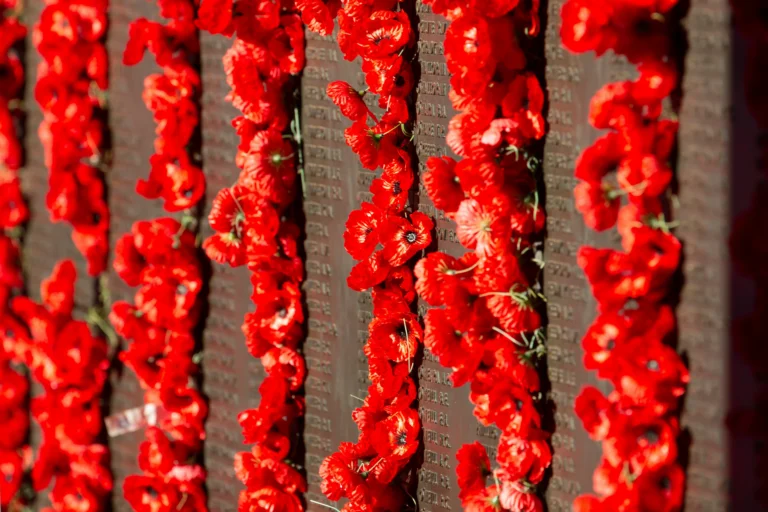
On the 25th day of every April millions of Australians, many who ordinarily never attend Church, gather in their throngs at dawn and pay their respects at Dawn Services all over the country. ANZAC Day is the religious holiday we observe when we do not think we are being religious. Somehow, we manage to ignore the religiosity of ANZAC Day and instead concentrate on incidental notions such as sacrifice; selflessness; helping others; resurrection; and eternal life.
But how can this be religious? On the surface of it, ANZAC Day commemorates normal, everyday mortal men and women. People with families… our families. Everyday men and women who fought for a country, a flag, an ideal, and each other… their mates. Noble? Certainly… but religious???…
You do not have to go far however to see the signs. The first clue is in the widespread practice of attending a Dawn or ANZAC Day Service. The key word here is Service. The constituent parts of the Dawn Service are that, at its very heart, it is a Christian Service. It may not be held in a church or cathedral, but it is nevertheless presided over by a member of the clergy and the gathered crowds are lead in solemn prayer. We only have to go as far as Matthew 18:20, ‘For where two or three are gathered together in my name, there am I in the midst of them’ to be guided to a broader definition of the church.
Despite the blindingly obvious indictors of Christianity’s influence on ANZAC Day ceremonies, such as being led by clergy, reciting Prayer and singing hymns, I strongly suspect that many of those who annually attend these Services still tick the ‘no religion’ box on the Census. Additionally, I expect that if asked the question as to whether they had attended a church Service in the five years between Census interviews, many of the responses would also be ‘No’. Thus, whilst there may be some resistance to religious identification and affiliation by one in three Australians (talking the talk), participation in ANZAC Day activities suggests widespread, if unrealised, involvement in religious practice (walking the walk).
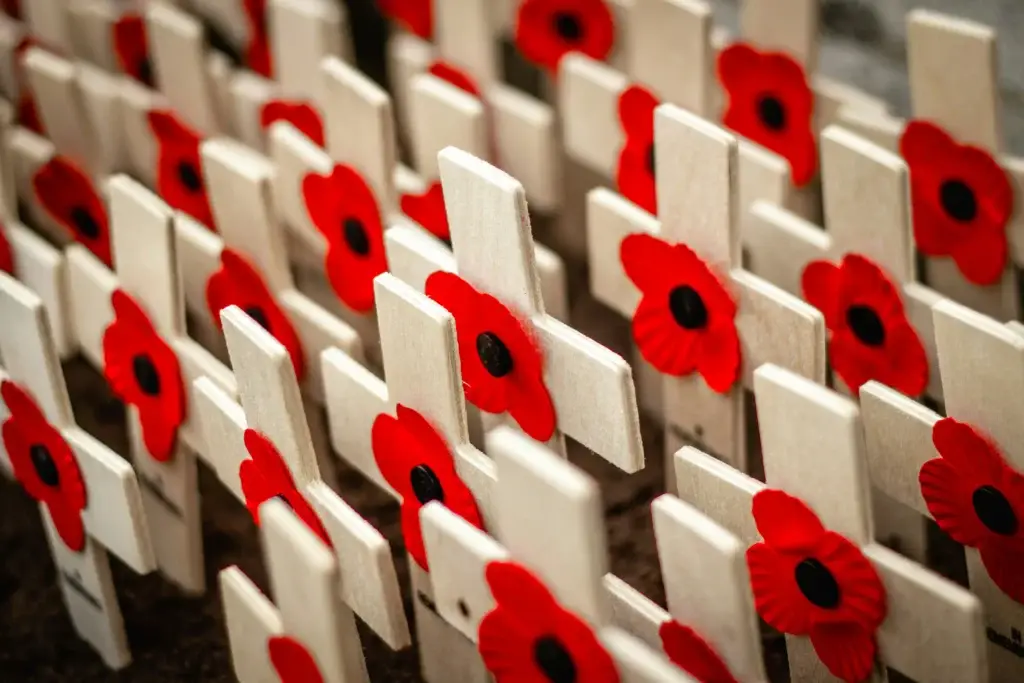
Sacrifice, remembrance and resurrection
Even if they who identify as being ‘without conviction’ manage to suspend their disbelief as to the Christian underpinnings of the ANZAC Service, the symbolic representations and allusions to Christ within the ceremony and the institutions of remembrance are altogether recognisable and pervasive. In the first instance it is important to note what ANZAC Day generally represents to most Australians.
Whilst ANZAC Day is steeped in a martial tradition it is not generally interpreted as a celebration of victory in War. On the contrary, ANZAC Day commemorates a military defeat. Yet it was in this defeat that many believe the genesis of a new nation was born and declared to the world. A victory of Virtues born from the ashes of tactical failure. Strategic blunder replaced by a storyline of moral courage and faith. A fundamental message rang out and resonated with Australians that those who lay down their lives so that others may live in peace should not be forgotten.
In the more than 100 years since the original landings at ANZAC Cove this message has not diminished. So why has this story’s resonance seemingly only strengthened over time? I contend that it is because the story is not new and whether people consciously realize it or not, it represents and retells the story of Christ’s sacrifice and crucifixion. We connect because we recognize an inalienable truth behind the notion of sacrifice and the concept of a higher purpose beyond that of this mortal coil.
The ceremony and its Christian traditions
If we then turn and examine the constituent elements of the ceremony itself a strong connection to the Christ narrative is also evident. For the most part, the ceremony commences with Prayer and hymns led by a member of the clergy. The Service is then often followed by an oration by a keynote speaker. Traditionally the oration usually includes a story from our War history that reinforces a particular Virtue. Such Virtues often have their locus within discourses of Moral Courage, Sacrifice, Loyalty, Mateship, and Integrity. This is much in the tradition that similar themes are presented in church through the use of parable.
A lay member of the congregation will then deliver the Recitation and the Ode. In this way, the Recitation is analogous to a lay member of a church community being asked to recite a passage from the Bible or the Book of Common Prayer.
The Ode itself is far more prescriptive and is derived from a poem written by Lawrence Binyon:
“They shall grow not old, as we that are left grow old; Age shall not weary them, nor the years condemn. At the going down of the sun and in the morning; We will remember them.”
The Ode message harks to the concept of an eternal life. Those who have passed are beyond the wearying aspects of aging, yet they shall live eternal in the memories of those who remain. The declaration of remembrance acts as a commitment to collective prayer. This is then linked to the inevitability of renewal or the promise of an afterlife as symbolized through the linking of a daily prayer ritual to the rising and setting of the sun.
At the conclusion of the reciting of the Ode it is customary for the congregation to publicly exclaim, “Lest We Forget.” This is additional to the original wording of the poem but acts as a warning against loss of faith in those who have sacrificed all. These words occupy an almost devotional space and in many ways are said within the same context as the prayer ending ‘Amen’.
The story of Christ’s sacrifice and resurrection is also not lost within the ANZAC day narrative. No ANZAC day remembrance would be complete without the playing of the Last Post, the observing of a minute’s silence and then the playing of Reveille. The Last Post traditionally is a call for soldiers to end their day and for operations to cease. In this case, the Last Post symbolizes the final resting of the soldier. The death of the soldier in this context is understood as the ultimate act of sacrifice, a declaration of love and devotion to those left behind. The narrative of Christ’s sacrifice is played out and retold through the hauntingly slow notes from a lone bugler.
Last Post is followed by one minute’s silence. This is a powerfully solemn period of meditation and quiet contemplation that is eerily adhered to by crowds who would otherwise be inclined to irreverently holla and cheer in any other context. It could be argued that this symbolizes the period that Christ was laid out in the tomb after his crucifixion. The silence is finally broken with the playing of Reveille.
Reveille was traditionally the call for soldiers to wake up and commence their day. Played in this context, the resurrection narrative is the unmistakable subtext. The call to those who have died to rise, and the subsequent promise of a better afterlife adds to overall retelling of Christ’s death and resurrection.
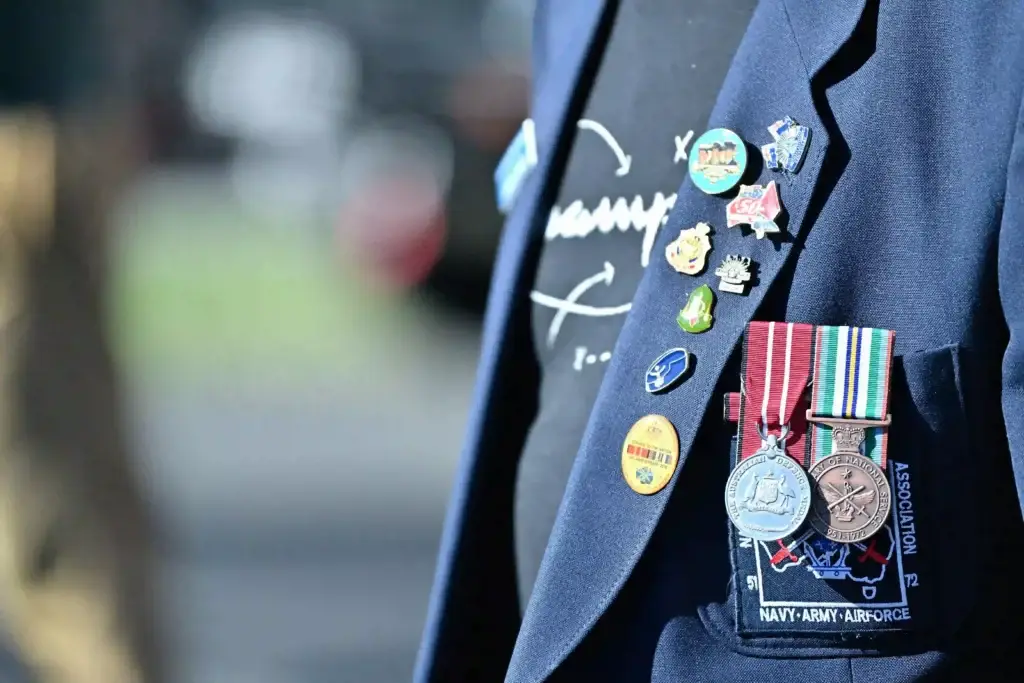
Sacred ground and symbols of eternal life
It is also no accident that the sites of ANZAC Day remembrance are held in sacred reverence to many Australians. Vandalism of an ANZAC memorial or shrine will often be deemed important enough to make the evening news. These sites make little attempt to disguise the sacred and religious nature of the proceedings that occur within or upon. Take for example the Shrine of Remembrance in Melbourne. The designer of the Shrine, Philip Hudson, suggested that the memorial must be more than just another building but must instead symbolically breath life back into the ‘souls’ of those who did not return. The building was to house the collective ‘soul’ of the ANZAC in that:
“Here on our isolated and commanding site, our Memorial must be of a monumental and arresting design with a “soul” which could only be attained by symbolism…”
The influence of Christianity is obvious and evidenced elsewhere on and within this building. Emblazoned on the approach to the Eastern Wall of the Shrine are the words:
“Let All Men Know that this is Holy Ground”
“Holy Ground!!!” The sacrifice of the ANZACs is physically sanctified through this assertion. This is no passing secular reinterpretation. This statement unashamedly links the sacrifices of the ANZACs to that of Christ. Allusions to Christ are no less evident once inside the Shrine. The inner chamber of the Shrine is the Sanctuary that houses the ‘Stone of Remembrance’. Inscribed in the center of the stonework are the words, GREATER LOVE HATH NO MAN taken from the Gospel of John, 15:13. Consistent with 1 John 4:16, ‘God is Love; and he who dwelleth in love dwelleth in God’, a ray of natural sunlight passes through an aperture in the ceiling of the Sanctuary and falls onto the Stone of Remembrance over the word “love” at precisely 11.00 am on 11 November each year. Rays of light have been used as a device to symbolize the presence of God in countless tomes. In this case, the symbolic ‘finger of God’ reaching down to remind us of the importance of ‘love’ at the time of ‘sacrifice’ is the obvious inference.
Large crowds each year also choose to commemorate the ANZAC Service at one of Australia’s seven ‘Eternal Flames’ or ‘Flames of Remembrance’. The eternal fire is a long-‐held tradition in many cultures and religions and generally represents the concept of ‘eternal life’. In ancient Persia the Atar was tended by a dedicated priest and represented the concept of “divine sparks”. The eternal flame was also an important component of the religious rituals performed in the Israelite’s Temple. “And the fire upon the altar shall be burning in it; it shall not be put out… and shall burn it upon the alter for a sweet savor, even the memorial of, unto the Lord.” Leviticus 6:12-‐15. In this context the eternal flame is again used to symbolize ‘eternal life’ for those ANZACs who offered the ‘ultimate’ sacrifice.
Gallipoli as a national pilgrimage
In recent years, the site of the original ANZAC sacrifices at Gallipoli has also developed to become an annual and uniquely Australian pilgrimage. The importance of Gallipoli to the national psyche should not be understated. Each year tens of thousands of Australians are making this journey. They foot the considerable cost; they negotiate a long passage of travel; they reside in the most basic of accommodation; and they brave the bitter cold of the ANZAC Day dawn… and for what?
In a practice reminiscent of Christian pilgrimages to Jerusalem or the Moslem pilgrimage to Mecca, thousand upon thousands of Australians (mostly young men and women) pledge themselves to this journey at least once in their lifetime. We expect no less than our National leaders to represent us collectively each year at the ANZAC Dawn Service. Heaven help a politician who spurns the invitation. Even as National Leaders they are but bit players in the ceremony whose sacred reverence takes precedence. ‘The Fallen’; those who have given of themselves for others; they of uncommon virtue; they whose name liveth forever more; they remain the focus of the ritual.
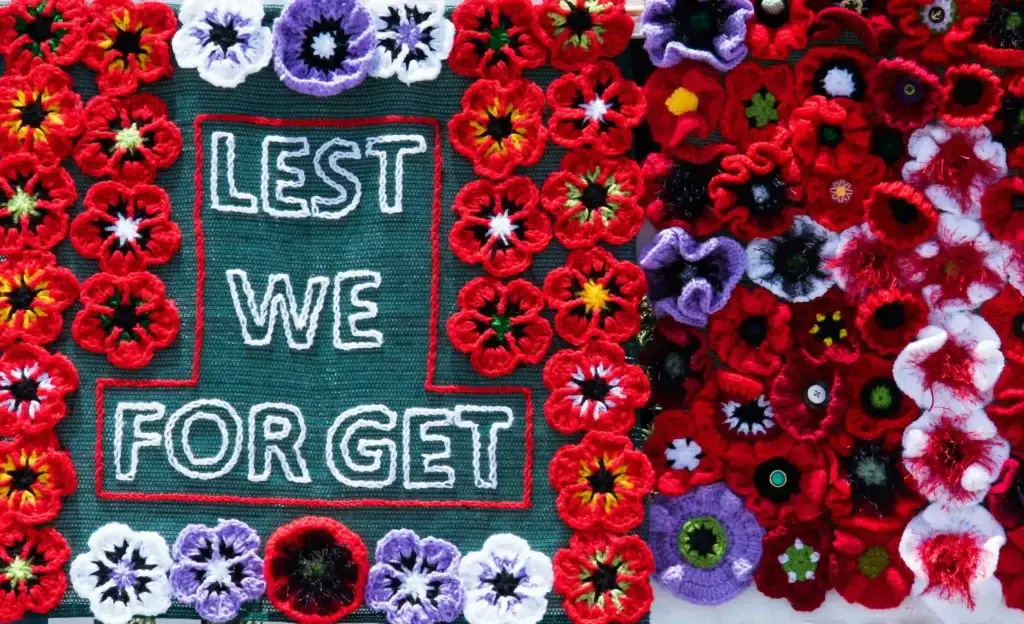
A spiritual tradition shared across borders
Universal recognition of the religious underpinnings of the sacrifices made by those at Gallipoli isn’t just limited to Australians, New Zealanders or the allied forces. Ataturk, the Turkish General who opposed the ANZAC forces and would later become Turkey’s first President, generously recognized the otherworldly symbolism of what occurred on those beaches.
For a famously secular leader his comments immortalized at the Ari Burnu Memorial hark to a spiritualism and belief in afterlife born from the sacrifices of the fallen:
“Those heroes that shed their blood, and lost their lives;
You are now lying in the soil of a friendly country, Therefore Rest in Peace.
There is no difference between the Jonnies; and the Mehmets to us they lie side by side, Here in this country of ours.
You, the mothers;
who sent their sons from far away countries, wipe away your tears.
Your sons are now lying in our bosom, and are in peace.
Having lost their lives on this land they have become our sons as well”
Ataturk’s prose alludes to an afterlife and a universal brotherhood of man that is not bounded by the limitations of secular borders. Ataturk, raised a Moslem, nevertheless would have been conscious of the Abrahamic notion of “we are all children of the ‘one’ true God”. Thus, his promise of universal brotherhood can be interpreted as simply restating a well-‐established theological position shared by Christians and Moslems alike.
A nation more religious than it admits
As millions of Australians, in increasingly greater numbers each year, ritually attend one of the most solemn religious Services in the Australian calendar it would seem incongruous to think that we are becoming increasingly secular. Men and women who do not normally identify as being especially religious stand silent; shed tears; and reflect upon the virtues of Sacrifice and Love on this most auspicious of annual occasions.
They pray, they sing, they meditate, and they stand upon sacred ground together actively, proudly and openly participating in a most religious ceremony. Christian ministers lead the nation in reflections that symbolise the death and resurrection. The ceremonies are attended by young and old; men and women; those who identify as religious and many who do not; friends, and those who were once enemies; the message of ANZAC Day is universal and has a deeply spiritual resonance with many Australians. The message of Christ’s sacrifice is analogous and recognized.
This profoundly religious ceremony shapes our national psyche. To be Australian is to venerate the ANZACs therefore to remember in this way is to be religious.
The simple declaration by way of ‘ticking’ a box once every five years compares poorly to the lived practice of millions of Australians in experiencing Christ’s message through participation in ANZAC Day activities. The understanding of Australians becoming increasingly secular is thus challenged by observing ‘the walk’ instead of just relying on the ‘chatter’ of statistics. It is thus that I contend that this country of ‘non-‐practicing atheists’ remains a deeply religious nation, just so long as we don’t have to admit it.