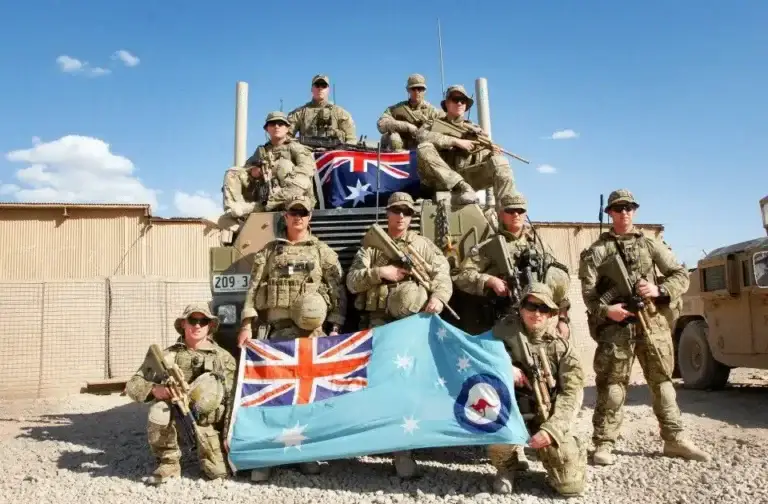
Australia’s full-time Defence workforce has reached a 25-year high, supported by stronger recruitment and the lowest separation rate in more than a decade. Yet growing geopolitical uncertainty has renewed questions about whether a predominantly full-time, all-volunteer force can expand quickly enough during a major conflict, placing greater focus on Reserve capacity, recruitment timelines and Australia’s ability to mobilise at scale.
This week the Australian Government announced the welcome news that Australian Defence Force full-time workforce has hit a 25 year high. Of course, while progress has been steady and retention is strong, our military workforce remains brilliant but boutique. With a full-time uniformed workforce that now numbers 64,000 personnel, our military workforce is growing, albeit slowly, courtesy of improved recruitment and retention rates.
The gains have been achieved by focusing on retention of Regular soldiers, sailors and aviators and increasing the Regular intake across Navy, Army and the Air Force. The separation rate is now down to 7.4%, the lowest in over a decade. Defence Force Recruiting fielded 74,000 applications in the past financial year, resulting in 8,100 enlistments.
Another area where growth has been achieved is in Defence’s Australian Public Servant (APS) levels. With a headcount of 20,545 as at 30 June 2025,
the APS workforce is now larger than both the Navy and Air Force and grew at a higher rate than all services except the Air Force in 2024-25. Let’s see if this trend has continued when the next Department of Defence Annual Report is released later this year.
However, is the Australian military model fit for the current geopolitical circumstances? How is it that our military workforce is so similar in size to the period of peace ushered in by the end of Cold War I? Despite the long and large war in Ukraine demonstrating that qualitative training and technological advantage is no substitute to size and scale, Australia maintains a boutique all-volunteer force where almost all planned growth is in the Regular workforce.
Indeed, when announcing “the largest ADF in 25 years,” the Deputy Prime Minister and Minister for Defence Personnel and Veterans’ Affairs made no mention of changes to the Reserve components of the Navy, Army or Air Force. Reservists appeared in the workforce figures only when serving on full-time contracts. This emphasis on full-time personnel is common in Defence workforce reporting and analysis, but it is still worth noting.
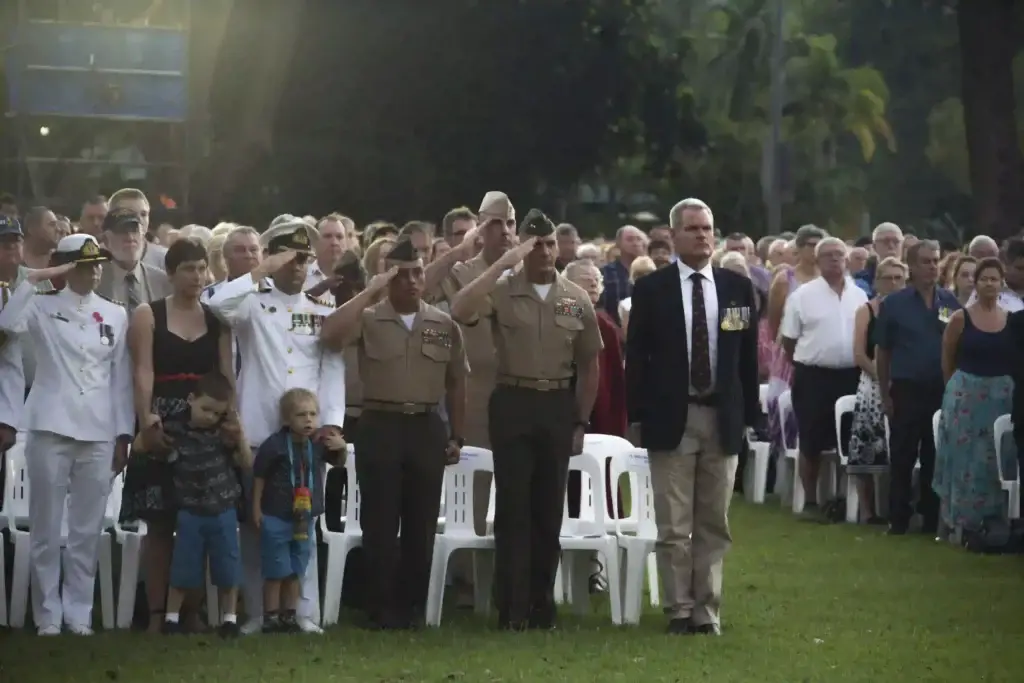
Is the present workforce model fit for heightened risk of long and large war?
If Australia is to be both ready to respond should the worst occur and able to mobilise and maintain a much larger force in the fight, we need a recruitment and training system that is efficient, effective and ready to scale. We as a nation also need to consider the size and scale of the Reserve given the worsening geostrategic outlook in our region and abroad.
Until the end of the Vietnam War, Australia relied on a much larger Reserve force and national service schemes during periods of heightened geostrategic risk. Full-time personnel did not become the majority of the Australian Defence Force until the 1960s. Throughout much of Australia’s early history, including both World Wars, the military was built largely around the Citizen Soldier.
In the lead up to World War II the Australian Government focused on an Army with a trained strength of 70,000 in the Citizen Military Force and a small Permanent Force of under 3,000 personnel. The Navy had a Permanent Force of ~4,500 and 3,800 Reserves with the Air Force ~2,500 Permanent Force and 400 in its Reserves. For World War II itself, total enlistments to the Navy, Army and Air Force were ~993,000 personnel or ~165,500 per year of the war. This was achieved with a general population that numbered just under 7 million in 1939. That’s what a long and large war in our region looks like.
When the Korean War broke out in 1950, the newly elected Menzies Government suspected a third world war could be imminent. To ensure Australia had adequate Reserves, a universal National Service Scheme was ordered for the Navy, Army and Air Force. In between 1951 and 1959, over 227,000 personnel were trained and then served as Reserves. This equates to around 28,375 enlistments annually for National Service alone, excluding regular enlistments to the services. That puts the current figure of 8,100 annual enlistments in context!
While many Western nations moved away from Conscription and National Service as the Cold War waned, there are democratic middle powers that demonstrate a different path. Singapore, for example, maintains a standing military of around 51,000, but also has Reserves of over 252,000, ready to mobilise from a population of around 6 million. Finland maintains a standing military of around 24,000 and a Reserve of approximately 900,000 from a population of about 5.65 million. Both nations have a National Service Scheme and have cultivated a sense of shared service in their societies to enable this approach.
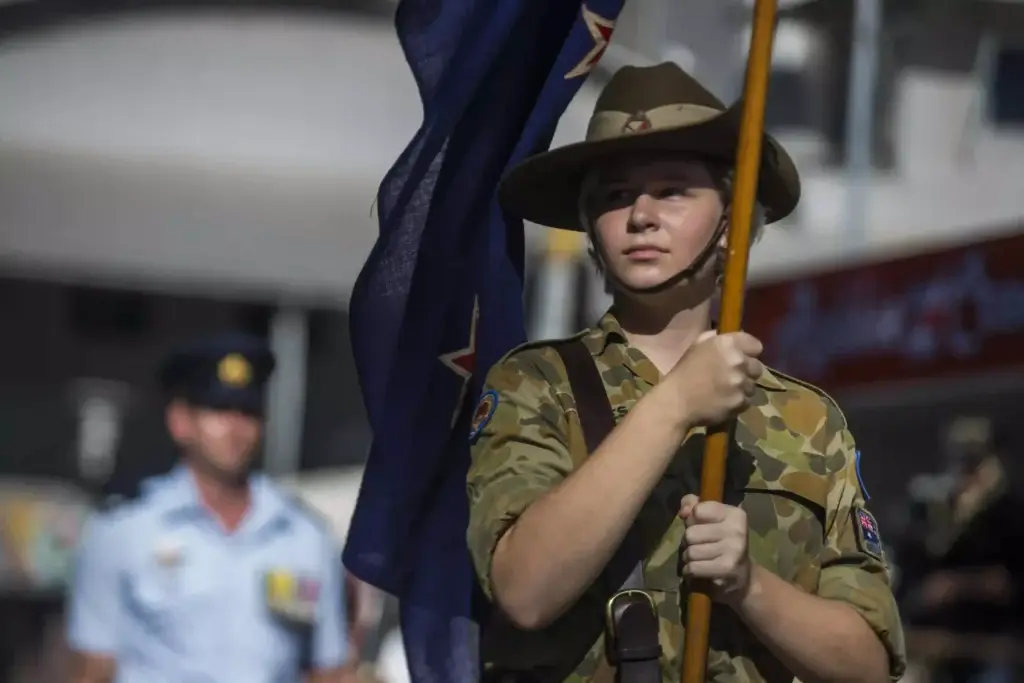
Regardless of our model, our recruitment system needs much more work
Our current recruitment model is built to deliver an annual intake that is significantly below what we saw in the Korean War era. Our military training system is likewise limited in capability and capacity, but that’s a topic for another day. If we persist with an all-volunteer and largely full-time Australian Defence Force, it is vital our recruiting is effective and efficient.
One area requiring continued attention is the time potential recruits spend moving through the recruitment process. In a 2025 address to the Royal United Services Institute of New South Wales, Chief of Personnel Lieutenant General Natasha Fox revealed that the average period from application to enlistment was 260 days. Such a lengthy process is poorly suited to the most challenging geopolitical environment since World War II, particularly at a time when people expect convenience and have many competing demands on their attention.
It is also a reminder that scenario modelling and wargaming should extend beyond the military’s warfighting functions. If the current recruitment system struggles to process applicants efficiently in peacetime, it is difficult to see how it could support a significant expansion of the Reserve before a conflict or rapidly scale the existing force should the war drums start to beat.
Australia has demonstrated a capability to generate a much larger military in times of conflict and peace. The unipolar moment let us treat mass as optional and cost as someone else’s problem, but that era is over. Our own history and middle powers like Singapore and Finland provide examples of force structures built for expansion. The Defence Workforce Plan shouldn’t be benchmarked on a unipolar moment that isn’t coming back.