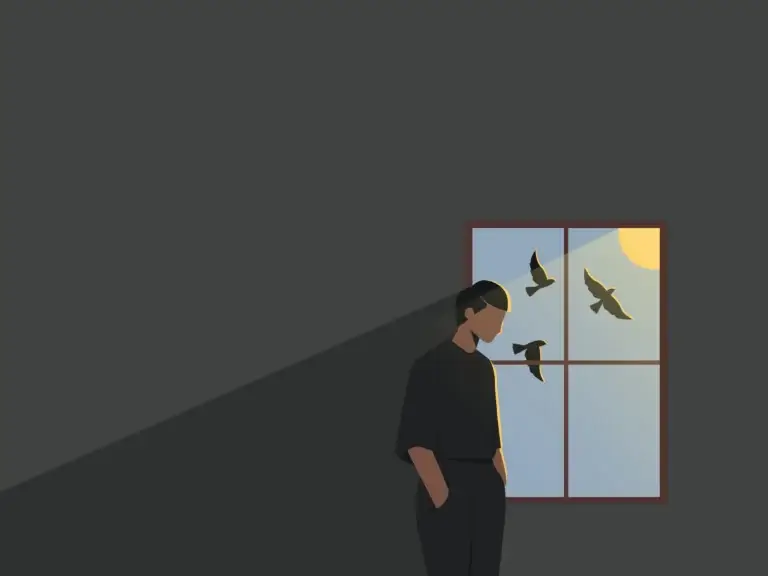
People working in Defence, emergency services, healthcare, journalism and other high-stakes professions may face situations that conflict with their values or leave them feeling betrayed by the institutions they serve. Growing recognition of moral injury is widening how Australia understands work-related psychological harm and highlighting the need for support that addresses guilt, shame, identity and moral conflict alongside trauma symptoms.
Moral injury has entered the Australian conversation through lived experience long before it has found full institutional recognition. Across defence, emergency services, healthcare, journalism and other high-stakes professions, individuals describe a form of psychological harm that is not rooted in fear, but in a fracture between what they did, what they witnessed, and what they believe is right.
A different kind of wound
The term itself was first articulated by psychiatrist Jonathan Shay, who observed that many Vietnam veterans were not primarily haunted by threat to their lives, but by violations of their own moral codes. In contemporary Australian contexts, the same pattern is emerging across professions where people are required to act within systems that can conflict with deeply held values.
As one Australian legal scholar notes, moral injury “typically arises in response to something that fundamentally challenges or conflicts with a person’s personal ethics or organisational values.”
Dean Yates, a former foreign correspondent, describes this rupture in stark personal terms. Reflecting on his time in Iraq, he speaks not of danger, but of failure. “I let down my Iraqi staff, and I let down myself, and that key word here is failure to do what I felt that I should have done.”
This sense of having transgressed one’s own standards, or having been unable to uphold them within a system, sits at the centre of moral injury. It is accompanied by guilt, shame, anger, and often a sustained questioning of identity and purpose.
Yates goes further, placing moral injury above other forms of trauma in its intensity. “Moral injury… has been harder to deal with than anything that I’ve ever experienced in this field.”
Recognition without classification
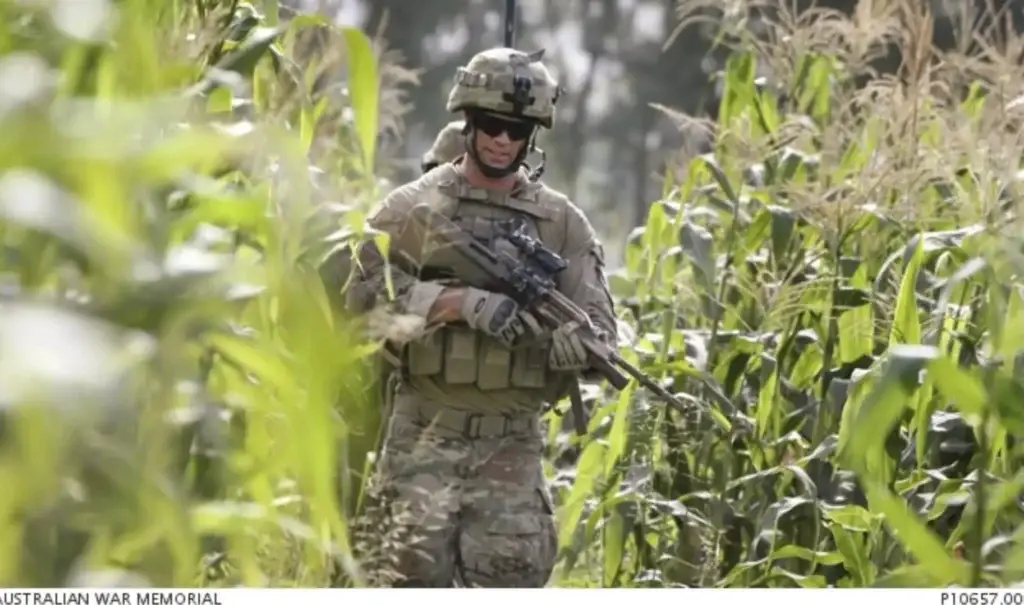
In Australia, moral injury occupies an unusual position. It is widely discussed in clinical, academic and policy settings, and increasingly referenced in major inquiries, including the Royal Commission into Defence and Veteran Suicide. It is treated by clinicians and recognised by those working directly with affected populations.
At the same time, it does not yet exist as a formally recognised standalone diagnosis within Australian compensation systems.
The Australian Department of Veterans’ Affairs and Open Arms acknowledge moral injury as a significant contributor to psychological distress, while noting that it is not classified as its own mental health disorder.
This creates a practical gap. Individuals may experience profound moral injury without meeting the diagnostic thresholds required for compensation or structured support. The result is a category of suffering that is clinically visible but administratively diffuse.
Internationally, the classification landscape is shifting. The DSM-5-TR now allows clinicians to code moral injury under a broader category of moral or spiritual problems. Australian practitioners, who rely on these frameworks, are already incorporating this into their work.
The system, in effect, is catching up with what practitioners and those affected already know.
How it presents in practice
Andy Cullen, who works directly with veterans and first responders, describes the gap between conventional trauma treatment and what people are actually experiencing.
“What I found was a lot of the treatment that was available wasn’t really addressing the root causes of the suffering… it wasn’t addressing the deeper moral belief systems that were impacted.”
He characterises moral injury as “an internal wrestle,” centred on guilt, shame, regret, and unresolved moral conflict.
These internal dynamics often sit alongside, but distinct from, fear-based trauma responses. Individuals may respond well to treatments that address hypervigilance or anxiety, while still carrying an unresolved sense of moral dislocation.
Zoe Cullen, who has worked closely with affected families, describes how this manifests in everyday life. “He was struggling very much with feeling like he didn’t have an identity anymore… ‘Who am I? I don’t have purpose.’”
This loss of identity is a recurring feature. When a role defined by service, duty or authority is removed or disrupted, individuals are left to reconcile past actions with a present context that no longer provides the same moral framework.
Dean Yates observed the same pattern among veterans and first responders during his time in treatment. “Deep guilt and shame of the things that those men and women had done or failed to do, or who let down by their organisations.”
He also identifies another defining feature: betrayal. In his account, the most difficult experiences were not those encountered in the field, but those that followed. “Every single one said it was a betrayal… the hardest thing to deal with.”
This sense of institutional or organisational failure compounds the original injury, reinforcing the perception that one’s values were compromised within a system that did not uphold them.
Why existing frameworks fall short
Traditional trauma models are built around threat and fear. They are effective in addressing physiological responses to danger, but less equipped to deal with moral conflict.
Cullen describes this distinction clearly. Treatments may reduce fear-based symptoms, yet leave untouched the “guilt and shame and regret… unforgiveness of myself and others.”
This creates a cycle where symptoms persist despite intervention, leading individuals to believe they are not improving, or that recovery is out of reach.
The issue is not the absence of care, but the mismatch between the nature of the injury and the framework used to treat it.
Pathways to recovery
Across the experiences of Yates, Cullen and others working in this space, a set of consistent approaches emerges. These are not quick interventions, but structured processes that address the root of the injury.
1. Naming the experience
Language plays a critical role. Without a framework to describe what they are experiencing, individuals struggle to engage with it.
Cullen notes that many people initially lack the words to articulate their internal state. Structured programs help “put language to what all that… internal stuff” actually is.
Naming guilt, shame, or moral conflict allows it to be examined rather than avoided.
2. Distinguishing forms of guilt
A key step involves differentiating between genuine responsibility and what Cullen describes as “false guilt.”
This distinction enables individuals to separate what can be acted on from what must be released. It shifts the focus from self-condemnation to clarity.
3. Addressing the root, not the symptoms
Effective approaches focus on underlying moral beliefs rather than surface-level behaviours.
Cullen uses a simple analogy. Addressing symptoms alone is “like a game of whack-a-mole… if we can address the root cause issue, then the symptoms go away.”
This reframes recovery as a process of resolution rather than management.
4. Reconstructing identity and purpose
Zoe Cullen’s work highlights the importance of rebuilding identity beyond a professional role. Individuals are guided to reconnect with other aspects of themselves, including family, community and personal values.
This is not a return to a previous state, but the construction of a new, integrated identity.
5. Community and shared experience
Yates describes the turning point of encountering others who articulated experiences similar to his own. “They talked about how they were having nightmares… and I just thought they just sound like me.”
Peer environments provide both validation and a structure for recovery.
6. Structured processes for reconciliation
Writing, reflection, and symbolic acts of reconciliation form part of many recovery pathways.
Yates describes writing a 5,000-word letter as a means of expressing responsibility and making sense of his experience. These processes create a mechanism for individuals to engage directly with the moral dimension of their experience.
7. Reframing experience into contribution
A consistent theme across practitioners is the movement from injury to purpose.
Zoe describes this as finding “purpose in the pain,” where lived experience becomes a basis for supporting others.
This reframing does not diminish the original experience. It integrates it into a forward trajectory.
An emerging field with practical momentum
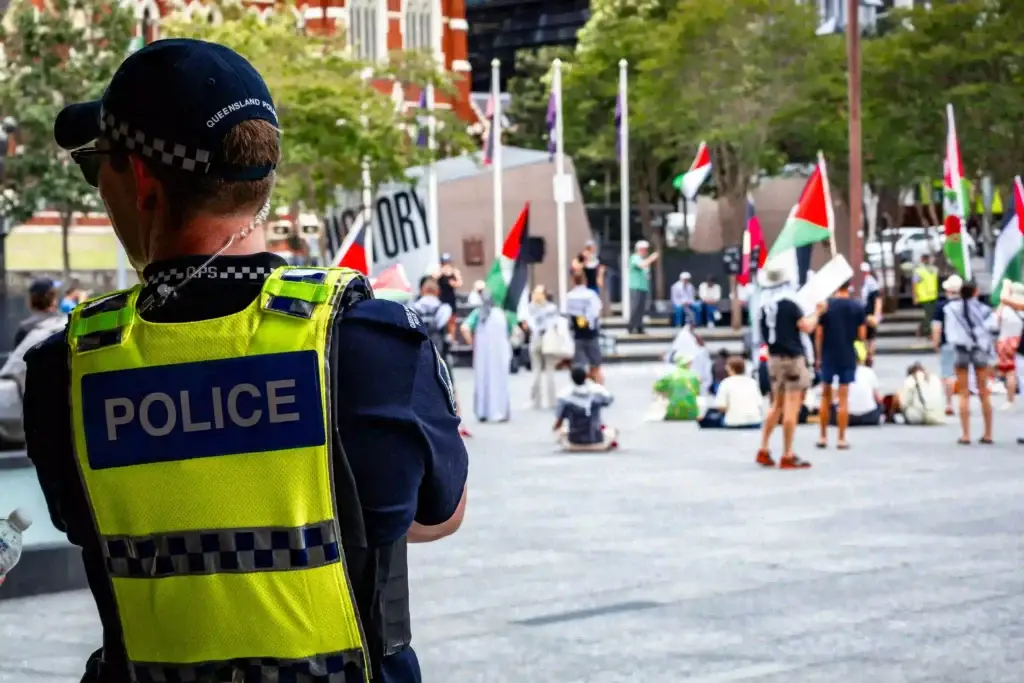
Moral injury in Australia sits at an intersection of clinical practice, policy development and lived experience. Formal recognition is still evolving, yet treatment approaches are already in motion, shaped by those working closest to the problem.
What has emerged is a more expansive understanding of psychological harm. One that includes not only what people endure, but what they believe, what they carry, and how they make sense of their actions within complex systems.
For individuals and organisations alike, the implications are clear. Ethical environments, supportive leadership, and accessible pathways to reflection and reconciliation are no longer peripheral considerations. They form part of the conditions required for people to continue operating in roles where the stakes are inherently human.
The work ahead lies in aligning systems with what experience has already made visible.