Families and carers provide a significant share of the day-to-day support that underpins Australia’s mental health system, from monitoring changes in behaviour and managing risk to navigating services and maintaining continuity after a crisis. Yet much of this work remains largely invisible in workforce planning and service design, placing sustained pressure on households and the relationships surrounding people experiencing mental illness. Greater recognition of this relational frontline raises important questions about how earlier intervention, shared safety planning and better support for carers could reduce repeated escalation while strengthening the sustainability of the broader mental health system.
Australia’s mental health system relies on a workforce that rarely appears in staffing models, service budgets or workforce planning. Families, carers and other significant people provide crisis management, emotional support, safety monitoring, medication prompting, system navigation and continuity of care, often while maintaining jobs, raising children and managing their own wellbeing. Their contribution allows people experiencing complex mental illness to remain connected to their homes and communities, but it can also place significant pressure on the relationships that surround them.
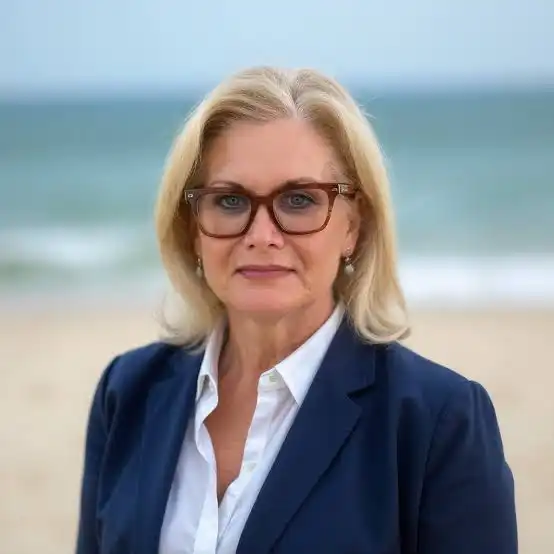
For De Backman-Hoyl, National Manager of Community Engagement at Mental Health Carers Australia, understanding this role starts with recognising where the mental health frontline actually begins, which is often well before a police officer, paramedic, clinician or community mental health worker arrives.
“The frontline is relational,” she says. “It’s the person who notices sleep patterns changing, who feels the tone in the house shifting, who tries the gentle conversation, then the stronger conversation, and eventually asks, ‘How do we get through tonight?’”
Families can spend considerable time trying to stabilise a situation before seeking professional intervention. They de-escalate distress, assess changing levels of risk and try to preserve the dignity of the person they love. When they eventually call for help, Backman-Hoyl says it is often after the options available within the household have been exhausted.
This creates a form of responsibility that mental health systems do not always adequately account for. Clinical services assess symptoms, behaviour and immediate safety, while families continue living with the consequences of a crisis after the formal response has ended. Fear, conflict and uncertainty can alter relationships long after immediate danger has passed, leaving families responsible for rebuilding trust while continuing to support the person experiencing mental illness.
Backman-Hoyl describes this as “relational risk”: the gradual erosion of trust, safety and stability when the gap between a person’s needs and the support available to them becomes a permanent part of household life. Families can progressively absorb tasks that would carry formal safeguards, training and boundaries in a professional setting.
“Most families don’t want an unpaid role. They want a relationship with their person. They want them to be okay and they want to stay connected without becoming the service system in the home.” – De Backman-Hoyl
When care becomes an unofficial workforce
Much of this work remains largely invisible because it happens inside private homes. Families may monitor medication, arrange appointments, negotiate with multiple services, manage behavioural changes, protect other members of the household and remain alert to early signs of deterioration. Over time, employment, study, friendships and participation in community life can contract around these responsibilities.
Backman-Hoyl argues that treating this contribution primarily as families “coping” disguises the extent of the labour involved. The system effectively draws on unpaid capacity without planning for it as it would any other workforce, even though the sustainability of formal services can depend heavily on what happens between professional interventions.
“People quietly reorganise their whole life around someone else’s distress,” she says. “Because that happens behind closed doors, it’s easy for the system to treat it as an endless resource. When it eventually shows up as a crisis, it looks sudden, but often it is delayed visibility.”
The consequences extend beyond individual households. People reduce their working hours or leave employment to provide care, while prolonged hypervigilance can affect sleep, finances, relationships and carers’ own mental health. Formal services then encounter the consequences when exhausted households can no longer contain escalating situations.
Backman-Hoyl has experienced the intensity of that responsibility personally through almost four decades of supporting family members living with complex mental illness. She describes the difficulty families face when safety becomes a concern while they are simultaneously trying to protect a loved one from stigma or an unnecessarily escalated response.
“One of the hardest things for families to talk about is risk and family safety, because there can be a sense that you’re demonising the person you love,” she says. “You know that the person who is very unwell in that moment isn’t the person you know, but the risks can still be real.”
She has personally stood between drawn firearms and family members on six occasions. Experiences of that severity can remain largely hidden as families try to preserve the dignity of the person experiencing illness and maintain relationships that must continue after the crisis has passed.
The gap between coping and crisis
One of the structural problems Backman-Hoyl identifies is the limited range of options available before a situation reaches crisis point. Families frequently face a choice between continuing to manage at home or escalating into an emergency pathway involving police, ambulance services, emergency departments or acute mental health services.
“Families aren’t avoiding help. They’re trying to avoid escalation,” she says. “They’re trying to get support without turning love into surveillance and without turning the home into a default holding bay for risk.”
That choice influences when families seek help. A crisis response can carry significant consequences for the person experiencing distress and for everyone living around them, so households may continue managing deteriorating circumstances while searching for a safer or less disruptive alternative.
Backman-Hoyl describes the need for a “third door,” which is accessible support that intervenes earlier, while relationships and household stability still have enough capacity to sustain recovery. Greater access to early intervention, shared safety planning and clear crisis pathways could give families options before exhaustion and risk reach emergency levels.
The benefits would extend into formal services. When households have limited support, unresolved problems can return as repeat emergency presentations, difficult handovers and recurring calls for police, ambulance and clinical intervention. Professionals themselves can become responsible for work outside the purpose of their roles when the broader system has few alternatives available.
“When the only pathway is escalation, everyone gets recruited into roles they didn’t train for,” Backman-Hoyl says. “Families become risk managers, police become de facto mental health responders, ambulance staff end up holding people in emergency departments, and emergency departments become places of crisis containment.”
Earlier support therefore changes the conditions facing both families and professional workforces. It creates more opportunities to use specialist skills where they can have the greatest effect while reducing the amount of unresolved risk transferred back into households.
Protecting the relationship around the person
Backman-Hoyl believes better mental health care requires services to understand families as part of a relational system surrounding the person experiencing distress. That means recognising both the knowledge families hold and the limits of what they can reasonably provide.
Families often carry years of information about a person’s behaviour, triggers, routines, relationships and previous experiences with treatment. They may identify subtle changes well before they become visible during a clinical assessment. Their involvement can strengthen continuity, particularly when a person moves between community services, emergency care and home.
Partnership, however, also requires services to ask what the family itself can sustain. Care plans can implicitly depend on someone being available around the clock without establishing whether that person has the capacity, knowledge or safety required to fulfil the role.
“We need to stop seeing families as an extra set of hands and start seeing them as people with their own needs, limits, fears and responsibilities,” Backman-Hoyl says. “We need to name roles clearly and ask what they can realistically sustain, rather than quietly writing plans that assume a 24/7 unpaid workforce will appear because love is present in the house.”
That approach also requires earlier conversations about safety. Families and services can establish crisis preferences, identify which responses are helpful or likely to escalate distress, determine who should be contacted and clarify what can realistically be managed within the home. The significant person may be a parent, partner, sibling, friend or someone else whom the individual trusts, making the relationship itself more important than a narrow definition of family.
Support for carers also needs to form part of the care response. Financial strain, sleep deprivation, trauma exposure, employment impacts and relationship stress affect a household’s capacity to continue providing support and can influence whether a situation stabilises or returns to crisis.
Backman-Hoyl has seen the long-term implications directly, including elderly parents continuing to provide intensive care for adult children while worrying about what will happen when they can no longer do so. She recently met parents in their 80s who were still providing full-time support to their adult son.
“The thing they needed to know was that he would be safe when they were gone,” she says. “The fatigue in their eyes told you how much they had been carrying for such a long time.”
Building a system with more doors
The sustainability of Australia’s mental health system is closely connected to the sustainability of the relationships surrounding people who use it. When formal care ends at discharge or after an emergency response, responsibility does not disappear. It returns to a household whose capacity may already have been tested considerably.
Backman-Hoyl argues that services can begin changing that dynamic through practical decisions: involving families earlier, asking about their needs as well as the information they can provide, planning collaboratively for future crises and explicitly assessing what can safely be sustained at home. Frontline professionals can also bring their experience into policy discussions, particularly when recurring crises reveal gaps that individual services have limited ability to resolve.
Her own advocacy comes from both professional work and extensive lived experience. Backman-Hoyl has lost her husband and four family members to suicide and has an adult daughter living with profound psychosocial disability. After decades of caring, crisis response and advocacy, she describes the cumulative impact as something her own body can no longer ignore.
“The moral injury in a household is real. The burnout is real, the trauma exposure is real, and the fatigue is real. My nervous system has told me that I am mere mortal and that love on its own is not a safety net.” – De Backman-Hoyl
Families will continue to play a significant role in supporting people experiencing mental illness because relationships provide continuity that services cannot replicate. The challenge is to design care around that reality without converting relationships into an unlimited source of unpaid clinical and crisis capacity.
For Backman-Hoyl, the goal is a mental health system with more pathways available before families and services reach breaking point, where professional support protects the relationships people return to and families have enough support to remain parents, partners, children, siblings and friends.
“Help us build a system where families can stay in their relationship without being recruited as a default service extension,” she says.