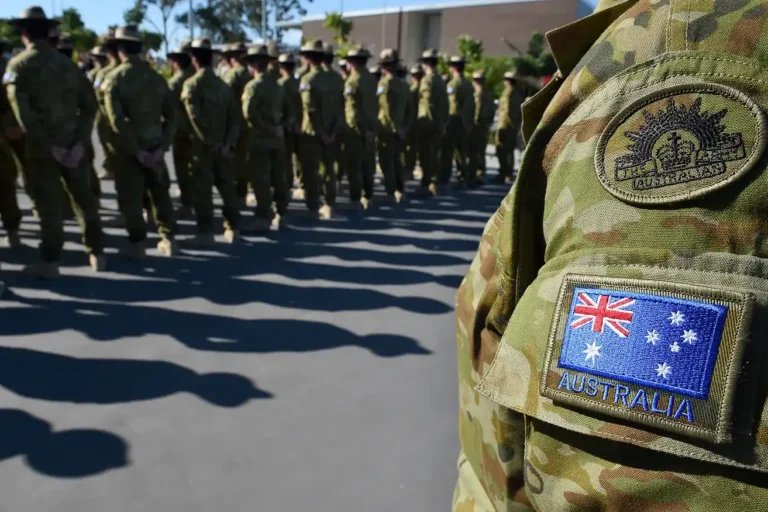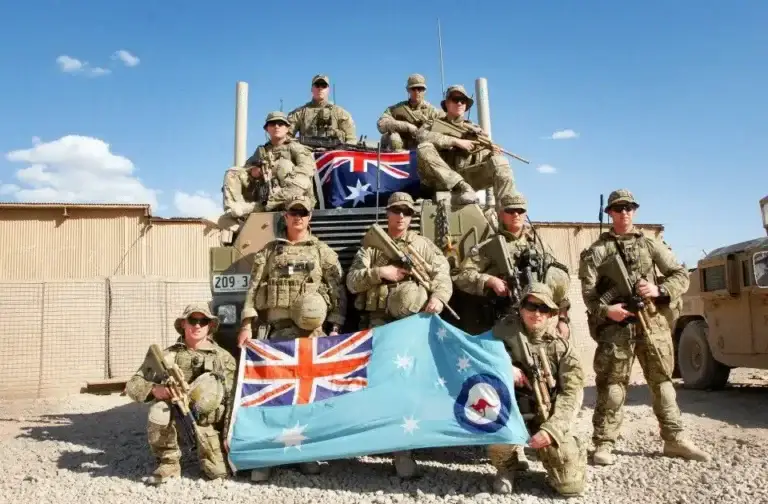
Reliable population data underpins effective public policy, service planning and research, particularly for communities whose experiences extend beyond formal government systems. As Australia prepares for the 2026 Census, the return of the veteran service question carries significance well beyond statistical reporting, offering one of the few opportunities to build a more complete picture of the nation’s veteran population and strengthen the evidence that informs future health, wellbeing and support decisions.
The veteran question returns on 11 August. It remains the only national count that sees the people the department does not.
In 2021, 581,139 Australians told the Census they had served or were serving in the Australian Defence Force. Of those, 84,865 were still in. The other 496,276 were out.
That was the first time the number had ever been collected. Not the first time in a decade, or since Vietnam. The first time in the history of the Australian Census.
Before that, the position was this, according to the Australian Bureau of Statistics’ own assessment: information existed about people currently serving, but very little was known about people who had previously served.
The Department of Veterans’ Affairs knew about the veterans who used its services. About the ones who did not, it knew close to nothing.
Sit with that, because it explains a great deal. Throughout the modern era of veteran policy, the department’s picture of the veteran population reflected its own caseload. Everyone who walked away — and plenty of people walked away — was invisible in it.
More about this, possibly another time, but take this into consideration when discussing the complexity of a Department trying to address decades upon decades of missing information and data.
What invisibility actually costs
This is not abstract. It works like this. Population estimates drive service planning: where support is placed, which regions are funded, how large a program needs to be, who gets grants, where hospitals and medical services are built. Research into a cohort requires knowing that the cohort exists, how big it is and where it lives… the list goes on.
A study of veterans in a region is only as good as its denominator, and when an agency has not analysed a particular veteran cohort, the absence of a reliable population base is often part of the reason.
So, the veteran who disengaged from DVA because the process cost more than it returned did not merely end a relationship with a department. They left the national picture. Their region’s veteran count fell. The case for a service in their town got weaker. Their cohort became statistically smaller than it actually is.
The irony is precise. The people with the strongest grounds to distrust the system are the people whose absence most distorts the evidence about it.
The distrust is not the thing to argue with
I am not going to try to talk anyone out of it, and I would not be credible if I did. I served from 2006 until my medical discharge in April 2021. The reasons are directly attributed to ADF Service.
The Royal Commission into Defence and Veteran Suicide delivered seven volumes and 122 recommendations in September 2024. Commissioner Dr Peggy Brown described the situation as “not a problem that Defence or DVA can be trusted to solve by themselves”. The Commonwealth agreed or agreed in principle to 104 of those recommendations in December 2024 and noted a further 17. A veteran who says the system has not earned their confidence is not being difficult; they are reading the record.
But the Census is not the system. It is run by a statistical agency that is legally barred from disclosing anything about you to the department.
What is, and is not, on the 2026 form
The ADF service question returns on 11 August. The ABS lists it among the topics carried into the 2026 Census with no change. One thing did not carry. In 2023, the Royal Commission asked the ABS to retain the question and to add a second element: most recent year of discharge. The reasoning was that it would open research on members who served during particular periods and deployments and would begin to close a specific gap, the more than 220,000 living Australians who served before 1985, the cohort mentioned earlier; one for which relatively little is known.
Year of discharge is not in the 2026 Census. Census content is settled by the Government and the Parliament through a public process that weighs respondent burden and data quality, and that is where the decision sat. Worth knowing, rather than worth an argument.
It does mean the question that survived is the only instrument going. For another five years, it is the only thing that counts the entire veteran population rather than just the portion already within a departmental system.
The privacy question, answered properly
For many people, the hesitation is not indifference. It is a fair question about where the answer ends up. Specifically:
- Census information is protected by the secrecy provisions of the Census and Statistics Act 1905 and by the Privacy Act 1988. Section 19 makes it a criminal offence for any current or former ABS officer to divulge information collected under the Act.
- The ABS does not share information from a Census form that could identify you or your household with other government departments.
- Census information is not used for compliance or enforcement activities, other than for offences under the Census and Statistics Act itself.
- Names are retained for up to 18 months after the Census, and addresses for up to 36 months.
- Any person in a household can request a separate personal form. Nobody at home needs to see your answer.
Ticking the box does not create a departmental record, open or affect a claim, or attach to a service file. It adds one to a number.
Eleven August
Census night is Tuesday 11 August 2026, and participation is compulsory for everyone in Australia.
If you served, the question is there. It costs a few seconds; it is confidential by statute, and if you are outside the departmental system, it is the only place your service is counted at all. If you have a serving or ex-serving family member under your roof that night (and one in twenty Australian households does) the same applies to answering it accurately on their behalf.
Fill it in. Not because the institutions have earned it, but because the count is the evidence, and the evidence is what makes the next veteran health and welfare argument winnable.