Mental health challenges, social isolation, and difficulties navigating support systems continue to affect many veterans, first responders, healthcare workers, and their families long after periods of service or crisis have ended. While significant attention is often placed on clinical treatment, growing recognition is being given to the role of peer connection, community support, and early intervention in improving wellbeing and reducing the risk of people reaching crisis point. This article explores one veteran’s journey through trauma, injury, addiction, and suicidal ideation, and examines how lived experience can shape new pathways of support for others facing similar struggles.
This article contains references to suicide and self-harm. If you need support, please reach out to Open Arms—Veterans & Families Counselling at 1800 011 046.
I have been thinking a lot lately about why I do what I do, and why Mindful Mates matters so much to me. My story did not start in a perfect place.
I grew up with a lot of adverse childhood experiences. School was not really where I found myself. I did not do particularly well academically, and like a lot of young blokes, I poured most of my energy into football. That was where I felt like I had value. That was where I felt like I could prove myself.
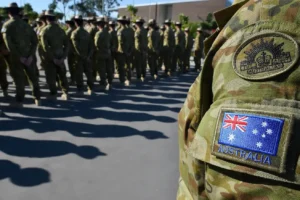
Eventually, I joined the Royal Australian Air Force. At the time, I think part of me saw it as a way out. A way to escape the Gold Coast, my old environment, and probably a version of myself and my life that I did not really know how to deal with. But service changed me in ways I did not understand at the time.
Looking back now, I can see that my nervous system was rearranged. I became hypervigilant, reactive, defensive, and angry. I became a young man who was difficult to be around. I had issues with authority and command. I rebelled. I pushed back. I carried anger everywhere I went and I did not have the emotional tools to understand what was happening inside me.
That anger came out in my relationships. I had multiple relationship problems because of it. I was not the partner I should have been. I need to be honest about that. There was domestic violence in my past. Not physical violence, but emotional violence. I caused harm through my behaviour, my words, my anger, my control, and my inability to regulate myself. That is not easy to write, but it is important.
Treading water
There was a young woman who once said to me that I was the worst person she knew. At the time, that hurt deeply. But in reflection, she was right to say it. I was not a good person then. I was angry, toxic, wounded, and I was hurting other people because I had not dealt with what was happening inside me.
If she ever reads this, I want to say thank you. And I am sorry. That moment stayed with me. It became one of the first times I had to properly look at myself and ask, “What am I becoming?” It did not fix everything overnight, but it planted something. It made me realise that I had a choice. I could keep blaming the world, or I could start taking responsibility for the man I was becoming.
For years, I carried both physical and mental health issues. Like many veterans, I did not know how to properly navigate the DVA space. I did not understand what support I was entitled to, how to ask for help, or even how to explain what was going on. So I did what a lot of us do. I just got on with it.
I worked different jobs. I kept moving. I tried to find the thing that made sense for me. Eventually, I found paramedicine.
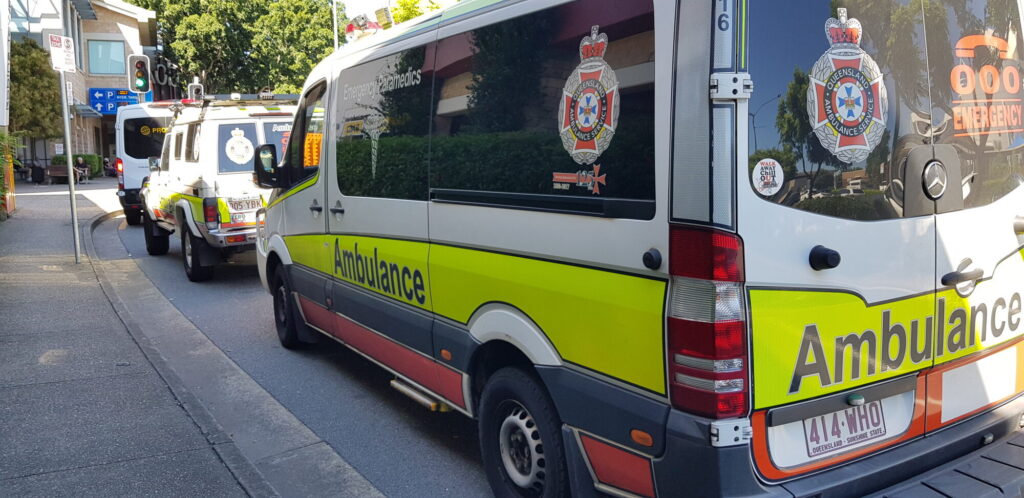
For the first time in a long time, I felt like I had found something that matched who I was. I loved the work. I loved being on road. I loved being able to walk into someone’s worst day and do something useful. Paramedicine gave me purpose, identity, and meaning. I worked as a paramedic for six years, and then my body gave out.
Years of physical injuries, pain, and pushing through eventually caught up with me. My back pain became unbearable. My body said, “No more.” I lost a role I loved, and when that happened, my mental health spiralled badly. I had lost more than a job. I had lost part of my identity. I did not cope well.
I chose to self-medicate. I drank heavily. I hid it. I told myself I was managing. I told myself I was functioning. I thought that if I spoke openly about my mental health, it could jeopardise my future career, my reputation, and my ability to keep moving forward. So I stayed quiet. But quiet became dangerous.
Eventually, the thoughts of suicide came. Not just fleeting thoughts. Serious thoughts. Plans. I had reached a point where I was not thinking about being injured or incapacitated. I was thinking about dying.
One night, I had finished a bottle of gin. I had found an episode of Brooklyn Nine-Nine that I wanted to finish, and in my mind, that was it. I was done. My daughter was two years old at the time. She had been sleeping through the night, but for some reason that night, she woke up crying. My wife got up to look after her, like she always did. But I heard my daughter cry, and I put the keys down. Then I broke down.
Suffering in silence
At the time, nobody knew how much I was drinking. Nobody knew how close I was. Nobody knew that I was genuinely contemplating dying by suicide. Since sharing parts of my story, people have said to me, “I’m sorry, I didn’t know.” They did not know because I was trying so hard to hide it.
That is the part people need to understand. Many people who are at risk are not walking around obviously falling apart. Some are working. Some are parenting. Some are laughing. Some are helping others. Some are doing everything they can to appear fine, while privately fighting to stay alive.
So what changed? A few things.
First, my daughter’s cry cut through something in me. It made me stop and think about what I was about to do. It made me think about what I would leave behind. That was incredibly painful, because at the time, I genuinely believed I would be doing everyone a favour. I thought people would be better off without me. I thought my family would not have to put up with me anymore. That is how distorted my thinking had become.
Second, I had a very stern conversation with my psychiatrist. He did not dance around the issue. He did not soften it. He was direct with me, and I needed that. That conversation helped push me towards actually engaging in mental health support rather than pretending I could manage it all myself.
Then something happened at work that changed the direction of my life. I was working on road with the ambulance service and we were called to an elderly lady with chest pain. I completed my assessment, including all the typical paramedic assessments. Nothing obvious was pointing to anything sinister. But through talking with her, asking questions, and digging a little deeper, I found out that her doctor had recently told her she needed to move into a nursing home.
That changed everything. Her chest pain was real, but so was her fear, grief, uncertainty, and loss of control. While I was there, I noticed a photo on the wall of a young, strong-looking man. I asked her about him. It was her late husband. He had served in the Vietnam War. She was a war widow. She had a Gold Card. And she had no real idea what she was entitled to.
I ended up spending about two hours with her, helping to connect the dots. I found a GP who understood the DVA system. I helped get Veterans’ Home Care and other supports moving. And for those in the medical field, yes, I kept checking her chest pain, repeated observations, and made sure clinically she was safe.
After the job, while doing my paperwork, I called the social workers in the clinical hub to see if they could follow up and do their part. That is when one of them said to me, “You should become a social worker.”
I did not say this out loud at the time, but honestly, I did not really know what a social worker did. I went home and thought about it, and six weeks later, I enrolled in the Master of Social Work at Griffith University.
Rediscovering purpose
Now, almost three years later, my life looks very different. It is not perfect. I am still a work in progress. But I am no longer destroying myself to do a job I loved. I am no longer drinking because I have to numb myself. If I have a couple of drinks now, it is because I choose to, not because I am trying to survive the night.
My back pain now sits around a 1 or 2 out of 10 most days, instead of an 8, 9 or 10. My mental health is in a far better place. I have found a new purpose. I have started my own business, Mindful Mates Social Services, helping people through tough seasons in their lives.
Alongside an incredible board, we have also established Mindful Mates Association Inc., a charity and drop-in centre for veterans, first responders, healthcare workers and their families. We host games nights, coffee catch-ups, peer connection, and safe spaces where people can walk in and feel like they do not have to pretend.
That matters to me because I know what it is like to pretend. I know what it is like to look like you are functioning while quietly falling apart. I know what it is like to feel like a burden. I know what it is like to believe the people you love would be better off without you.
And I also know that things can change. Not instantly. Not perfectly. Not without pain, honesty, accountability, support, and hard conversations. But they can change.
Mindful Mates exists because I believe people need places where they can be met before crisis point. Places where veterans, first responders, healthcare workers and families can find connection, practical support, and people who understand that life after service, trauma, injury, or burnout is not always simple.
This is still evolving. I am still evolving. The work is not always perfect. I am not always perfect. But it is progress, and it is moving in the right direction.
To my wife, my kids, and the people close to me who have supported me through this journey, thank you. You have seen the worst parts, the broken parts, the rebuilding parts, and the growth. I would not be where I am without you.
And to anyone reading this who is quietly struggling, please do not believe the lie that people would be better off without you. That is not truth. That is pain speaking.
There is help. There is a way forward. There are people who will sit with you, walk beside you, and help you find your way back. I am still here because people, moments, and support interrupted the path I was on. Now I hope Mindful Mates can be part of doing that for someone else.